Proven ways to control the symptoms of anxiety without medication.

No Rx needed
by Robert A. Barnett
You're anxious, worried,
freaked. You're upset about (pick one):
money,
health, work, family, love. Your heart is beating fast, your breathing
is shallow and rapid, your mind is imagining doom, and you wish you
could just relax…now! Whether you have a full-blown
anxiety disorder or are just freaking out, you may not want to try medication—at least not yet.
There
are many safe nondrug remedies for anxiety, from mind-body techniques
to supplements to calming teas. Some start working right away, while
others may help lessen anxiety over time.

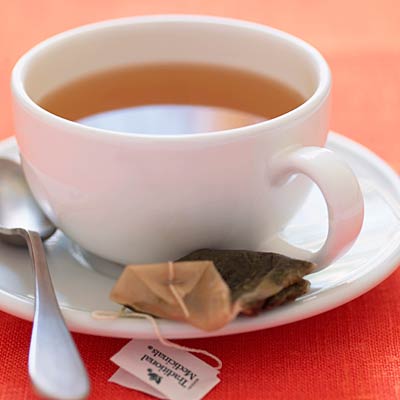
Chamomile
If you have a jittery moment, a cuppa chamomile
tea might help calm you down. Some compounds in chamomile
(Matricaria recutita) bind to the
same brain receptors as drugs like Valium.
You
can also take it as a supplement, typically standardized to contain
1.2% apigenin (an active ingredient), along with dried chamomile
flowers. In one
study
at the University of Pennsylvania Medical Center, in Philadelphia,
patients with generalized anxiety disorder (GAD) who took chamomile
supplements for eight weeks had a significant decrease in anxiety
symptoms compared to patients taking placebo.
L-theanine (or green tea)
They say Japanese Buddhist monks could meditate for hours, both alert
and relaxed. One reason may have been an amino acid in their
green tea called L-theanine, says Mark Blumenthal, of the
American Botanical Council.
Research
shows that L-theanine helps curb a rising heart rate and blood
pressure, and a few small human studies have found that it reduces
anxiety. In one
study, anxiety-prone subjects were calmer and more focused during a test if they took 200 milligrams of L-theanine beforehand.
You can get that much L-theanine from green tea, but you'll have to drink many cups—as few as five, as many as 20.

Hops
Yes, it's in beer, but you won't get the tranquilizing benefits of the bitter herb hops
(Humulus lupulus)
from a brew. The sedative compound in hops is a volatile oil, so you
get it in extracts and tinctures—and as aromatherapy in hops pillows.
"It's
very bitter, so you don't see it in tea much, unless combined with
chamomile or mint," says Blumenthal. Hops is often used as a sedative,
to promote sleep, often with another herb, valerian. Note: Don't take
sedative herbs if you are taking a prescription tranquilizer or
sedative, and let your doctor know any supplements you are taking.
Valerian
Some herbal supplements reduce anxiety without making you sleepy (such as L-theanine), while others are sedatives.
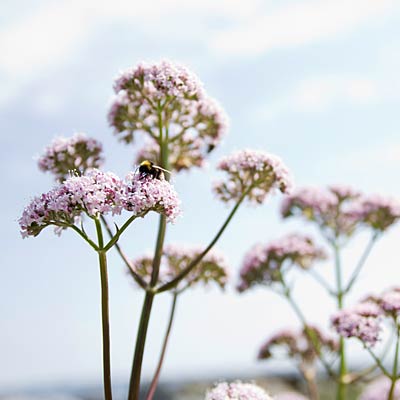
Valerian (Valeriana officinalis)
is squarely in the second category. It is a sleep aid, for insomnia. It
contains sedative compounds; the German government has approved it as a
treatment for sleep problems.
Valerian smells kind of nasty,
so most people take it as a capsule or tincture, rather than a tea. If
you want to try it, take it in the evening—not before you go to work!
Valerian is often combined with other sedative herbs such as hops,
chamomile, and lemon balm.

Lemon balm
Named after the Greek word for "honey bee," lemon balm (
Melissa officinalis), has been used at least since the Middle Ages to reduce stress and anxiety, and help with sleep. In one
study
of healthy volunteers, those who took standardized lemon balm extracts
(600 mg) were more calm and alert than those who took a placebo.
While
it's generally safe, be aware that some studies have found that taking
too much can actually make you more anxious. So follow directions and
start with the smallest dose. Lemon balm is sold as a tea, capsule, and
tincture. It's often combined with other calming herbs such as hops,
chamomile, and valerian.
Exercise
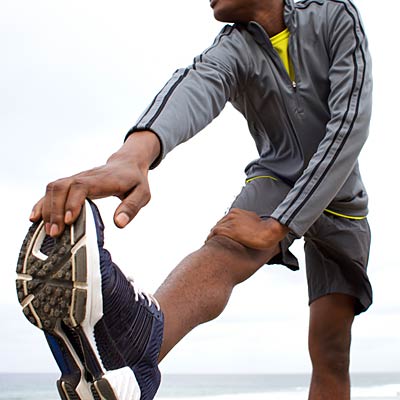
Exercise is safe, good for the brain, and a powerful antidote to
depression
and anxiety, both immediately and in the long term. "If you exercise on
a regular basis, you'll have more self-esteem and feel healthier," says
Drew Ramsey, MD, Assistant Clinical Professor of Psychiatry at New
York-Presbyterian Hospital, Columbia University, who blogs at
www.DrewRamseyMD.com.
"One of the major causes of anxiety is worrying about illness and health, and that dissipates when you are fit."

The 21-minute cure
Twenty-one minutes: That's about how long it takes for exercise to
reliably reduce anxiety, studies show, give or take a minute. "If you're
really anxious and you hop on a treadmill, you will feel more calm
after the workout," Dr. Ramsey says.
"I generally ask my
patients to spend 20 to 30 minutes in an activity that gets their heart
rate up, whether it's a treadmill or elliptical or stair
stepping—anything you like. If you rowed in college, get back to rowing.
If you don't exercise, start taking brisk walks."
Passionflower
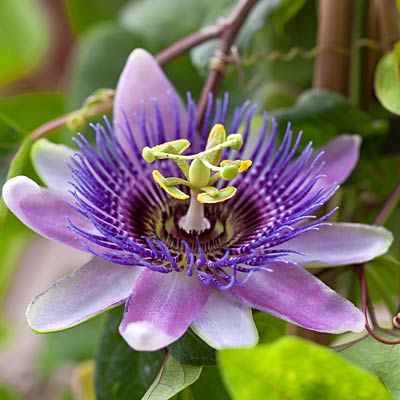
In spite of the name, this herb won't help you in love. It's a
sedative; the German government has approved it for nervous
restlessness. Some studies find that it can reduce symptoms of anxiety
as effectively as prescription drugs. It's often used for insomnia.
Like
other sedatives, it can cause sleepiness and drowsiness, so don't take
it—or valerian, hops, kava, lemon balm, or other sedative herbs—when you
are also taking a prescription sedative.
Be careful about using more than one sedative herb at a time, and don't take passionflower for longer than one month at a time.
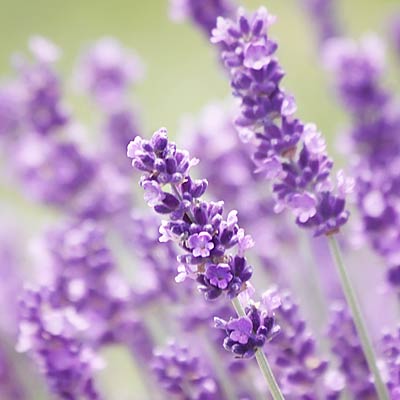
Lavender
The intoxicating (but safe) aroma of
lavender (Lavandula hybrida) may be an "emotional" anti-inflammatory. In one
study, Greek dental patients were less anxious if the waiting room was scented with lavender oil. In a Florida
study, students who inhaled lavender oil scent before an exam has less anxiety—although some students
said it made their minds "fuzzy" during the test.
In one German
study,
a specially formulated lavender pill (not available in the U.S.) was
shown to reduce anxiety symptoms in people with Generalized Anxiety
Disorder (GAD) as effectively as lorazepam (brand name: Ativan), an
anti-anxiety medication in the same class as Valium.

Hold your breath!
Ok, let it out now. We're not recommending that you turn blue, but
yoga breathing has been shown to be effective in lowering stress and
anxiety. In his bestselling 2011 book
Spontaneous Happiness, Andrew Weil, MD, introduced a classic yoga breathing technique he calls the
4-7-8 breath.
One
reason it works is that you can't breathe deeply and be anxious at the
same time. To do the 4-7-8 breath, exhale completely through your mouth,
then inhale through your nose for a count of four. Hold your breath for
a count of seven. Now let it out slowly through your mouth for a count
of eight. Repeat at least twice a day.
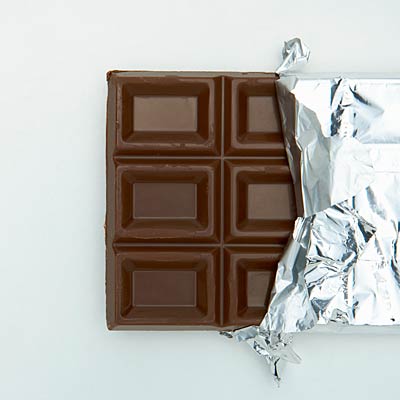
Eat something, quick
"Almost universally, people get more anxious and irritable when they are hungry," says Dr. Ramsey, coauthor of
The Happiness Diet.
"When you get an anxiety attack, it may mean your blood sugar is
dropping. The best thing to do is to have a quick sustaining snack, like
a handful of walnuts, or a piece of dark chocolate, along with a glass
of water or a nice cup of hot tea."
In the long term, diet is
key to reducing anxiety, says Dr. Ramsey. His advice: Eat a whole-foods,
plant-based diet with carefully selected meat and seafood, plenty of
leafy greens (such as kale) to get folate, and a wide variety of
phytonutrients to help reduce anxiety.
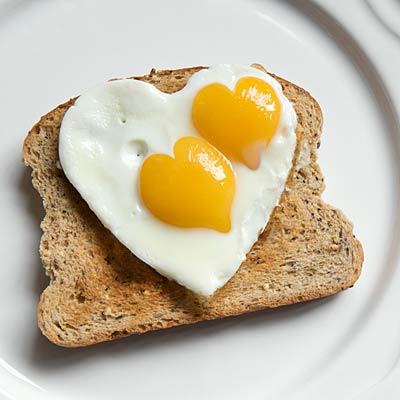
Eat breakfast
Stop starving yourself, advises Dr. Ramsey. "Many people with anxiety
disorders skip breakfast. I recommend that people eat things like eggs,
which are a satiating and filling protein, and are nature's top source
of choline. Low levels of choline are associated with increased
anxiety."
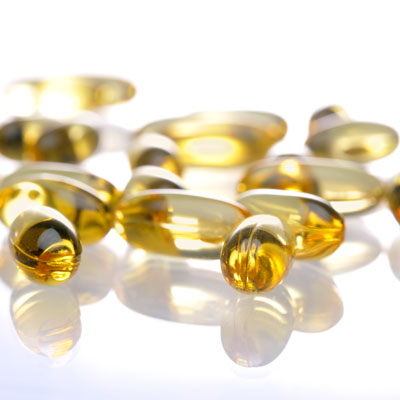
Eat omega-3s
You know fish oils are good for the heart, and perhaps they protect against depression. Add anxiety to the list. In one
study,
students who took 2.5 milligrams a day of mixed omega-3 fatty acids for
12 weeks had less anxiety before an exam than students taking placebo.
Experts
generally recommend that you get your omega-3s from food whenever
possible. Oily, cold-water fishes like salmon are the best sources of
the fatty acids; a six-ounce piece of grilled wild salmon contains about
3.75 grams.
Other good choices: anchovies, sardines, and mussels.

Stop catastrophizing
When you're attacked by anxiety, it's easy to get into a mind set
known as "catastrophic thinking" or "catastrophizing." Your mind goes to
the bad terrible really horrible just unbearable things and what if
they really do happen? "You think, ‘This could really ruin my life,'"
says Dr. Ramsey.
Instead, take a few deep breaths, walk around
the block, and consider the real probability that this problem will
really spin out into catastrophe. How likely is it that you'll lose your
job, never talk to your sister again, go bankrupt?
Chances are
a catastrophic outcome is a lot less likely than you think when you're
consumed with anxiety. "Very few events really change the trajectory of
your life," says Dr. Ramsey.

Get hot
Ever wonder why you feel so relaxed after a spell in the sauna or a
steam room? Heating up your body reduces muscle tension and anxiety,
research finds. Sensations of warmth may
alter neural circuits that control mood,
including those that affect the neurotransmitter serotonin. Warming up
may be one of the ways that exercise—not to mention curling up by a fire
with a cozy cup of tea—boosts mood.
As one group of researchers
put it,
"Whether lying on the beach in the midday sun on a Caribbean island,
grabbing a few minutes in the sauna or spa after work, or sitting in a
hot bath or Jacuzzi in the evening, we often associate feeling warm with
a sense of relaxation and well-being."

Take a 'forest bath'
The Japanese call it
Shinrin-yoku, literally "forest bath." You and I know it as a walk in the woods. Japanese researchers
measured body changes in people who walked for about 20 minutes in a beautiful forest, with the woodsy smells and the sounds of a running stream.
The forest bathers had lower stress hormone levels after their walk than they did after a comparable walk in an urban area.

Learn mindfulness meditation
Mindfulness meditation, originally a Buddhist practice but now a
mainstream therapy, is particularly effective in treating anxiety, says
Teresa M. Edenfield, Ph.D., a clinical psychologist in the Veterans
Administration Medical Center in Durham, N.C., who often uses it to
treat anxiety patients. "The act of practicing mindful awareness allows
one to experience the true essence of each moment as it really occurs,
rather than what is expected or feared," she says.
How to
begin? You can start by simply "paying attention to the present moment,
intentionally, with curiosity, and with an effort to attend
non-judgmentally," Edenfield says.

Breath and question
To stay mindful, ask yourself simple questions while practicing
breathing exercises, Edenfield suggests. "Sit in a comfortable place,
close your eyes, and focus on how your breath feels coming in and out of
your body. Now ask yourself silent questions while focusing on the
breath."
What is the temperature of the air as it enters your
nose? How does your breath feel different as it leaves your body? How
does the air feel as it fills your lungs?
Give yourself credit
Are you having anxious thoughts? Congratulations. You're aware of
your emotional state, and that awareness is the first step in reducing
anxiety, says Edenfield.
"Remember to give yourself credit for
being aware that you are having anxious thoughts, and probably body
changes. This is truly a skill of mindfulness that must be learned, and
is essential in making the next steps of intervening through strategies
such as positive self-talk, cognitive reframing, or the use of
mindfulness or relaxation strategies."


 Consider the following two questions:
 Major negative life events, such as the death of a loved one, the
dissolution of an important relationship, or the diagnosis of a serious
illness, can be painful and isolating. But these experiences can also
sometimes bring about unexpected positive changes. Here are 5 of them:
 Whether you’ve been rejected by a


 When it comes to