所以到了一定时候,人都拼命想买房子。
有一间属于自己的房子。
关了门后,惟我独尊。
我就是这个房子的主人。
我爱怎样就可以怎样。
可自由诚然可贵,代价也很高。
每个月的房贷水电煤气费,样样都得房主自己张罗。
还有时不时屋里某盏灯不亮,水龙头关紧还滴水和空调不冷等等问题。
这些都是屋主要面对的现实问题。
没有一定的经济能力,想要买房享受所谓的自由,真得三思呀。

2017年6月10日
15 Qualities of the Perfect Employee
By Melissa Lamson

In today's global business environment, hiring (and keeping) the right employee is one of the most difficult jobs a manager
has. Often leaders focus on the skill sets needed to get a job done
right and overlook basic skills and personality traits critical to being
a valued and productive team member. The consequences of a bad hire can
be steep--personality clashes, project failures, and even firings.
While every employee has a unique mix of skills and personality traits, there are common ones that every hiring manager should look for.
Candidates who have these 15 qualities should definitely make your short list.
In addition to looking for strong skill sets, leaders should be probing for these qualities when trying to find the right fit for their organizations.
While every employee has a unique mix of skills and personality traits, there are common ones that every hiring manager should look for.
Candidates who have these 15 qualities should definitely make your short list.
1. Agile.
Employees should be flexible, nimble, and quick. They should be able to react and respond to changing needs and customer desires and to the moving parts in our global business world.2. Friendly and open.
Employees need to be approachable, kind, and compassionate. They should be able to speak in a way that makes others feel they are cared about. Stephen Covey writes that highly effective people are those who care about others before themselves.3. Internationally aware.
An Ernst and Young report says that one of the most important qualities employers are looking for today is a global mindset. This means being aware of and sensitive to other cultures, customs, events, and perspectives.4. Energetic.
Sometimes projects require an employee to work late or extra early--particularly when collaborating across time zones. Dream employees have the stamina to do this. They eat right, exercise, and take care of themselves so that they can conserve and protect their energy and have more of it.5. Adaptable.
Perfect employees are able to adjust to different cultures, personalities, and ways of doing things. For example, when collaborating with an introverted employee, they have the emotional intelligence to know that this person needs quiet time to think before speaking.6. Ability to make small talk.
This is especially important when working with other cultures. Dream employees know how to talk about safe topics like the weather, current events, or sports when engaging with those from other parts of the world. It's a bonus if they can have these exchanges in the other person's language.7. Assertive.
Strong employees know how to mediate conflict. They know how to take initiative, ask for what they need, and assert opinions and suggestions so that they are visible and productive. This is especially important when working on remote teams.8. Curious.
The best employees want to know about different ways of doing things. They wonder how others are doing something; what other organizations are working on; and how teammates are doing in their lives or jobs--particularly when the teammates live elsewhere in the world. Being curious is an important trait for gaining knowledge and showing people that you're interested in them.9. Flexible.
When working with different cultures and across time zones, the ability to flex one's schedule, switch up systems, and abandon processes that may not be working is critical to success. Dream employees aren't afraid of change. They're open to learning new skills, software, and technology to keep pace with the rate of change today.10. Time zone aware.
Virtual, dispersed, or remote teams are becoming the norm. This means people need to accommodate different time zones. The general rule is that meetings should be uncomfortable for everyone sometimes. So don't schedule a standing meeting that makes a team member always have to stay up late or wake up too early.11. Direct.
Some cultures communicate in very indirect ways, so perfect team members know how to speak directly but without ruffling feathers. They know how to be clear in what they're saying and what their expectations are while maintaining harmony within the relationship.12. Can-do attitude.
The best employees are ready to jump in with sleeves rolled up. They aren't naysayers. They believe anything can be done even if it requires abandoning old ways of doing things. They see only solutions, not problems.13. Diplomatic.
The right employees know how to mediate differing opinions or suggestions. They're able to talk with people so that they do a lot of listening and have a lot of empathy and consideration of other perspectives. They ensure people are being heard.14. Take care of their appearance.
Perfect employees are aware of their appearance, hygiene, and the customs of different cultures. They know how to let different environments dictate their dress so that they aren't over- or underdressed and everyone feels comfortable.15. Competitive.
Competition can be a positive thing when employees are competitive with outside organizations. They want to outpace other businesses and are thinking about the organizations as a whole. Competition is really negative only when employees are just out for themselves. The right employees also know that men and women approach competition differently, and how to walk that line.In addition to looking for strong skill sets, leaders should be probing for these qualities when trying to find the right fit for their organizations.
2017年6月9日
4 Powerful Body Language Habits of Confident People
An
intriguing interview with the Body Language Dr. reveals 4 simple
nonverbal communication tips to build up your confidence and leadership
skills.
 Quite often, I get new books coming across my desk by authors and thought-leaders asking to be interviewed for my column.
One that caught my attention is in a field I have little familiarity
with -- body language (as I type this, I am hunched over my laptop in a
horrendous posture).
Quite often, I get new books coming across my desk by authors and thought-leaders asking to be interviewed for my column.
One that caught my attention is in a field I have little familiarity
with -- body language (as I type this, I am hunched over my laptop in a
horrendous posture).I was intrigued by the prospect of speaking to a bona fide expert in the field, so I took the bait. And it was a fascinating conversation.
Meet Donna Van Natten, the Body Language Dr. In her latest book, Image Scrimmage, she alerts us -- with uncanny candor and humor -- to take advantage of understanding the power of nonverbal communication in business.

CREDIT: Courtesy Dr. Donna Van Natten
The book is packed with information, research, exercises, and "Sage Stories," but its subtitle ("9 Ways Women Win With Body Language") gave me the impression that I was not the target audience.
Van Natten quickly dismissed that notion. She said, "It's definitely not only for women. It's about people helping and studying people based on research with practical ideas for being intentional about one's self and others."
After I read it myself, I agreed. Its numerous teachings and her own humorous anecdotes benefit men and women alike to immediately improve their communication skills.
In my conversation with Van Natten, which I will highlight over several future articles for length, her expertise came across with confidence. For this article, I will focus on four things every person in a business setting can improve.
1. Talk with just the right amount of words.
Wait--that's verbal communication, you say. I had the same reaction, and asked about it. Van Natten explains that she started with words because it's the smallest percentage of how we communicate (shockingly, only 7 percent, as she states in this video), but it builds up to the nonverbal. All too often, we intentionally, or accidentally, send nonverbal messages that are in complete opposition to our words.Too good to pass up here, Van Natten references research in her book that states the "optimal rate" we process information is between 170 and 190 words per minute. That means, if we use fewer than 170 words per minute, we are less dynamic and our listener will zone out. In other words, speed up!
But that's not nearly as important as using more than 190 words per minute, especially if the topic is about complex work stuff. In that case, she says "slow down and seek comprehension"--otherwise your listener is headed for the deer-in-the-headlights look. At worse, Van Natten says if you use more than 210 words per minute, expect the listener to abandon the conversation. Run, Forrest, run!
The takeaway here? For most learners and people processing new information, slow things down so they don't lose you; for everyday conversations and written content in which no new information is being introduced, speed things up.
2. Make an immediate good first impression with your face.
While that sounds obvious enough, according to the Body Language Dr., people can judge us in just a 10th of a second. And in two or more seconds, people's judgments of us tend to become more negative. I asked her we can avoid this. It comes down to two things: teeth and eyes. Here's Van Natten's explanation:As visual beings, we seek to lock eyes with others for an immediate pupil, eye, and facial read, including exposed teeth, smiles, skin color, and physical stature. We know that smiles are universal and clear indicators of "it's ok, I'm safe." People need to work on their smiles. Some may have unhealthy teeth and that's frustrating and impacts smiles and, too often, self-esteem. We judge the condition of our teeth for health, beauty, and economic status. We like to see teeth. So, smile! We also quickly seek eye contract and that's a struggle for some people. But, in our country, we are an eye contact culture for a sign of trust. People aren't hopeless, but they are definitely making impressions and hopeful that we'll mirror each other -- monkey see, monkey do. Try smiling at a stranger--they usually smile back or at least nod. In both cases, there's eye contact and a quick connection. We need this as humans.
3. Be aware of your stance.
While focusing so much on how we come across with our face, arms, and torso, we tend to forget the importance of the entire body. People do pick up cues from the position of the entire person standing before them, including leg and feet positions.Van Natten says, "We know that the feet tell us where the mind wants to go. Someone who is authentically engaged and present in the situation involves their whole body in the conversation. They get closer, they face you, and they bring their bodies and feet toward you to demonstrate 'I'm fully here.'"
4. Have a memorable handshake.
Handshakes are serious business in our culture. Typically, it's the first time we get to touch a stranger for a proper introduction. Yet, if you give someone a poor handshake, it's seared in that person's memory.Van Natten gave me several examples of handshakes you should avoid with a stranger.
Not a memorable handshake
- A man's hand grip strangling a woman's hand.
- A finger-tip touch with palms barely touching.
- Sweaty hands.
- The hand-over-hand paternal feel of being embraced.
- The pull of one's arms and body into the other's space.
- And, of course, the failure to rise and return a handshake when you're seated.
To intentionally create an "equal" feeling, the Body Language Dr. offers up a winning strategy from her book's chapter on "Hands, Arms, and Space Consumption." Here's the step-by-step guide:
- Walk toward the person while making eye contact and with a warm smile, let the other person know that a handshake is well on its way.
- Make sure that no barrier, like a chair or desk, blocks this opportunity. If you are sitting when someone enters the room, stand up. Formal handshakes require two standing participants.
- Extend your right hand at least half way into the shared space. Almost instinctively, the other person will do the same.
- The important part: With a vertical palm, slide your hand along the person's fingers and through the palm until your thumbs hook. Once you feel this, take your fingers and curl around the other person's palm. A mutual grip will ensue. Both hands are equally engaged.
- Within a second or two, decide how firmly you want to grip the hand. Smaller people have lighter squeezes; bigger people have harder grips. If you're a smaller person, increase pressure to complement your recipient's hand. If your beastly hand could squash a polar bear's paw, lighten up.
- As you pump the hands like water from a well, several (between 5 and 7 pumps) are acceptable in our culture. Too many and you're perceived as eager and destructive. Too few and you're not really enjoying the handshake.
Closing thoughts.
Assessing and improving our nonverbal communication and interpreting the signals of those around us is key to our success. The key is to intentionally work on both our verbal and nonverbal messages, actions, and words.Van Natten told me, "We'll never be perfect communicators, but as people, we need to work on this, especially in a technological era in which communication and its mechanisms are evolving -- some good, some poorly."
2017年6月7日
10 Free Tools to Improve Your Life in Less Than a Day (Yes, Really)
Most will even take you less than an hour.

After what felt like endless years of school, I can imagine it's tough to force yourself to sit down and learn more things. Without the assistance of a scary-looking teacher peeking over your shoulder, that is.
How about I make it a bit easier for you?
These 10 free online classes are not only fun, but they'll take you less than a week--if not less than an hour--to start and finish, meaning you can improve your life that much faster.
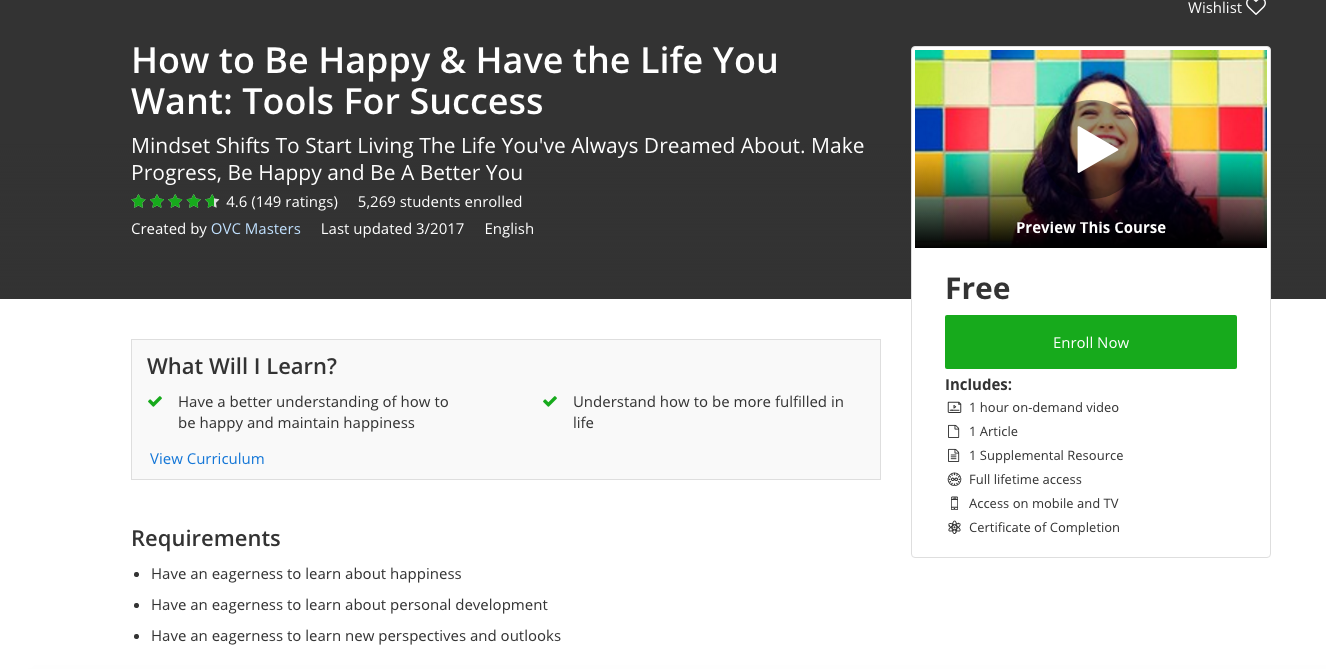
You had me at the title. If you're striving to find more excitement in your career and life, this short course is the perfect way to get yourself in the mindset for success.
Requirements? A desire to be happier.
Length: 1 hour/ 17 lectures
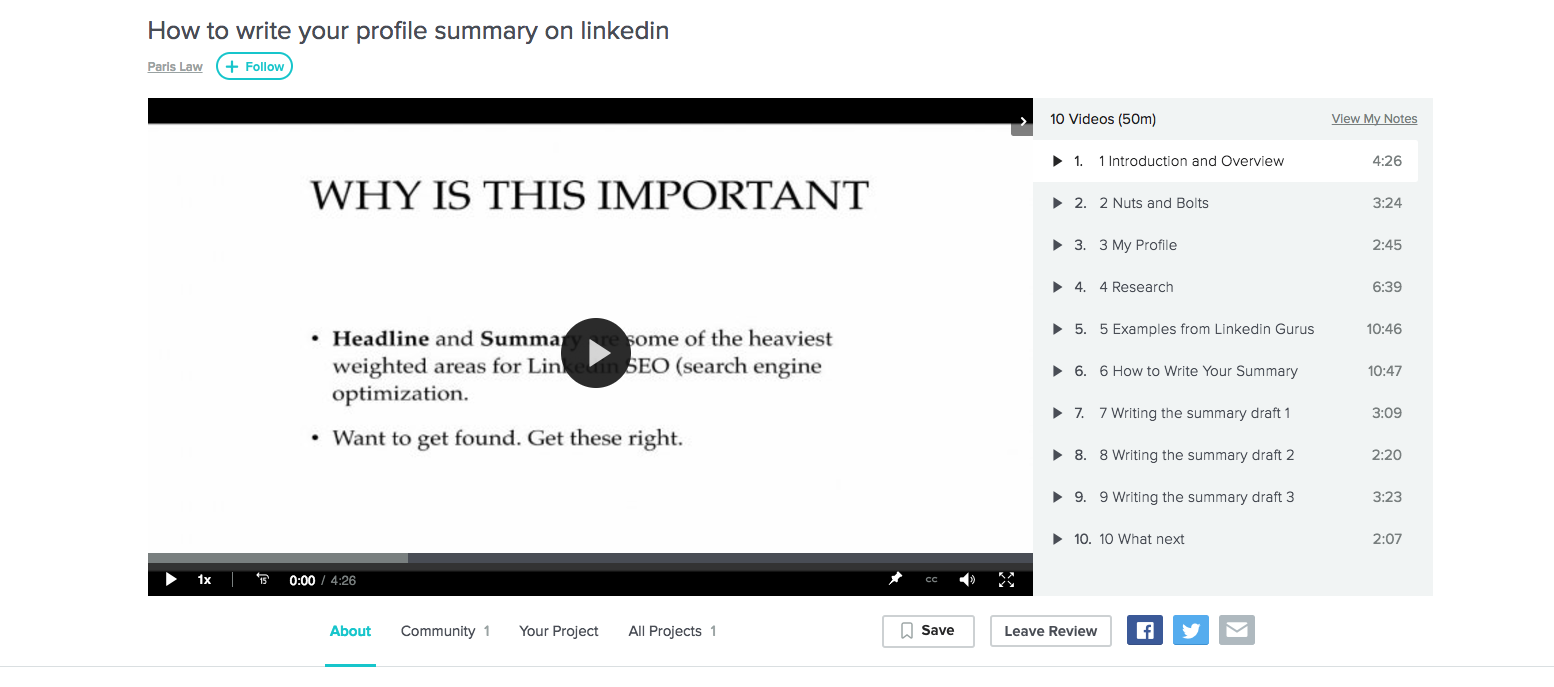
Tackle this very tricky (but important) task of promoting yourself online with a step by step process and real-life examples for inspiration.
Length: 50 minutes/ 10 videos
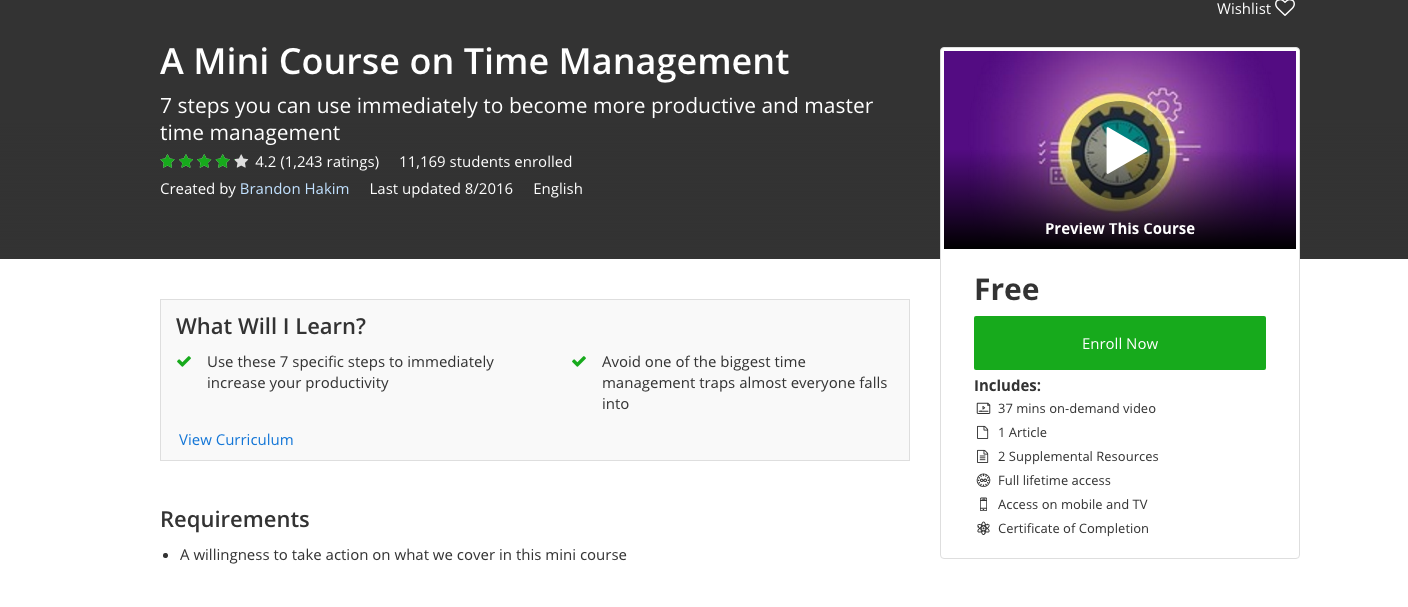
Learning about time management stresses us out when we think we're losing, well, time. Lucky for you, this class is only half an hour--and covers a heck of a lot.
Length: 37 minutes/ 12 lectures
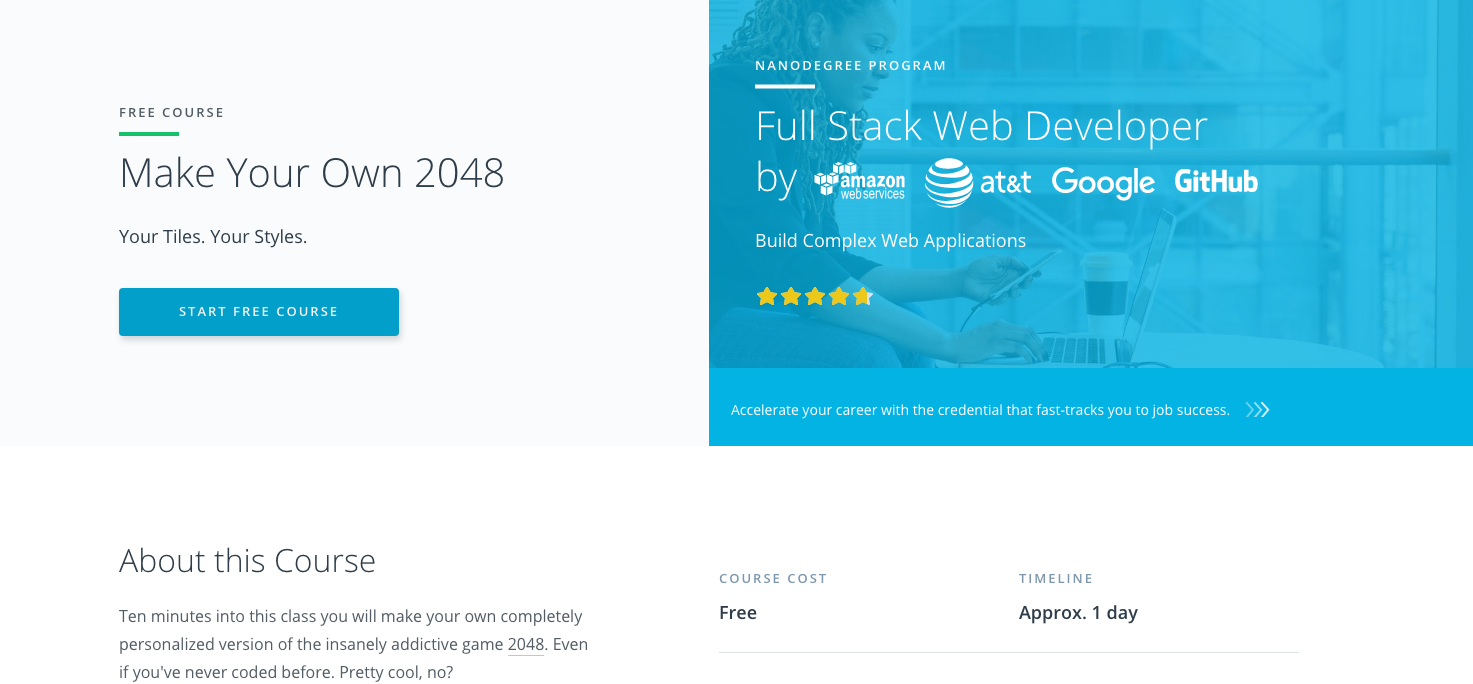
Kick-start your coding career with this simple--but fun--class on the basics of HTML, CSS, and Javascript. And, if you're a big fan of the game "2048," you'll get to make your own version by the end!
Length: 1 day
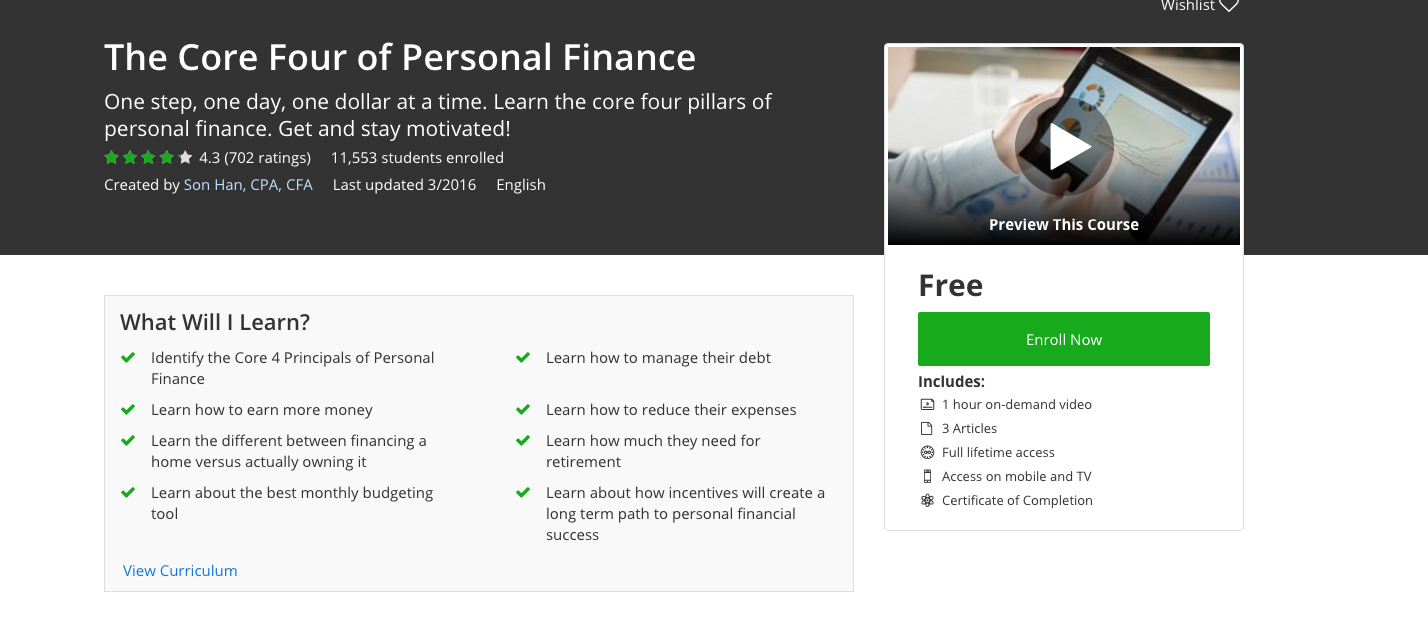
If just the idea of personal finance overwhelms you, it shouldn't. It's super easy to save and spend wisely--and this course will teach you the basics to smart money.
Length: 1 hour/ 17 lectures
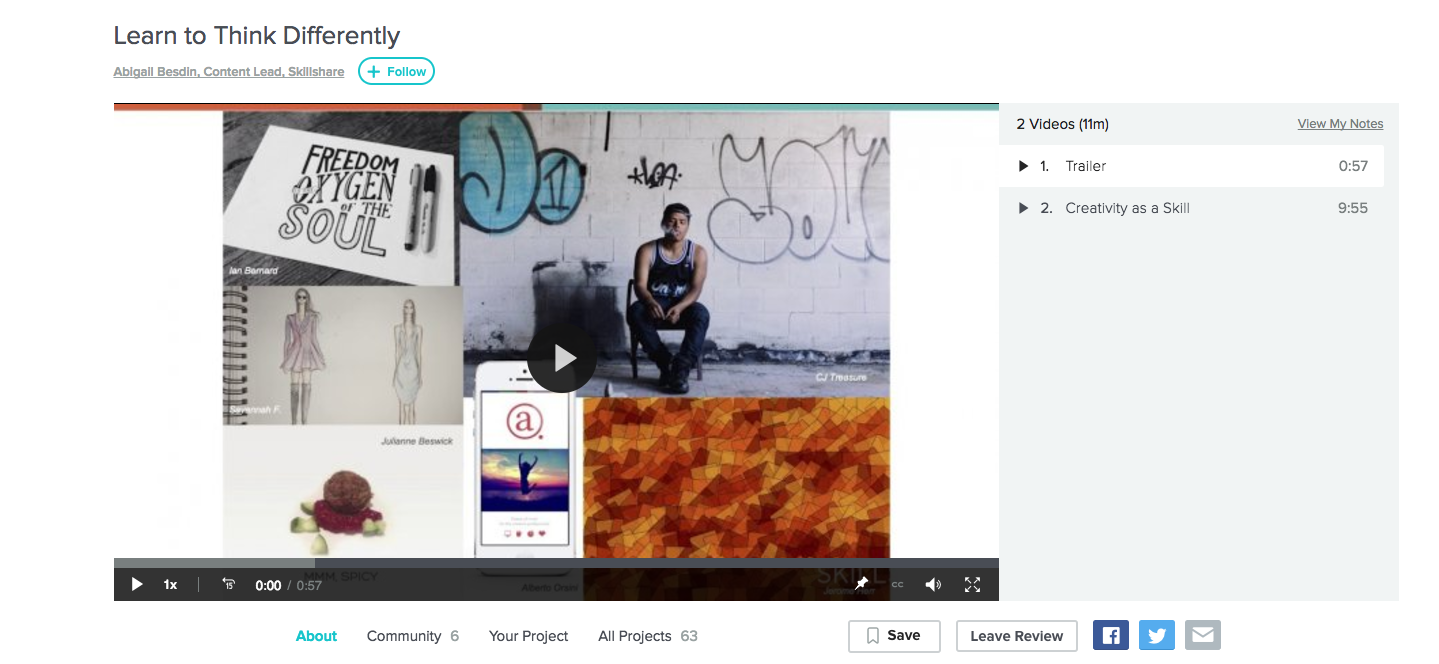
If you don't have all day to get creative, how about 10 minutes? That's all you'll really need to finish this super short class on innovation and creative thinking.
Length: 11 minutes/ 2 videos
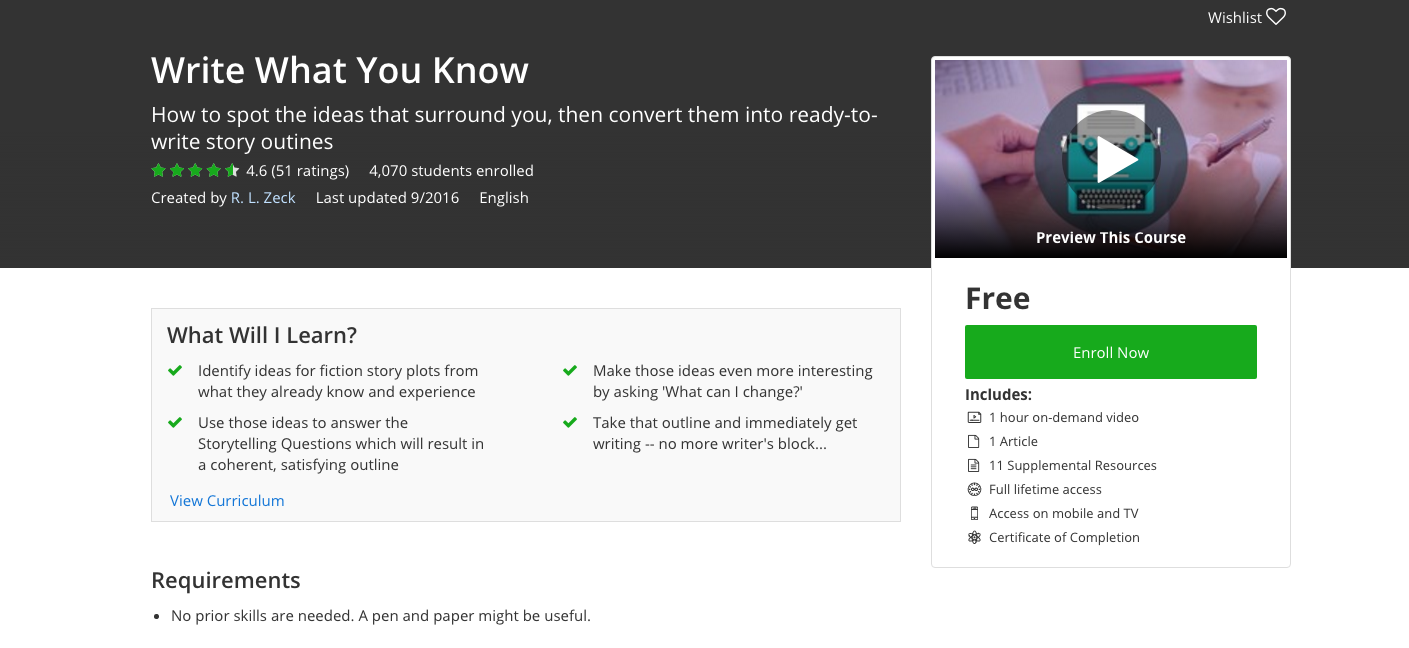
Interested in taking up writing as a side hobby? Learn how to pick out stories from your life and put them down on paper in an effective way, and you're halfway there to writing a book (or, at least a blog post or two).
Length: 50 minutes/ 6 lectures
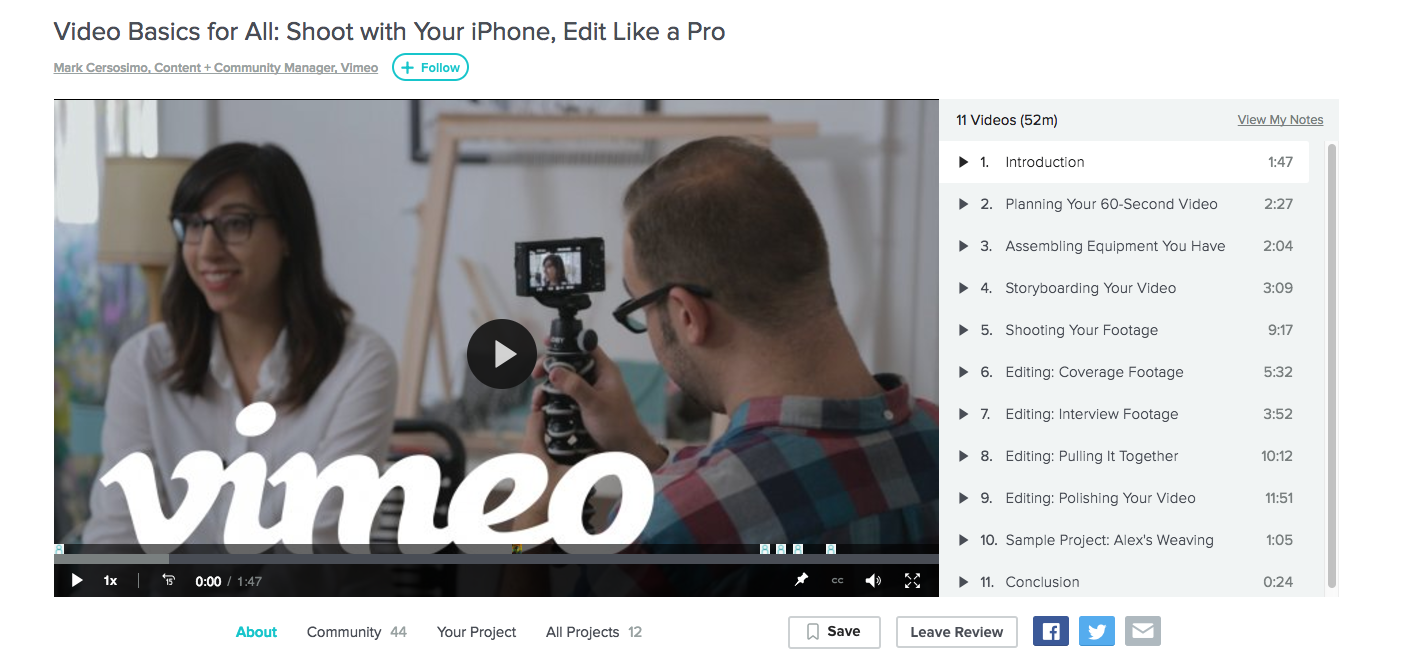
Shooting awesome video doesn't require you to run out and buy a thousand dollar camera--and this class is proof. Bring your story to life, impress your colleagues, or just pick up some cool video techniques in under an hour.
Length: 52 minutes/ 11 videos
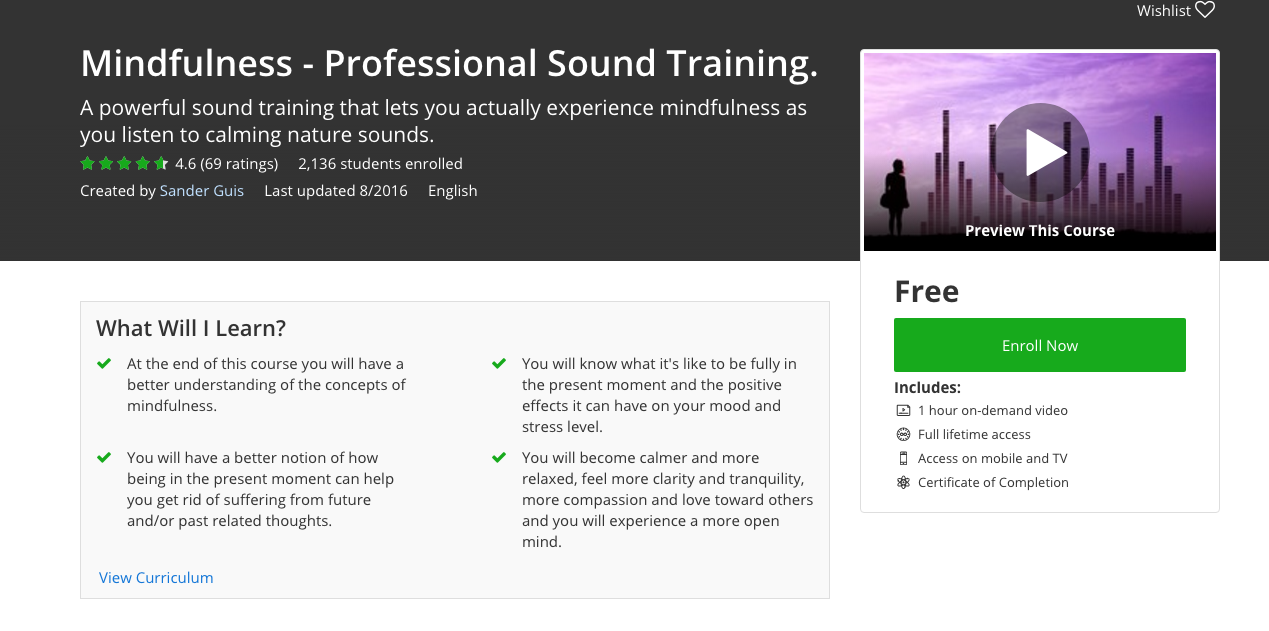
Reaping the benefits of mindfulness and meditation is just a click away. And, it (literally) sounds fun--that is, it'll use the noises of nature to get you in the zone (or, Zen).
Length: 52 minutes/ 14 lectures

Those first few hours of the day are essential if you want to be productive the rest of the day. Know how to optimize your mornings with these seven simple habits.
Length: 13 minutes/ 9 videos
If you end up signing up for one of these classes, bookmark this article: How to List Online Courses on Your Resume the Right Way . Because why not boost your career in the process of become more skilled?
Oh, and while we're on the topic of more skilled, have you check out our otherrecommended courses ? Don't want to brag, but they're all pretty great.
--This post originally appeared on the The Muse.
How about I make it a bit easier for you?
These 10 free online classes are not only fun, but they'll take you less than a week--if not less than an hour--to start and finish, meaning you can improve your life that much faster.
1. How to Be Happy and Have the Life You Want: Tools For Success , Udemy
You had me at the title. If you're striving to find more excitement in your career and life, this short course is the perfect way to get yourself in the mindset for success.
Requirements? A desire to be happier.
Length: 1 hour/ 17 lectures
2. How to Write Your Profile Summary on LinkedIn , Skillshare
Tackle this very tricky (but important) task of promoting yourself online with a step by step process and real-life examples for inspiration.
Length: 50 minutes/ 10 videos
3. A Mini Course on Time Management , Udemy
Learning about time management stresses us out when we think we're losing, well, time. Lucky for you, this class is only half an hour--and covers a heck of a lot.
Length: 37 minutes/ 12 lectures
4. Make Your Own 2048 , Udacity
Kick-start your coding career with this simple--but fun--class on the basics of HTML, CSS, and Javascript. And, if you're a big fan of the game "2048," you'll get to make your own version by the end!
Length: 1 day
5. The Core Four of Personal Finance , Udemy
If just the idea of personal finance overwhelms you, it shouldn't. It's super easy to save and spend wisely--and this course will teach you the basics to smart money.
Length: 1 hour/ 17 lectures
6. Learn to Think Differently , Skillshare
If you don't have all day to get creative, how about 10 minutes? That's all you'll really need to finish this super short class on innovation and creative thinking.
Length: 11 minutes/ 2 videos
7. Write What You Know , Udemy
Interested in taking up writing as a side hobby? Learn how to pick out stories from your life and put them down on paper in an effective way, and you're halfway there to writing a book (or, at least a blog post or two).
Length: 50 minutes/ 6 lectures
8. Video Basics for All: Shoot With Your iPhone, Edit Like a Pro , Skillshare
Shooting awesome video doesn't require you to run out and buy a thousand dollar camera--and this class is proof. Bring your story to life, impress your colleagues, or just pick up some cool video techniques in under an hour.
Length: 52 minutes/ 11 videos
9. Mindfulness: Professional Sound Training , Udemy
Reaping the benefits of mindfulness and meditation is just a click away. And, it (literally) sounds fun--that is, it'll use the noises of nature to get you in the zone (or, Zen).
Length: 52 minutes/ 14 lectures
10. 7 Morning Habits to Level-Up Your Daily Productivity and Creativity , Skillshare
Those first few hours of the day are essential if you want to be productive the rest of the day. Know how to optimize your mornings with these seven simple habits.
Length: 13 minutes/ 9 videos
If you end up signing up for one of these classes, bookmark this article: How to List Online Courses on Your Resume the Right Way . Because why not boost your career in the process of become more skilled?
Oh, and while we're on the topic of more skilled, have you check out our otherrecommended courses ? Don't want to brag, but they're all pretty great.
--This post originally appeared on the The Muse.
The opinions expressed here by Inc.com columnists are their own, not those of Inc.com.
7 Questions Interesting People Always Ask in Conversations
Replace
those typical (and boring, I may add) questions like, 'What do you do
for a living?' with these refreshing questions that lead to great
conversations.

Want to be the most interesting person in the room? Well, whether you're introverted or extroverted,
it doesn't really matter: There are things one must do to have the kind
of captivating conversations that will attract others to your social
circle.
Before I get to the seven questions that will ignite those conversations, if you don't apply these three principles first, you may as well toss in the towel now.
George Mason University psychologist Todd Kashdan, author of Curious?, conducted one of the studies and wasn't surprised by his findings: "Being interested is more important in cultivating a relationship and maintaining a relationship than being interesting; that's what gets the dialogue going. It's the secret juice of relationships," stated Kashdan in Great Good.
Fellow Inc. columnist Rhett Power, co-founder of Wild Creations, says "curiosity drives interest: What does this person think, what makes him 'tick,' how does she do that, what does he want to happen, how does she view the world? And people with humility understand that they don't have all the answers and that each person they meet, each experience, has something to teach them."
Before I get to the seven questions that will ignite those conversations, if you don't apply these three principles first, you may as well toss in the towel now.
1. Know when you're being boring.
Most of us don't have a good internal barometer for knowing when we bore others, since we think we're so fascinating. Take this advice from Scott Adams, author of How to Fail at Almost Everything and Still Win Big: Kind of the Story of My Life: Be brief, be positive.- Brief: Make it a habit of being to the point and not dragging on and on. People who talk slowly, pause a long time before responding, and process their thoughts in mid-sentence will lose the listener faster than you can spell b-o-r-i-n-g.
- Positive: Stay upbeat in conversation (beware of polarizing topics like religion and politics), and avoid being serious, monotone and a bump on a log -- show emotions, laugh at people's jokes, smile when they smile, and make light of awkward situations.
2. Be curious.
Several studies published in The Greater Good Science Center seem to agree that curious people have better relationships. The research suggests that curious people connect better, cope better with rejection, and enjoy socializing more. In fact, other people are more easily attracted and feel socially closer to individuals that display curiosity.George Mason University psychologist Todd Kashdan, author of Curious?, conducted one of the studies and wasn't surprised by his findings: "Being interested is more important in cultivating a relationship and maintaining a relationship than being interesting; that's what gets the dialogue going. It's the secret juice of relationships," stated Kashdan in Great Good.
Fellow Inc. columnist Rhett Power, co-founder of Wild Creations, says "curiosity drives interest: What does this person think, what makes him 'tick,' how does she do that, what does he want to happen, how does she view the world? And people with humility understand that they don't have all the answers and that each person they meet, each experience, has something to teach them."
3. Tell a good story (or two).
It's good to a few go-to stories you can pull out of your hat when you sense a conversation losing momentum. Have stories you can share that are well-rehearsed, meaning, they've been tested with other audiences and found to be reliably funny, entertaining, informative or engaging. Scott Adams suggests putting your focus on stories about other people, rather than things, because most of us find human behavior fascinating.7 questions that lead to great conversations
You meet someone for the first time, get his or her name and strike up a conversation. The next thing out of you mouth may be:- What's up?
- What do you do?
- Where are you from?
1. What's your story?
It's open-ended enough to trigger an intriguing story -- a journey to a foreign country, living out of a van while touring in a rock band, getting funded for the startup of your dreams, a special God-given talent used for improving lives, etc.2. What was the highlight of your day (or week)?
This question sets the mood for the conversation to be on a positive note right off the bat, giving the other person a chance to reflect on something they're excited about.3. What is one of your most defining moments in life?
Another great question that invites the speaker to share on a deeper level, which builds momentum and rapport quicker. Obviously, a few "casual" questions before this one helps to set the mood for hearing about a profound moment or transition in that person's life.4. What book has influenced you the most?
Books that have made an impact can lead to more personal and inviting conversations because of its life changing effect on people. Asking this question will deepen your connection as you understand how it altered the person's life in some way. It also leads to asking more interesting, follow-up questions.5. What was your dream job growing up?
A great way to introspectively draw out unique stories from someone's childhood. We all dreamed about being something growing up -- a doctor, a police officer, an astronaut, a super hero, and so on. Connect the dots to the present by asking if they still have those same aspirations as adults (including being a super hero!)6. If you could know the absolute and total truth to one question, what question would you ask?
For me, it's too obvious: Who really killed JFK? Perhaps for the person you just asked, it's "Is there a God?" Whatever the question -- serious, cerebral, funny, or ridiculous -- it's interesting enough to clue you in to the other person's interests, values, beliefs or sense of humor.7. Why did you choose your profession?
This is one of those questions I call "peeling the conversational onion." Learning about how people landed in their given profession has layers. It'll tell you what defines them, what motivates them, what they're passionate about and whether their work is their calling or purpose. It may also trigger a different, more thought-provoking, response: Some people aren't happy in their jobs. By asking, you may be in the position to assist or mentor a person through a career or job transition.Closing thought.
Did you notice a refreshing pattern in these questions? Perhaps you're not used to it, but it starts with you taking the initiative and making it about them. People love to talk about themselves -- if they have something worth talking about that adds value to the conversation. Once they know you're not a wacko, by asking first, you're being interested and showing interest. This selfless act of putting the spotlight on someone else makes you the more interesting person in the room.2017年4月13日
10 Habits of the Most Confident People
Confidence breeds success. Are you as confident (and successful) as you can be?

When
I look back on my 20s, I see two different versions of myself. The
first five years were dominated by feelings of insecurity and anxiety. I
was living a life I did not want, and I wasn't confident enough to stop
it. Then, in the second half of my 20s, I learned to embrace my purpose
and began living the life I wanted -- the life of an entrepreneur. One
thing is clear: The success I've experienced while launching and growing SkyBell would not have been possible with my old mindset.
Now at age 32, I can clearly see my shift from a negative mindset to a success mindset was caused by my developing more confidence. When you feel confident, the whole world seems to belong to you. You suddenly surround yourself with other successful and confident people, and both opportunities and success come your way with ease.
Here are 10 ways you can develop the mindset shared by the most confident people.
Now at age 32, I can clearly see my shift from a negative mindset to a success mindset was caused by my developing more confidence. When you feel confident, the whole world seems to belong to you. You suddenly surround yourself with other successful and confident people, and both opportunities and success come your way with ease.
Here are 10 ways you can develop the mindset shared by the most confident people.
1. Define your purpose.
It's hard to be confident in what you're doing if you're not sure why you're doing it. What is your purpose in work and in life? Once you identify your "why," you'll be more confident because you'll be coming from a place of purpose.2. Avoid comparing yourself with others.
In almost every case, when you compare yourself with someone else, it takes the form of negative self-talk about how you're not good enough. Doing this weakens self-confidence. The only person you need to compare yourself with is the version of yourself that you want to become. That's it.3. Focus on solutions.
There will always be challenges. But focusing solely on a problem is a self-defeating practice. Instead, acknowledge that problems will arise, and when they do, focus on finding solutions as a strong leader. The more problems you overcome, the more confidence you'll build and the easier it will be to find solutions.4. Play to your strengths.
Sometimes we spend more time making up for our perceived weaknesses than we do honoring our strengths. While I certainly agree with improving weaknesses, you might find that your confidence will increase when you play up your strengths. For example, if you're not good at math (like me), don't be a CFO. Stick with your strengths.5. Fake it till you make it.
If you suffer from imposter syndrome, or the untrue belief that you're not good enough, just pretend to be confident. Keep embracing the idea that you're already successful. You might not be convinced at first, but eventually your thoughts will follow your emotions and you'll become a more confident person.6. Take action.
Fear can be paralyzing. Ignore the voice in your head telling you that you can't do something, and take action anyway. The more you let fear hold you back, the stronger the negative voice will become. It works in the other direction too: The more you take action, the quieter the negative voice will become.7. Take pride in your appearance.
When you look good, you'll feel good. When you feel good, you feel confident. Wear the clothes you want to wear. Invest in how you look and you'll invest in your own success.8. Focus on the positive.
Negative self-talk and pessimism are a vicious cycle, and a drain on your confidence. Focus on your positive attributes instead of perceived weaknesses; focus on your accomplishments rather than on your perceived failures. Keep focused on what is working instead of what is not working.9. Be ready.
Success is part preparation and part opportunity. Study, practice, and do what it takes to prepare yourself for when the right opportunity knocks on your door. If you're prepared, you are more likely to have the confidence to capitalize on the opportunity.10. Embrace the power of body language.
Body language speaks much louder than words. When you're feeling down on yourself, change your posture: Pull your shoulders back, hold your head high, stand with your feet wide and put your hands in the air like a superhero. Notice how the new stance quickly changes your mood and boosts your confidence.Final word.
There is no magic solution that will suddenly make you a more confident person. But when you focus on making consistent and small steps, you can transform yourself from a fixed mindset to a growth mindset. Building confidence is like building momentum: Just keep taking action and you'll feel more and more confident with each positive step.2017年3月13日
Science Says These 11 Body Language Secrets Will Make You More Successful

If
you're like me, you don't ever think about how you stand, sit, or move.
But we should, because other people instinctively pick up on nonverbal
signals we send.
And there's an even better reason to think about body language: Science shows we pick up on our own nonverbal signals. How we stand, how we sit, and the gestures we make can have a dramatic impact on how we think, feel, and perform.
Fortunately, it's easy. You don't have to think about using body language to your advantage all day. Instead, just pick the times when you need a little boost of confidence, of creativity, or just to feel happier.
Like:
1. Want to be more sincere? Use the power of touch.
Touch can influence behavior, increase the chances of compliance, make the person doing the touching seem more attractive and friendly, and can even help you make a sale.
For example, in one experiment the participants tried to convey 12 different emotions by touching another blindfolded participant on the forearm. The rate of accuracy for perceiving emotions such as fear, anger, gratitude, sympathy, love, and disgust ranged from 43 to 83 percent -- without a word being spoken.
Say you're congratulating someone; shaking hands or (possibly better yet, depending on the situation) patting him or her gently on the shoulder or upper arm can help reinforce the sincerity of your words.
The person will feel better about him- or herself -- and you'll feel better about yourself, because you will know you made a difference, however small, in another person's life.
2. Want to be more innovative and creative? Lie down.
According to Australian National University professor Darren Lipnicki, lying down can lead to creative breakthroughs.
"It might be that we have our most creative thoughts while flat on our back," he says. One reason might be that more of the chemical noradrenaline is released while we're standing, and noradrenaline could inhibit our ability to think creatively.
Sweet: Now we all have a great excuse to lay back, relax, and just think.
3. Want to have greater willpower and determination? Flex your muscles.
Say you're at the doctor and you need bloodwork. The sight of the needle automatically makes you tense up. Why? That's your body's way of trying to minimize pain.
Flexing your muscles also helps you to stay more focused when you hear negative information. And flexing can even increase your ability to resist eating tempting food.
(Sounds like we should be flexing all day.)
4. Want to feel more determined and persistent? Cross your arms.
I know. Crossed arms signal to other people that you're closed-minded or anxious. It supposedly sends a negative signal.
On the other hand, crossing your arms will make you stick with an "unsolvable" problem a lot longer and will make you perform better on solvable problems. That's definitely cool, because persistence is a trait most successful entrepreneurs need in abundance.
In addition, crossing your arms can help calm you down if you feel anxious or stressed. (But if you don't want others to pick up on it, do that in private.)
Whenever you feel stuck, try crossing your arms. And then keep pushing ahead.
5. Want to feel more confident? Do your best impression of Superman.
Harvard professor Amy Cuddy says two minutes of power posing -- standing tall, holding your arms out or toward the sky, or standing like Superman with your hands on your hips -- will dramatically increase your level of confidence.
Before you step into a situation where you know you'll feel nervous, insecure, or intimidated, strike your pose. (Just make sure no one is watching.)
I do it for a few minutes before every speaking gig. It definitely works.
6. Want to reduce stress? Smile.
Frowning, grimacing, and other negative facial expressions signal your brain that whatever you are doing is difficult. So your body responds by releasing cortisol, which raises your stress levels.
Stress begets more stress, begets more stress, and in no time, you're a hot mess.
Here's the cure: Make yourself smile. You'll feel less stress even if nothing else about the situation changes.
And there's a bonus: When you smile, other people feel less stress too. Which, of course, will reduce your stress levels. So kill two stresses with one smile.
(By the way, smiling also makes exercising easier. Say you're doing reps with a heavy weight. It's natural to grimace. But if you force yourself to smile, you'll often find you can do one or two more reps. Try it, but be prepared for other gym rats to look at you oddly.)
7. Want to make other people feel more comfortable? (And make yourself feel more comfortable?) Tilt your head forward.
Tilting your head forward slightly when you meet someone shows deference and humility, and can help remove any perceived differences in status.
The next time you meet someone, tilt your head forward slightly, smile, make eye contact, and show you are honored by the introduction.
We all like people who like us, so if I show you I'm genuinely happy to meet you, you'll instantly start to like me. And, in return, that will show me that you like me, and that will help calm my nerves and help me be myself.
Win-win.
8. Want to better understand someone else's feelings? Mimic their nonverbal expressions.
I know it sounds strange, but research shows that imitating other people's nonverbal expressions can help you understand the emotions they are experiencing.
Since we all express our emotions nonverbally, copying those expressions affects our own emotions due to an "afferent feedback mechanism."
In short: Mimic my expressions and you'll better understand how I feel -- which means you can better help me work through those feelings. Plus, mimicking facial expressions (something we often do without thinking) makes the other person feel the interaction was more positive.
9. Want to defuse an interpersonal conflict? Stand at an angle.
When tensions are high, standing face to face seems confrontational. (Standing really closely, face to face, seems really confrontational.)
When you know what you say could make another person feel challenged, shift your feet slightly. Stand or sit at an angle. And if you're confronted by someone, don't back away. Just shift to create a slight angle. You'll implicitly reduce any perceived confrontation and may make an uncomfortable conversation feel less adversarial.
10. Want to improve information retention? Use your hands.
Research shows requiring children to speak while they are learning has no effect on enhancing learning -- but requiring them to gesture helps them retain the knowledge they gain.
If it works for kids, it will work for us, too. According to one researcher, "Gesturing can thus play a causal role in learning, perhaps by giving learners an alternative, embodied way of representing new ideas."
Sounds good to me.
11. Want to feel happier and more upbeat? Chew gum.
Granted, chomping on a wad of gum may not look professional. Still, a number of studies show chewing gum can make you more alert.
And improve your reaction times. And improve selective and sustained attention. And improve your disposition.
Here's a thought: The next time you need to solve a difficult problem, lie down, cross your arms, and pop in a stick of gum. Maybe, just maybe, that will be the winning combination you need to achieve your next breakthrough.
And there's an even better reason to think about body language: Science shows we pick up on our own nonverbal signals. How we stand, how we sit, and the gestures we make can have a dramatic impact on how we think, feel, and perform.
Fortunately, it's easy. You don't have to think about using body language to your advantage all day. Instead, just pick the times when you need a little boost of confidence, of creativity, or just to feel happier.
Like:
1. Want to be more sincere? Use the power of touch.
Touch can influence behavior, increase the chances of compliance, make the person doing the touching seem more attractive and friendly, and can even help you make a sale.
For example, in one experiment the participants tried to convey 12 different emotions by touching another blindfolded participant on the forearm. The rate of accuracy for perceiving emotions such as fear, anger, gratitude, sympathy, love, and disgust ranged from 43 to 83 percent -- without a word being spoken.
Say you're congratulating someone; shaking hands or (possibly better yet, depending on the situation) patting him or her gently on the shoulder or upper arm can help reinforce the sincerity of your words.
The person will feel better about him- or herself -- and you'll feel better about yourself, because you will know you made a difference, however small, in another person's life.
2. Want to be more innovative and creative? Lie down.
According to Australian National University professor Darren Lipnicki, lying down can lead to creative breakthroughs.
"It might be that we have our most creative thoughts while flat on our back," he says. One reason might be that more of the chemical noradrenaline is released while we're standing, and noradrenaline could inhibit our ability to think creatively.
Sweet: Now we all have a great excuse to lay back, relax, and just think.
3. Want to have greater willpower and determination? Flex your muscles.
Say you're at the doctor and you need bloodwork. The sight of the needle automatically makes you tense up. Why? That's your body's way of trying to minimize pain.
Flexing your muscles also helps you to stay more focused when you hear negative information. And flexing can even increase your ability to resist eating tempting food.
(Sounds like we should be flexing all day.)
4. Want to feel more determined and persistent? Cross your arms.
I know. Crossed arms signal to other people that you're closed-minded or anxious. It supposedly sends a negative signal.
On the other hand, crossing your arms will make you stick with an "unsolvable" problem a lot longer and will make you perform better on solvable problems. That's definitely cool, because persistence is a trait most successful entrepreneurs need in abundance.
In addition, crossing your arms can help calm you down if you feel anxious or stressed. (But if you don't want others to pick up on it, do that in private.)
Whenever you feel stuck, try crossing your arms. And then keep pushing ahead.
5. Want to feel more confident? Do your best impression of Superman.
Harvard professor Amy Cuddy says two minutes of power posing -- standing tall, holding your arms out or toward the sky, or standing like Superman with your hands on your hips -- will dramatically increase your level of confidence.
Before you step into a situation where you know you'll feel nervous, insecure, or intimidated, strike your pose. (Just make sure no one is watching.)
I do it for a few minutes before every speaking gig. It definitely works.
6. Want to reduce stress? Smile.
Frowning, grimacing, and other negative facial expressions signal your brain that whatever you are doing is difficult. So your body responds by releasing cortisol, which raises your stress levels.
Stress begets more stress, begets more stress, and in no time, you're a hot mess.
Here's the cure: Make yourself smile. You'll feel less stress even if nothing else about the situation changes.
And there's a bonus: When you smile, other people feel less stress too. Which, of course, will reduce your stress levels. So kill two stresses with one smile.
(By the way, smiling also makes exercising easier. Say you're doing reps with a heavy weight. It's natural to grimace. But if you force yourself to smile, you'll often find you can do one or two more reps. Try it, but be prepared for other gym rats to look at you oddly.)
7. Want to make other people feel more comfortable? (And make yourself feel more comfortable?) Tilt your head forward.
Tilting your head forward slightly when you meet someone shows deference and humility, and can help remove any perceived differences in status.
The next time you meet someone, tilt your head forward slightly, smile, make eye contact, and show you are honored by the introduction.
We all like people who like us, so if I show you I'm genuinely happy to meet you, you'll instantly start to like me. And, in return, that will show me that you like me, and that will help calm my nerves and help me be myself.
Win-win.
8. Want to better understand someone else's feelings? Mimic their nonverbal expressions.
I know it sounds strange, but research shows that imitating other people's nonverbal expressions can help you understand the emotions they are experiencing.
Since we all express our emotions nonverbally, copying those expressions affects our own emotions due to an "afferent feedback mechanism."
In short: Mimic my expressions and you'll better understand how I feel -- which means you can better help me work through those feelings. Plus, mimicking facial expressions (something we often do without thinking) makes the other person feel the interaction was more positive.
9. Want to defuse an interpersonal conflict? Stand at an angle.
When tensions are high, standing face to face seems confrontational. (Standing really closely, face to face, seems really confrontational.)
When you know what you say could make another person feel challenged, shift your feet slightly. Stand or sit at an angle. And if you're confronted by someone, don't back away. Just shift to create a slight angle. You'll implicitly reduce any perceived confrontation and may make an uncomfortable conversation feel less adversarial.
10. Want to improve information retention? Use your hands.
Research shows requiring children to speak while they are learning has no effect on enhancing learning -- but requiring them to gesture helps them retain the knowledge they gain.
If it works for kids, it will work for us, too. According to one researcher, "Gesturing can thus play a causal role in learning, perhaps by giving learners an alternative, embodied way of representing new ideas."
Sounds good to me.
11. Want to feel happier and more upbeat? Chew gum.
Granted, chomping on a wad of gum may not look professional. Still, a number of studies show chewing gum can make you more alert.
And improve your reaction times. And improve selective and sustained attention. And improve your disposition.
Here's a thought: The next time you need to solve a difficult problem, lie down, cross your arms, and pop in a stick of gum. Maybe, just maybe, that will be the winning combination you need to achieve your next breakthrough.
2017年3月4日
8 Things Worth Remembering When Everything Goes Wrong
Writer and blogger Marc Chernoff believes that there is always
something to be thankful for. And that no matter how good or bad things
are, you must wake up each day and be thankful for your life, because
someone somewhere else is desperately fighting for theirs.
The truth is that happiness is not the absence of problems, but
the ability to deal with them. Imagine all the wondrous things your mind
might embrace if it weren’t wrapped so tightly around your struggles.
Always look at what you have, instead of what you have lost. Because
it’s not what the world takes away from you that counts; it’s what you
do with what you have left.
Here are some of Marc’s ideas which might help motivate you when you need it most.
1. Pain is part of growing
Sometimes life closes doors because it’s time to move forward.
And that’s a good thing because we often won’t move unless circumstances
force us to. When times are tough, remind yourself that no pain comes
without a purpose. Move on from what hurt you, but never forget what
it taught you. Just because you’re struggling doesn’t mean you’re
failing. Every great success requires some type of worthy struggle
to get there. Good things take time. Stay patient and stay positive.
Everything is going to come together; maybe not immediately, but
eventually.
Remember that there are two kinds of pain: pain that hurts and
pain that changes you. When you roll with life, instead of resisting it,
both kinds help you grow.
2. Everything in life is temporary
Every time it rains, it stops raining. Every time you get hurt,
you heal. After darkness there is always light — you are reminded
of this every morning, but still you often forget, and instead choose
to believe that the night will last forever. It won’t. Nothing lasts
forever.
So if things are good right now, enjoy it. It won’t last forever.
If things are bad, don’t worry because it won’t last forever either.
Just because life isn’t easy at the moment, doesn’t mean you can’t
laugh. Just because something is bothering you, doesn’t mean you can’t
smile. Every moment gives you a new beginning and a new ending. You get
a second chance, every second. You just have to take it and make the
best of it.
3. Worrying and complaining changes nothing
Those who complain the most, accomplish the least. It’s always
better to attempt to do something great and fail than to attempt
to do nothing and succeed. It’s not over if you’ve lost; it’s over when
you do nothing but complain about it. If you believe in something, keep
trying. Don’t let the shadows of the past darken the doorstep of your
future. Spending today complaining about yesterday won’t make tomorrow
any brighter. Take action instead. Let what you’ve learned improve how
you live. Make a change and never look back.
And regardless of what happens in the long run, remember that
true happiness begins to arrive only when you stop complaining about
your problems and you start being grateful for all the problems you
don’t have.
4. Your scars are symbols of your strength
Don’t ever be ashamed of the scars life has left you with. A scar
means the hurt is over and the wound is closed. It means you conquered
the pain, learned a lesson, grew stronger, and moved forward. A scar
is the tattoo of a triumph to be proud of. Don’t allow your scars
to hold you hostage. Don’t allow them to make you live your life
in fear. You can’t make the scars in your life disappear, but you can
change the way you see them. You can start seeing your scars as a sign
of strength and not pain.
Rumi once said, “The wound is the place where the Light enters
you.“ Nothing could be closer to the truth. Out of suffering have
emerged the strongest souls; the most powerful characters in this great
world are seared with scars. See your scars as a sign of ”YES! I MADE
IT! I survived and I have my scars to prove it! And now I have a chance
to grow even stronger."
5. Every little struggle is a step forward
In life, patience is not about waiting; it’s the ability to keep
a good attitude while working hard on your dreams, knowing that the work
is worth it. So if you’re going to try, put in the time and go all the
way. Otherwise, there’s no point in starting. This could mean losing
stability and comfort for a while, and maybe even your mind on occasion.
It could mean not eating what, or sleeping where, you’re used to, for
weeks on end. It could mean stretching your comfort zone so thin
it gives you a nonstop case of the chills. It could mean sacrificing
relationships and all that’s familiar. It could mean accepting ridicule
from your peers. It could mean lots of time alone in solitude. Solitude,
though, is the gift that makes great things possible. It gives you the
space you need. Everything else is a test of your determination, of how
much you really want it.
And if you want it, you’ll do it, despite failure and rejection
and the odds. And every step will feel better than anything else you can
imagine. You will realize that the struggle is not found on the path,
it is the path. And it’s worth it. So if you’re going to try, go all the
way. There’s no better feeling in the world...there’s no better feeling
than knowing what it means to be ALIVE.
6. Other people’s negativity is not your problem
Be positive when negativity surrounds you. Smile when others try
to bring you down. It’s an easy way to maintain your enthusiasm and
focus. When other people treat you poorly, keep being you. Don’t ever
let someone else’s bitterness change the person you are. You can’t take
things too personally, even if it seems personal. Rarely do people
do things because of you. They do things because of them.
Above all, don’t ever change just to impress someone who says
you’re not good enough. Change because it makes you a better person and
leads you to a brighter future. People are going to talk regardless
of what you do or how well you do it. So worry about yourself before you
worry about what others think. If you believe strongly in something,
don’t be afraid to fight for it. Great strength comes from overcoming
what others think is impossible.
All jokes aside, your life only comes around once. This is IT.
So do what makes you happy and be with whoever makes you smile, often.
7. What’s meant to be will, eventually, BE
True strength comes when you have so much to cry and complain
about, but you prefer to smile and appreciate your life instead. There
are blessings hidden in every struggle you face, but you have
to be willing to open your heart and mind to see them. You can’t force
things to happen. You can only drive yourself crazy trying. At some
point you have to let go and let what’s meant to be, BE.
In the end, loving your life is about trusting your intuition,
taking chances, losing and finding happiness, cherishing the memories,
and learning through experience. It’s a long-term journey. You have
to stop worrying, wondering, and doubting every step of the way. Laugh
at the confusion, live consciously in the moment, and enjoy your life
as it unfolds. You might not end up exactly where you intended to go,
but you will eventually arrive precisely where you need to be.
8. The best thing you can do is to keep going
Don’t be afraid to get back up — to try again, to love again,
to live again, and to dream again. Don’t let a hard lesson harden your
heart. Life’s best lessons are often learned at the worst times and from
the worst mistakes. There will be times when it seems like everything
that could possibly go wrong is going wrong. And you might feel like you
will be stuck in this rut forever, but you won’t. When you feel like
quitting, remember that sometimes things have to go very wrong before
they can be right. Sometimes you have to go through the worst, to arrive
at your best.
Yes, life is tough, but you are tougher. Find the strength
to laugh every day. Find the courage to feel different, yet beautiful.
Find it in your heart to make others smile too. Don’t stress over things
you can’t change. Live simply. Love generously. Speak truthfully. Work
diligently. And even if you fall short, keep going. Keep growing.
2017年2月27日
如何讓自己靜下來?4位名人安定身心術
- 作者 : 吳若女
- 圖片來源 : 呂恩賜
生活上的浮燥不安、工作上的焦慮壓力,需要安靜與思考,才能知道接下去要走的方向與目標。《康健雜誌》特別採訪幾位成功忙碌的人物︰ 紀政、卡內基訓練中心副總經理黑立言、大眾銀行副總經理黃秀華、 佳姿養生工程館的負責人蔡純真,分享他們安定身心的方法。
幾乎每個人都有這樣的經驗。辦公室有做不完的事,家也有處理不完的東西,從老闆同事,到配偶小孩,好像每個人都伸手向你要時間和精力。
於是,你盡其所能,使出渾身解數,希望能夠滿足每個人的需求。但最後你卻發現自己精疲力竭,再也沒有辦法做什麼,工作效率一直在降低,脾氣也暴躁到隨時可以崩潰,半夜無法入眠,因為心裡著急焦慮,沒辦法安靜下來。
有時候,真想躲起來,離開這個世界,讓什麼人也找不到。有時候,也知道自己到了一個極限,想要放鬆,卻怎麼也靜不下來,不知道該怎麼放鬆?
隨時隨地放鬆
有「飛躍羚羊」之稱的紀政,早年曾是叱吒田徑場的運動員,現在是熱心活躍的體育大使,為各式各樣的活動代言或奔走,密密麻麻的行程說明了她現在的生活。
剪著一頭短髮的紀政,俏麗清爽,她打開行事曆,細細地解釋自己的行程排了哪些事、要見什麼人。常常是早上六、七點就出門,晚上十一、二點才能回到家,而且是一個星期七天,幾乎是全年無休。
這麼滿的行程,怎麼安靜和放鬆自己?紀政形容自己不會特別花時間去靜坐,而是隨時隨地在放鬆。「我有鬧中取靜的本領,在很混亂的環境或氣氛,我可以關掉外在所有的雜音,進入一種安靜的心靈狀態,」她說。
這個能耐得力於早年運動員的生涯,通常,運動員的壓力會在比賽前達到最高點,因此,每個傑出的運動員都必須學會放鬆的技巧,才能有正常完美的表現。而紀政已經把這種本領完全融入到生活,可以隨時隨地保持在平靜安穩的狀態。
她最常做的,是盡其所能地回想生命中最美好的事物,想想看什麼事情會讓自己快樂?可能是一幅畫或一首歌,也可能是一段話或一個心愛的人。當一個人快樂的時候,就很容易放鬆安靜了。
除了回想自己喜歡的東西,紀政還喜歡哼唱歌曲,哼著哼著,心也會快樂起來。
「自我對話」是紀政讓自己鬧中取靜的第三個好方法,不停地跟自己說說話,鼓勵自己,紀政笑瞇瞇地透露心的秘密,她說:「我啊,最常跟自己講Behappy、Betough。」一直講一直講,心真的就安靜、踏實了。
這種讓心靈「瞬間放鬆」的方法,可以不限次數的反覆使用,又不會打擾到正在進行的工作。日積月累的練習,可以讓生活變得平緩、舒適而且平靜。
但如果這種瞬間放鬆的方法還不能成為生命中的一部份,也許可以試試「中場休息」的方式。
找一個週末、一個下午,或者每天的晚上或清晨,給自己一個「停下來」的時間,什麼事都不做,或者做一些喜歡的事情,讓自己放鬆安靜。
卡內基訓練中心副總經理黑立言曾有一段時間是個到處講課的空中飛人,星期一在台南、星期二到嘉義、星期三到台中、星期四回到台北,像古時候的驛馬車,一站一站走下去。
黑立言的忙碌不只在辦公室,還延伸到外面的戰場,這樣的舟車勞頓,當然更容易帶來一顆疲憊浮燥的心。身材微胖、笑起來像個開心佛的黑立言回憶,的確有一段時間是疲倦不堪,加上國外引進的課程,並不能完全適用中南部的情況,更是讓他心煩,靜不下來。
但慢慢地,他發現在等交通工具,抵達下個目的地前的一段時間,是個安靜的好時光。他會看一本喜歡的書,放鬆自己,或者打開電腦記下飛快的新點子,讓模糊的思緒變得更加清晰,慢慢發展為成熟具體的想法。
黑立言後來發現,有很多教學或工作上的難題,的確是在那段時間找出答案的。一直到現在,他養成每天安靜的習慣,等孩子和太太都上床了,再聽點音樂,慢慢地放鬆、安靜,很自然地也就入睡了。性子開朗的他很滿意地形容,這樣一覺到天明,第二天精神會很好。
善用封鎖時間
早上六點鐘,當許多人還沉睡在夢鄉,大眾銀行副總經理黃秀華已經神采奕奕地走進辦公室,帶著外頭清新的陽光與空氣,開始一段安靜的時光。辦公室空無一人,沒有響個不停的電話,也沒有鼎沸的人聲,更沒有不斷進來請示的部屬,只有她一個人,安安靜靜地,沉思與放鬆。
這是她每天在工作上的沉澱時光。接著,看過電腦和桌面上所回覆的文件,黃秀華開始規劃一天的工作重點和優先順序,靜謐的氣氛讓思緒格外清晰,很快地就能工作,發電子郵件給底下的部屬,下達工作指令。等其他人都進辦公室,她開始處理和其他人一起做的工作,如開會或討論。
通常,黃秀華能在下午五點就結束一天的工作,輕鬆愉快地回家陪一對雙胞胎兒子。之前還在美國銀行消費理財部擔任主管時,很多人就覺得不可思議,因為一個外商銀行的主管怎麼可能在五點鐘就下班,但是她會不慌不忙地解釋,這是她善用「封鎖時間」的結果。
在時間管理學上,專家會建議經理人每天應該有一段屬於自己的封鎖時間,在這段時間,不接任何電話或打擾,安靜思考,可能是做重要的決策,也可能是規劃一般性的事物,或者是執行某些重要的事情。
有一項數據顯示,一般的主管,每6分鐘就會被打斷一次,這很容易影響工作效率,就像開車在路上一直遇到紅燈,當然會花比較多時間才到目的地,不像行駛在高速公路,可以一路暢通,直行到底。
生活上的浮燥不安,需要個人安靜地來沉澱,恢復活力。工作上的焦慮與壓力,有時候也需要一段「封鎖時間」來安靜與思考,才能知道接下去要走的方向與目標。
佳姿養生工程館的負責人蔡純真,原本是高中的國文老師,但是對舞蹈充滿了興趣,加上個人旺盛的企圖心,在二十幾年前就率先成立了韻律舞蹈中心。
評估過台灣的環境,她認為韻律中心也應該國際化,因此,在過去的18年,曾經和日本人、美國人及法國人合作,創設大小不等的韻律健身中心,吸取不同文化的長處。
擅於逆向操作,她會在一片不景氣中,為企業置產投資。曾在1990年法國經濟衰退時,買下他們不會輕易出售的國家級建築物。最近,也在台灣一片低迷聲中,斥資2億6千萬成立一個新的養生工程館,很多人嘖舌稱奇,但是她卻敢拍著胸脯說,我對台灣人有信心。
在風光亮麗的背後,蔡純真也曾經歷過身體的病痛與婚姻的危機,事業也一直在創新與求變。除了擁有一顆不服輸的企圖心,蔡純真是透過每天的日記來整理自己。
每天睡覺前是她振筆疾書的時間,除了寫下見了什麼人、做了什麼事、有什麼感覺,最重要的是,今天碰到什麼困擾,有什麼問題是不能解決的?
行動力極強的蔡純真可是沒辦法帶著不痛快的心情上床睡覺,在寫的過程中,她會試著去找出問題所在,若是沒辦法第二天解決,至少會把它變成是下個月或下個星期的完成目標。
「我是把心情變成事情,」樂觀的蔡純真說。她分析,一個人靜不下來,通常是被混亂的情緒所攪擾,沒有把心情變成事情,如果能夠把心情變成事情,那麼去處理事情就好了。
儘管文字的處理都已經進入電腦化的時代,蔡純真還是喜歡一筆一畫寫下來,充分享受書寫的樂趣,當過國文老師的她,字寫得又快又漂亮,把思緒轉換成文字,事情變得簡單容易,蔡純真的心也跟著掏空、安靜下來了。
讓生命留白
在極度緊繃的日子,應該讓亢奮或混亂的心情有紓緩的機會。當下就放鬆,也可以抓住空檔時間安靜。
但不管用什麼方法,要讓自己有停下來再出發的機會。一如中國的山水畫,留白是最高境界,很難,但要去學習。
於是,你盡其所能,使出渾身解數,希望能夠滿足每個人的需求。但最後你卻發現自己精疲力竭,再也沒有辦法做什麼,工作效率一直在降低,脾氣也暴躁到隨時可以崩潰,半夜無法入眠,因為心裡著急焦慮,沒辦法安靜下來。
有時候,真想躲起來,離開這個世界,讓什麼人也找不到。有時候,也知道自己到了一個極限,想要放鬆,卻怎麼也靜不下來,不知道該怎麼放鬆?
隨時隨地放鬆
有「飛躍羚羊」之稱的紀政,早年曾是叱吒田徑場的運動員,現在是熱心活躍的體育大使,為各式各樣的活動代言或奔走,密密麻麻的行程說明了她現在的生活。
剪著一頭短髮的紀政,俏麗清爽,她打開行事曆,細細地解釋自己的行程排了哪些事、要見什麼人。常常是早上六、七點就出門,晚上十一、二點才能回到家,而且是一個星期七天,幾乎是全年無休。
這麼滿的行程,怎麼安靜和放鬆自己?紀政形容自己不會特別花時間去靜坐,而是隨時隨地在放鬆。「我有鬧中取靜的本領,在很混亂的環境或氣氛,我可以關掉外在所有的雜音,進入一種安靜的心靈狀態,」她說。
這個能耐得力於早年運動員的生涯,通常,運動員的壓力會在比賽前達到最高點,因此,每個傑出的運動員都必須學會放鬆的技巧,才能有正常完美的表現。而紀政已經把這種本領完全融入到生活,可以隨時隨地保持在平靜安穩的狀態。
她最常做的,是盡其所能地回想生命中最美好的事物,想想看什麼事情會讓自己快樂?可能是一幅畫或一首歌,也可能是一段話或一個心愛的人。當一個人快樂的時候,就很容易放鬆安靜了。
除了回想自己喜歡的東西,紀政還喜歡哼唱歌曲,哼著哼著,心也會快樂起來。
「自我對話」是紀政讓自己鬧中取靜的第三個好方法,不停地跟自己說說話,鼓勵自己,紀政笑瞇瞇地透露心的秘密,她說:「我啊,最常跟自己講Behappy、Betough。」一直講一直講,心真的就安靜、踏實了。
這種讓心靈「瞬間放鬆」的方法,可以不限次數的反覆使用,又不會打擾到正在進行的工作。日積月累的練習,可以讓生活變得平緩、舒適而且平靜。
但如果這種瞬間放鬆的方法還不能成為生命中的一部份,也許可以試試「中場休息」的方式。
找一個週末、一個下午,或者每天的晚上或清晨,給自己一個「停下來」的時間,什麼事都不做,或者做一些喜歡的事情,讓自己放鬆安靜。
卡內基訓練中心副總經理黑立言曾有一段時間是個到處講課的空中飛人,星期一在台南、星期二到嘉義、星期三到台中、星期四回到台北,像古時候的驛馬車,一站一站走下去。
黑立言的忙碌不只在辦公室,還延伸到外面的戰場,這樣的舟車勞頓,當然更容易帶來一顆疲憊浮燥的心。身材微胖、笑起來像個開心佛的黑立言回憶,的確有一段時間是疲倦不堪,加上國外引進的課程,並不能完全適用中南部的情況,更是讓他心煩,靜不下來。
但慢慢地,他發現在等交通工具,抵達下個目的地前的一段時間,是個安靜的好時光。他會看一本喜歡的書,放鬆自己,或者打開電腦記下飛快的新點子,讓模糊的思緒變得更加清晰,慢慢發展為成熟具體的想法。
黑立言後來發現,有很多教學或工作上的難題,的確是在那段時間找出答案的。一直到現在,他養成每天安靜的習慣,等孩子和太太都上床了,再聽點音樂,慢慢地放鬆、安靜,很自然地也就入睡了。性子開朗的他很滿意地形容,這樣一覺到天明,第二天精神會很好。
善用封鎖時間
早上六點鐘,當許多人還沉睡在夢鄉,大眾銀行副總經理黃秀華已經神采奕奕地走進辦公室,帶著外頭清新的陽光與空氣,開始一段安靜的時光。辦公室空無一人,沒有響個不停的電話,也沒有鼎沸的人聲,更沒有不斷進來請示的部屬,只有她一個人,安安靜靜地,沉思與放鬆。
這是她每天在工作上的沉澱時光。接著,看過電腦和桌面上所回覆的文件,黃秀華開始規劃一天的工作重點和優先順序,靜謐的氣氛讓思緒格外清晰,很快地就能工作,發電子郵件給底下的部屬,下達工作指令。等其他人都進辦公室,她開始處理和其他人一起做的工作,如開會或討論。
通常,黃秀華能在下午五點就結束一天的工作,輕鬆愉快地回家陪一對雙胞胎兒子。之前還在美國銀行消費理財部擔任主管時,很多人就覺得不可思議,因為一個外商銀行的主管怎麼可能在五點鐘就下班,但是她會不慌不忙地解釋,這是她善用「封鎖時間」的結果。
在時間管理學上,專家會建議經理人每天應該有一段屬於自己的封鎖時間,在這段時間,不接任何電話或打擾,安靜思考,可能是做重要的決策,也可能是規劃一般性的事物,或者是執行某些重要的事情。
有一項數據顯示,一般的主管,每6分鐘就會被打斷一次,這很容易影響工作效率,就像開車在路上一直遇到紅燈,當然會花比較多時間才到目的地,不像行駛在高速公路,可以一路暢通,直行到底。
生活上的浮燥不安,需要個人安靜地來沉澱,恢復活力。工作上的焦慮與壓力,有時候也需要一段「封鎖時間」來安靜與思考,才能知道接下去要走的方向與目標。
佳姿養生工程館的負責人蔡純真,原本是高中的國文老師,但是對舞蹈充滿了興趣,加上個人旺盛的企圖心,在二十幾年前就率先成立了韻律舞蹈中心。
評估過台灣的環境,她認為韻律中心也應該國際化,因此,在過去的18年,曾經和日本人、美國人及法國人合作,創設大小不等的韻律健身中心,吸取不同文化的長處。
擅於逆向操作,她會在一片不景氣中,為企業置產投資。曾在1990年法國經濟衰退時,買下他們不會輕易出售的國家級建築物。最近,也在台灣一片低迷聲中,斥資2億6千萬成立一個新的養生工程館,很多人嘖舌稱奇,但是她卻敢拍著胸脯說,我對台灣人有信心。
在風光亮麗的背後,蔡純真也曾經歷過身體的病痛與婚姻的危機,事業也一直在創新與求變。除了擁有一顆不服輸的企圖心,蔡純真是透過每天的日記來整理自己。
每天睡覺前是她振筆疾書的時間,除了寫下見了什麼人、做了什麼事、有什麼感覺,最重要的是,今天碰到什麼困擾,有什麼問題是不能解決的?
行動力極強的蔡純真可是沒辦法帶著不痛快的心情上床睡覺,在寫的過程中,她會試著去找出問題所在,若是沒辦法第二天解決,至少會把它變成是下個月或下個星期的完成目標。
「我是把心情變成事情,」樂觀的蔡純真說。她分析,一個人靜不下來,通常是被混亂的情緒所攪擾,沒有把心情變成事情,如果能夠把心情變成事情,那麼去處理事情就好了。
儘管文字的處理都已經進入電腦化的時代,蔡純真還是喜歡一筆一畫寫下來,充分享受書寫的樂趣,當過國文老師的她,字寫得又快又漂亮,把思緒轉換成文字,事情變得簡單容易,蔡純真的心也跟著掏空、安靜下來了。
讓生命留白
在極度緊繃的日子,應該讓亢奮或混亂的心情有紓緩的機會。當下就放鬆,也可以抓住空檔時間安靜。
但不管用什麼方法,要讓自己有停下來再出發的機會。一如中國的山水畫,留白是最高境界,很難,但要去學習。
2017年2月21日
If You Think You Are Going Nowhere In Life, Take A Deep Breath And Read This
In today’s fast-paced world, we are all in a hurry. In a hurry to get to where we are going, in a hurry to get successful, in a hurry to get things done. We get dejected when things don’t happen our way, when results are not achieved instantly. It’s a race and we are scared of being left behind. The age of achievement has decreased. Fifteen-year-olds are developing codes and selling websites. By the time you are 25, you have a company of your own. Or you are an accomplished musician who has travelled the world. People are doing too much in too little time. Only some people.
 © Pexels
 © Thinkstock/Getty Images
“You are unique, don't compare yourself to others.
Someone graduated at the age of 22, yet waited 5 years before securing a good job; and there is another who graduated at 27 and secured employment immediately!
Someone became CEO at 25 and died at 50 while another became a CEO at 50 and lived to 90 years.
Everyone works based on their 'Time Zone'. People can have things worked out only according to their pace.
Work in your “time zone”. Your Colleagues, friends, younger ones might "seem" to go ahead of you. May be some might "seem" behind you. Everyone is in this world running their own race on their own lane in their own time. God has a different plan for everybody. Time is the difference.
Obama retires at 55, Trump resumes at 70. Don't envy them or mock them, it's their 'Time Zone.' You are in yours!”
 © Pexels
Maybe that lost job was not right for you. Maybe you are meant to hone your skills for something great later. There is no right time. We get things when we are ready for them. When it doesn’t happen for you, it means it’s not supposed to happen right now. No point worrying yourself sick and envying another.
Spend your time polishing your personality, acquiring new skills, learning a new language – create the person you want to be in future. Create the personality that will match your success. Work towards your goal at your own pace. Everybody has their own timeline. What if you are meant to do something worthwhile in some years when you are older and wiser, but you were too busy feeling bad about yourself and drowning your woes in alcohol. Imagine the regret.
Opportunities never cease to come. If today is not your day, it could be tomorrow. Don’t stop living your life just because it isn’t happening.
2017年2月17日
18 Proven Ways to Be More Confident
No famous quotes, no lofty ideas... just actions that lead to greater confidence and greater success.

 There are some people -- I'm sure you know a few -- who seem to possess genuine confidence. It's as if they were born that way.
The rest of us are not as confident as we'd like to be -- especially in those challenging or stressful moments when we most need to believe in ourselves.
Fortunately for us, self-confidence is a quality we can develop. Anyone -- even me -- can develop greater confidence.
And that's really important, because in order to succeed, we need to be the best at what we do.
ADVERTISING
Here's Mareo:
The main thing that will help you step up your game from wanting to be the best and actually being the best are the actions you take. You need to practice your craft, find mentors... and have the ability to share your skills and talents with others.
That takes confidence.
Confidence leads to courage. Courage is not the absence of fear, though. Courage is taking action in spite of fear. (Without fear, you don't need courage.)
Developing confidence is not found in theories, but in action.
Here are 18 proven ways you can develop greater confidence:
1. Show Gratitude.
Thank someone. Thank anyone. Write a letter. Make a phone call. Find a reason to be grateful, find out who made that possible, and thank them.
Thank yourself too.
2. Act With Kindness.
Don't treat others how you want to treated. That is selfish. Treat them how they want to be treated. Most people want to be treated with honesty, transparency and kindness. Kindness is hard because you need to stop thinking about yourself.
Be kind. When you are kind, you will also be treated better by others. This will give you confidence to keep being kind and most importantly, to truly be yourself around others.
3. Define Your Values.
Not in your head. On paper. Get a pen and write them down. The define them. Do just write down integrity, define what integrity means to you. Jot down some examples. Make a commitment to live those values.
4. Find Your True Motivations.
Once you know what your values are, those values help you understand what motivates you. This will take some reverse memory engineering. Think back on four or five of your favorite memories. Write down why those experiences impacted you so strongly. Write down what caused those situations, who was involved, how you felt, how those experiences have affected you since. Write it all down.
Then make a mind map to find the connections. Answer this question: What similarities did all of these experiences have? Those similarities were driven by a true deep desire... that desire is your motivation. Was it the human connection? Was it the ability to solve a problem? Was it the chance to create?
Find the underlying similarities, and that is how you reverse engineer those experiences to find your true motivations.
5. Take Special Care to Look Better Than Usual.
Not everyone wants to look good. I don't. But we all perform better when we look better. Get over it.
6. Perform a Little Mental Photoshop.
We are what we expect. Change your personal expectations and you will change your life. Picture yourself the way you want to be seen by others.
Your subconscious mind will take over and you will become that person.
7. Smile More.
Humans were made to smile. Humans react to smiles. We can't help it. Smile more. You will be happier. Happiness leads to confidence. If you are not happy, watch a comedy show on Netflix.
Find a way to smile, especially when you don't want to.
8. Visualize Success.
If you can't picture it, no one else will either. Define what you want. Imagine it. Try to feel what it will feel like to be what you want, to have what you want. Hold on to those images. Hold on to those feelings.
9. Erase Negative Thoughts.
Goes hand-in-hand with visualization. Your thoughts become your reality. You have to learn to be aware of how you talk to yourself. When I am doing work I am not particularly good at, or when I exercise, sometimes my inner voice will start saying, "This is too much; do something else. I want to stop and go read a book."
The trick I learned is to stop listening to that voice by imagining the voice as a person, tell that person to leave, and they leave. If they don't leave, I get a big fat pink eraser and erase the person saying the negative thoughts. Erasers work.
10. Prepare, with Focus.
If you are prepared you will be able to decrease your fear. Some fear is needed, too much fear prevents growth. When you are prepared, you feel confident.
Study hard. Practice hard. Know your stuff.
11. Slow Down Your Speech.
Talk more slowly. People who talk fast either don't care about others or have anxiety issues. (We all show aspects of both.) Speaking slowly lets others know you care about them, while also showing you are not worried about what to say next.
Speaking slowly is a confident action.
12. Serve Others.
When you think about others and what they need, it is impossible to feel sad for yourself. Serving others erases millions of personal problems. Focusing on others lets you feel useful and forget about what is wrong with your life.
You will accomplish something worthwhile and your confidence will increase as you actively serve.
13. Focus on Solutions. Solutions Are More Important Than Problems.
Thinking about problems increases anxiety. Understanding the problem is not the same as focusing on the problem, once you have the facts, change your mindset to be solution oriented. Focus on what is possible rather than what currently "is."
14. Fix Your Posture.
I have really bad posture, that is why I know this works. Stand tall, sit up straight, be present. Others will notice. You will notice.
15. Learn More.
You can't be the best unless you know enough. If you don't know enough it is impossible to be confident. Learn from the best. Then learn more.
16. Set Goals. Then Set Bigger Goals.
Set a small goal. Accomplish it. Success breeds success. Set another small goal. Kill it. Then set a bigger goal, own it. Then set a bigger goal. Keep setting and slaying your goals.
17. Exercise More Than Last Week.
Improvement is key. Movement is vital to confidence. Movement creates action. Movement increase blood flow. The more you move, the more you will succeed.
More success = more confidence.
18. Clean Your Space.
Clarity of space allows for clarity of thought. Clean your space once a week. Allow yourself to throw away things. Keep what helps you help others, if it doesn't create good for you or others, throw it out. The fewer distractions you have the more you can focus on taking proper actions. The right actions lead to positive experiences.
Positive experiences lead to confidence.
Success is not measured by way we are viewed by others, though, but rather by the impact we have others.
The only thing that can create lasting impact is action. Take action to build confidence. This confidence will guide you to share your talents.
Then use your talents to help others.
The opinions expressed here by Inc.com columnists are their own, not those of Inc.com.
2017年2月15日
有人說過,我們的憂慮不會帶走明天的難過, 只會帶走今天的力氣。
http://www.read-life.com
十月 15, 2016 4019

憂慮
It has been said that our anxiety does not empty tomorrow of its sorrow, but only empties today of its strength.
有人說過,我們的憂慮不會帶走明天的難過, 只會帶走今天的力氣。
──查爾斯‧司布真
憂慮對你的情緒、身體以及心靈健康是絕對沒有任何好處的。它可以將一件小事渲染成一樁大事,如重石般壓得你喘不過氣,為你的生活烙下又長又暗的陰影。時間一久,你可能就會變成一個習慣性憂慮的人,以為最糟的事將接踵而至,生活完全被恐懼佔據。
「有多重要?」這是當你在憂慮的時候,可以拿來問自己的一個好問題,因為問題的答案將引領你的注意力集中在正確的方向上。你還可以思考其他的問題: 「我目前可以做什麼?」當你集中精神在解決惱人的事情上,你可能會發現,那些讓你煩惱的已經發生了或者還沒發生的事情,前者你無力回天,後者你則沒辦法控制。
在你的內心自有一股力量,可以將你的憂慮繼續豢養成一隻巨獸。當然,這股力量或從今天起,亦可將憂慮縮小至合理的大小。放輕鬆地過日子,試著不要把時間浪費在擔心已成定局的事情或根本還沒發生的事情上。不僅於事無補,反而加重心理的負擔。
你可以讓自己活在當下,讓憂慮適得其所。
憂慮使我徒增壓力。今天, 走在陽光下,以便看清楚並感受一切正在發生的美好事物。

生命美在事與願違:讓你重新找回笑容的88則勇敢小語
作者: 長澤玲子
譯者:馬曉玲
出版社:啟思
It has been said that our anxiety does not empty tomorrow of its sorrow, but only empties today of its strength.
有人說過,我們的憂慮不會帶走明天的難過, 只會帶走今天的力氣。
──查爾斯‧司布真
憂慮對你的情緒、身體以及心靈健康是絕對沒有任何好處的。它可以將一件小事渲染成一樁大事,如重石般壓得你喘不過氣,為你的生活烙下又長又暗的陰影。時間一久,你可能就會變成一個習慣性憂慮的人,以為最糟的事將接踵而至,生活完全被恐懼佔據。
「有多重要?」這是當你在憂慮的時候,可以拿來問自己的一個好問題,因為問題的答案將引領你的注意力集中在正確的方向上。你還可以思考其他的問題: 「我目前可以做什麼?」當你集中精神在解決惱人的事情上,你可能會發現,那些讓你煩惱的已經發生了或者還沒發生的事情,前者你無力回天,後者你則沒辦法控制。
在你的內心自有一股力量,可以將你的憂慮繼續豢養成一隻巨獸。當然,這股力量或從今天起,亦可將憂慮縮小至合理的大小。放輕鬆地過日子,試著不要把時間浪費在擔心已成定局的事情或根本還沒發生的事情上。不僅於事無補,反而加重心理的負擔。
你可以讓自己活在當下,讓憂慮適得其所。
憂慮使我徒增壓力。今天, 走在陽光下,以便看清楚並感受一切正在發生的美好事物。
生命美在事與願違:讓你重新找回笑容的88則勇敢小語
作者: 長澤玲子
譯者:馬曉玲
出版社:啟思
2017年2月14日
從自己會的事情開始做起──提升工作能力的方法

從自己會的事情開始做起──提升工作能力的方法
方法1 掌握「時間就是金錢」的工作奧義
本章我們的重點非常技術性,也就是如何提高自己的工作能力。要讓工作起來更得心應手,提高自我「能力」也是非常重要的一件事。因此,本章後半段我們會以擁有工作技術為前提,再來談到關於思考方式的重要性。
要做好一件工作,首先必須做好時間管理。
基本上這個世界分配給所有人的時間都是一樣的。儘管有金錢或社會地位的不平等,甚至有人出生在富貴人家,有人出生在貧窮家庭的天生不平等,但每個人所擁有的一天都是二十四個小時,沒有人會多出一分鐘,也沒有人會少一分鐘。
有句諺語:「時間就是金錢」,寫成英文則是「Time is money」。除了字面上的意思「時間就是金錢」之外,我認為還有另一種解釋,就是「懂得時間管理的人,才能創造財富」。
我們一般把它稱為時間管理,就是如何有效地運用這些有限的資源,也就是造物主分配給所有人的時間。
雖然我並沒有強調要善用時間,但可以肯定的是:忙碌是一件難能可貴的事。它可以幫助我們提升運用時間的能力,因為你必須思考如何在短時間內做同樣的事情。但令人遺憾的是,大多數的人都是「玩樂時間」比較多,換句話說就是浪費掉的時間比較多。
接下來我們要來談點技術性的話題,也就是關於時間管理的訣竅。
方法2 消除抗拒開始工作的訣竅
如果曾經觀察過那些工作能力不好的人,就會發現到他們通常都有一種傾向,就是要花很久的時間才肯開始著手工作。而那些工作能力強的人,則是很快就能進入狀況開始著手工作。
工作能力差的人往往對開始著手工作有很強烈的抗拒感,所以他們總是會找一些藉口來拖延。比如說:「還是先喝杯咖啡再開始工作吧……」或是「打開電腦之後,先看一下臉書再說吧!」甚至讓旁邊的人都忍不住想插嘴說:「真是的,你還不快點去工作。」
相反地,工作能力強的人都會認真思考事情的優先順序,然後先從非做不可的事情開始處理。
此外再補充一點,就是工作能力強的人也很善於營造好的工作環境,讓自己馬上就能夠進入狀況。工作能力差的人通常都不會收拾整理房間或桌子,電腦桌面上也有很多圖像。
如此一來,就算要找個東西也要花點時間,找東西花的時間越久,就越抗拒開始著手工作。為了避免發生這種情形,最好先把眼前工作必要的東西準備好,讓你立刻就可以進入工作狀況。平時就應該養成好的習慣,替自己營造這樣的工作環境。
讓辦公桌保持隨時可以開始動工的狀態
要消除抗拒開始工作的心態,光是收拾整理桌面還不夠。以我為例,經常讓桌上保持隨時可以開始做下一項工作的狀態。
舉例來說,如果隔天必須寫一篇稿子,我就會在前一天工作結束時,把準備好的資料先拿出來放在桌上後再離開辦公室。隔天一早進入辦公室時,馬上就能進入工作狀態,減少抗拒感。
如果當想寫封電子郵件給某人時,剛好有客戶來訪,我就會先打開電子郵件,輸入寄件人信箱再離開座位。如果有必須要寫的文章,就會先打開電腦的文件檔案。
總之,就是要讓辦公桌保持隨時可以開始動工的狀態。如此一來,不想立刻動手工作的抗拒感就會減少很多,隨時都可以進入工作的狀態。
此外,在工作時會使用到的一些文具,也可以事先備妥自己喜歡的款式。
例如,一枝三千日圓的鋼筆和五千日圓的鋼筆,當然用五千日圓的鋼筆會讓人更想要工作。在寫信給重要的客戶時,如果是用自己喜歡的鋼筆來寫,心情也會比較好,比較不會有抗拒感。相反地,如果用的是一枝難寫的鋼筆,往往會讓人心生放棄吧!
挑選可以提高工作士氣的文具,也可以降低對工作的抗拒感。只要稍微用點心思,工作心情可是會大大的不同。
方法3 用行事曆管理時間
時間管理不可或缺的一項道具就是「行事曆」。
不過務必要使用適當的行事曆才行,像學生們偶爾會使用的行事曆,一天只有一格空間的記事本並不合適,而只有分上午和下午的行事曆也一樣不適合。因為空格很少,只寫一個行程就沒有多餘的空間可以寫其他了,會讓人有種忙碌的錯覺。
現代人通常要查看自己是否有空閒,都會打開行事曆查看一下空白的部分。因此唯有使用適當的行事曆,才能清楚地掌握自己的行程,同時還可以防止自己陷入忙碌錯覺的恐慌之中。
建議大家使用以一個小時為區分的行事曆。我也曾經使用過電子行事曆大約兩年,優點是很方便,可以輸入大量的資料,缺點則是要輸入很麻煩,也無法一覽無遺。最後我還是恢復使用紙本的行事曆。
我現在使用的分別是英國的「Let’s diary」行事曆,以及我自創的「小宮一慶商務人士行事曆」兩種。
「Let’s diary」的行事曆是用來管理行程表,而小宮一慶行事曆則是用來管理代辦事項,以及記下一些比較在意的數字。後者因為附有二十年來景氣指標的統計資料等等,使用起來非常方便。
如果你使用的是那種只有分上下午或一天只有一個空格的簡單行事曆,建議不妨趁這個機會把它換掉,這樣才能正確掌握自己的空閒時間。如此一來,一定會發現自己可以運用的時間其實比想像中還要多。
正確使用行事曆,擺脫忙、雜、亂
再來是關於行事曆的使用方法,先來介紹一下我的使用方式吧!
我會先把「行程表」和「待辦事項」分開,「行程表」部分會把例如「演講從幾點開始到幾點結束」寫下來,事先決定好要花多少時間。
至於諸如「要寫電子郵件給某某人」或「校稿」等等的事,雖然有期限,但什麼時候做都可以,就會把它們歸類為待辦事項。
要先能夠正確地掌握行程表,再利用空檔處理一些待辦事項。不妨以一星期為一個單位,只要能夠確實掌握行程,不管多麼忙碌都不會讓自己陷入手忙腳亂的狀態。萬一真的遇到很忙碌的時候,就會提早進公司處理一些該做的待辦事項。
你是否曾經有過這樣的經驗:要處理的事情很多,但就只是一昧地感到心急如焚而已,事情卻沒有任何的進展。
事實上,只要能夠正確地掌握「待辦事項」和「所要花費的時間」以及「自己的空閒時間」,先把它寫在行事曆上面,就不至於出現手忙腳亂的情形。
我自認應該算是全日本最忙碌的那種管理顧問吧!每年要到二百多個地方演講和研修,不光是待在東京而已,還要全國走透透。我不僅擔任數十家公司的董事或顧問,而且自己還開公司,每個月還要到大阪電視錄影兩次。光是去年,我就搭了一百三十三次的新幹線和八十趟的飛機。
除此之外,我每個月在雜誌上連載的文章就超過十幾篇,每年還要趁空檔寫書,大約出版十幾本的著作,還要出席義工活動。處於這種忙碌的狀態下,依然能夠「妥善安排行程」,行事曆居功厥偉。
集中精力做只有自己才能處理的事
至於為什麼只要能夠妥善地安排行程,工作能力就會比較好呢?那是因為可以正確地掌握行程和待辦事項的關係。如此一來,一些可以交待下屬去做的事即能完全委由下屬去做,例如:安排行程就全權交由祕書去做,至於調查或蒐集必要的資料等事可以請員工進行,然後便能集中精力去做那些只有自己才能處理的事情。
即使再忙碌,我每年為了工作而犧牲睡眠的次數頂多只有幾次而已,每天都會睡飽七個小時,甚至比一般上班族睡得都還要好。
我是在用腦力工作,最重要的就是「靈感」,如果因為睡眠不足而讓頭腦變得昏沉遲鈍,就算絞盡腦汁也想不出好的點子來,有時反而是在靈光乍現的時候,才會得到正確的結論。如果因為時間不夠而讓自己陷入恐慌,後果往往不堪設想。在這種情況下去開會或演講,對客戶是非常失禮的。
誠摯建議大家都能夠養成這種習慣,正確地掌握「該做的事情」和「要花多少時間」,以及「自己的空閒時間」。如此一來,應該就會發現多出很多空檔。
如果把多出來的時間用來進修學習,一定可以提升自己的身價;休假時則多多增加和家人相處的時間或從事休閒活動,畢竟「時間就是金錢」啊!
方法4 無法提早到公司的人就輸了
我向來不熬夜的,這不是很理所當然的嗎?因為一旦熬夜,隔天便無法早起。
大多數的上班族若無法在白天展現工作績效,是無法獲得好評的,如果是那種獨自在家寫作的人則另當別論,他們似乎比較喜歡在深夜時分工作。畢竟一般的上班族幾乎都不會在深夜工作,所以務必讓自己在白天卯足全力才行。
進一步來說,最好在白天,也就是早上的時間就能夠讓自己維持在最佳狀態中。擠在人滿為患的捷運裡,在快要遲到之前及時趕到,雖然沒有違反公司規定,但我必須很嚴苛的說:晚進公司的人,當下就已經輸了。
每天上班都能提早抵達的好處有哪些呢?不但有足夠的時間可以瀏覽報紙,還可以知道那些比自己晚到的同事都在做些什麼。相對的,那些很晚才到公司的人,不但無法在擁擠的捷運上看報紙,甚至完全不知道那些比自己早到的人都在做些什麼。單就這一點來看,就已經完全輸給早到的同事了。
利用早到時間跟上司交換資訊
此外,通常在公司位居要膱的人都會提早進公司。以前有句話諷刺上班遲到的人說他們是「董事上班」,現在這樣的人則是「無法成為公司要膱的人」。等真正成為公司的大咖之後才上班遲到,也不會落人口舌。但通常一般上班族的上班時間都是從早上九點開始,如果老是拖到十點才進公司,也難怪會被公司炒魷魚。
在公司身居要職或想要成為大咖的人,通常都會提早進公司。而且早到的人有時間可以跟上司交換資訊,甚至在非正式的場合得到上司的建言。而是否能夠利用早上的時間跟上司交換資訊,對你往後的發展影響極大。
從上司的立場來看,也會認為那些願意提早進公司的員工,肯定是比較值得疼愛的下屬,他們通常不會把重要的任務交給那些經常遲到,還不時打哈欠的人。
同時提早進公司比較有機會可以請教公司大咖一些意見,因為在上班之前還有充分時間可以請教一些比較棘手的問題。
至於那些姍姍來遲的人,大概都是在上司最忙碌的尖峰時間向上司問道:「我有件事想要找你商量一下」或「能不能聽我說一下下呢?只要耽誤你兩、三分鐘的時間就好了……」
上司可能會很客氣地拒絕,因為有時候可能會忙到連兩、三分鐘的空閒時間都沒有。
另外,擠著人滿為患的捷運或公車及時趕到公司上班,很可能在還沒開始工作之前就已經沒有心情和體力了,萬一遇到出乎意料之外的狀況導致上班遲到,在精神上也會大受影響。
所以提早進公司的好處是非常多的。
好好運用自己的起始時間
如果能在白天上班時保持良好的狀態,進而找出自己工作最起勁的時間點,就能利用那段時間集中精神工作,提高工作效率。我把這個稱為「起始的時間」,因為時間也有輕重。
以我為例,完全是屬於上午型態的,所以都會利用這段時間處理一些比較棘手的問題或寫作。至於體力最差的時段則是在下午,所以下午的工作效率最低。因此吃過午餐之後,頭腦還不是很清醒的這段時間,如果沒有安排行程,我就會利用這段時間整理一下書桌,或做一些不需要用到腦力的事。
另外,從下午開始也會安排一些比較不需要集中精神的工作,例如,新書簽名會或接待客人來訪等等。我會趁早上精神飽滿、身體狀況最好的時候去做一些適合的工作。
關鍵就在於如何善用自己的「起始時間」,集中精神處理一些可以提高生產效率的工作。
方法5 對方時間也一樣寶貴
雖然前面我們談了一些如何有效運用時間的方法,但也不能只在意到自己的時間,同時也要顧慮到他人的時間。能夠考量到對方時間的人,往往也比較能夠善用下屬的時間。
比方說,行程表中剛好有安排兩個小時要跟客戶協商,如果在這之前就先交待下屬幫你去做某件事情,那麼下屬就可以趁這段時間幫你處理這件事。然而,那些無法做好時間管理的人,往往得等到跟客戶會談結束之後才臨時想到要交待屬下做事,遇到這種情況,想必也會造成屬下的困擾,畢竟是上司交待的工作,屬下也只能照單全收。
這裡所說的要考量到對方時間,所指的就是類似這種情形,不管對方是你的下屬或客戶都一樣。特別是在自己很閒的情況下,往往就無法體會到別人的忙碌。因此千萬要了解到這一點,對方的時間也是很寶貴的。
有效率地把握時間
記得我之前在外商銀行工作時,有位同事曾說,他只要跟某人見面之後,發現彼此談話的內容對雙方都沒有幫助,就會認為是在浪費時間,而給對方負面評價;相反地,如果聽到的內容有很大幫助的話,就會給予正面的評價。
對忙碌的人來說,時間就是最大的資源。同樣的,對於對方來說「時間就是金錢」。因此,不僅要把對方的時間納入考量,同時還必須盡量在最短時間內,告訴對方有用的資訊。
邁向成功,就從自己會的事開始做起:能力╳熱忱╳思考方式,助你職場無往不利
仕事の王道
作者: 小宮一慶
譯者:蕭照芳
出版社:寶鼎
方法1 掌握「時間就是金錢」的工作奧義
本章我們的重點非常技術性,也就是如何提高自己的工作能力。要讓工作起來更得心應手,提高自我「能力」也是非常重要的一件事。因此,本章後半段我們會以擁有工作技術為前提,再來談到關於思考方式的重要性。
要做好一件工作,首先必須做好時間管理。
基本上這個世界分配給所有人的時間都是一樣的。儘管有金錢或社會地位的不平等,甚至有人出生在富貴人家,有人出生在貧窮家庭的天生不平等,但每個人所擁有的一天都是二十四個小時,沒有人會多出一分鐘,也沒有人會少一分鐘。
有句諺語:「時間就是金錢」,寫成英文則是「Time is money」。除了字面上的意思「時間就是金錢」之外,我認為還有另一種解釋,就是「懂得時間管理的人,才能創造財富」。
我們一般把它稱為時間管理,就是如何有效地運用這些有限的資源,也就是造物主分配給所有人的時間。
雖然我並沒有強調要善用時間,但可以肯定的是:忙碌是一件難能可貴的事。它可以幫助我們提升運用時間的能力,因為你必須思考如何在短時間內做同樣的事情。但令人遺憾的是,大多數的人都是「玩樂時間」比較多,換句話說就是浪費掉的時間比較多。
接下來我們要來談點技術性的話題,也就是關於時間管理的訣竅。
方法2 消除抗拒開始工作的訣竅
如果曾經觀察過那些工作能力不好的人,就會發現到他們通常都有一種傾向,就是要花很久的時間才肯開始著手工作。而那些工作能力強的人,則是很快就能進入狀況開始著手工作。
工作能力差的人往往對開始著手工作有很強烈的抗拒感,所以他們總是會找一些藉口來拖延。比如說:「還是先喝杯咖啡再開始工作吧……」或是「打開電腦之後,先看一下臉書再說吧!」甚至讓旁邊的人都忍不住想插嘴說:「真是的,你還不快點去工作。」
相反地,工作能力強的人都會認真思考事情的優先順序,然後先從非做不可的事情開始處理。
此外再補充一點,就是工作能力強的人也很善於營造好的工作環境,讓自己馬上就能夠進入狀況。工作能力差的人通常都不會收拾整理房間或桌子,電腦桌面上也有很多圖像。
如此一來,就算要找個東西也要花點時間,找東西花的時間越久,就越抗拒開始著手工作。為了避免發生這種情形,最好先把眼前工作必要的東西準備好,讓你立刻就可以進入工作狀況。平時就應該養成好的習慣,替自己營造這樣的工作環境。
讓辦公桌保持隨時可以開始動工的狀態
要消除抗拒開始工作的心態,光是收拾整理桌面還不夠。以我為例,經常讓桌上保持隨時可以開始做下一項工作的狀態。
舉例來說,如果隔天必須寫一篇稿子,我就會在前一天工作結束時,把準備好的資料先拿出來放在桌上後再離開辦公室。隔天一早進入辦公室時,馬上就能進入工作狀態,減少抗拒感。
如果當想寫封電子郵件給某人時,剛好有客戶來訪,我就會先打開電子郵件,輸入寄件人信箱再離開座位。如果有必須要寫的文章,就會先打開電腦的文件檔案。
總之,就是要讓辦公桌保持隨時可以開始動工的狀態。如此一來,不想立刻動手工作的抗拒感就會減少很多,隨時都可以進入工作的狀態。
此外,在工作時會使用到的一些文具,也可以事先備妥自己喜歡的款式。
例如,一枝三千日圓的鋼筆和五千日圓的鋼筆,當然用五千日圓的鋼筆會讓人更想要工作。在寫信給重要的客戶時,如果是用自己喜歡的鋼筆來寫,心情也會比較好,比較不會有抗拒感。相反地,如果用的是一枝難寫的鋼筆,往往會讓人心生放棄吧!
挑選可以提高工作士氣的文具,也可以降低對工作的抗拒感。只要稍微用點心思,工作心情可是會大大的不同。
方法3 用行事曆管理時間
時間管理不可或缺的一項道具就是「行事曆」。
不過務必要使用適當的行事曆才行,像學生們偶爾會使用的行事曆,一天只有一格空間的記事本並不合適,而只有分上午和下午的行事曆也一樣不適合。因為空格很少,只寫一個行程就沒有多餘的空間可以寫其他了,會讓人有種忙碌的錯覺。
現代人通常要查看自己是否有空閒,都會打開行事曆查看一下空白的部分。因此唯有使用適當的行事曆,才能清楚地掌握自己的行程,同時還可以防止自己陷入忙碌錯覺的恐慌之中。
建議大家使用以一個小時為區分的行事曆。我也曾經使用過電子行事曆大約兩年,優點是很方便,可以輸入大量的資料,缺點則是要輸入很麻煩,也無法一覽無遺。最後我還是恢復使用紙本的行事曆。
我現在使用的分別是英國的「Let’s diary」行事曆,以及我自創的「小宮一慶商務人士行事曆」兩種。
「Let’s diary」的行事曆是用來管理行程表,而小宮一慶行事曆則是用來管理代辦事項,以及記下一些比較在意的數字。後者因為附有二十年來景氣指標的統計資料等等,使用起來非常方便。
如果你使用的是那種只有分上下午或一天只有一個空格的簡單行事曆,建議不妨趁這個機會把它換掉,這樣才能正確掌握自己的空閒時間。如此一來,一定會發現自己可以運用的時間其實比想像中還要多。
正確使用行事曆,擺脫忙、雜、亂
再來是關於行事曆的使用方法,先來介紹一下我的使用方式吧!
我會先把「行程表」和「待辦事項」分開,「行程表」部分會把例如「演講從幾點開始到幾點結束」寫下來,事先決定好要花多少時間。
至於諸如「要寫電子郵件給某某人」或「校稿」等等的事,雖然有期限,但什麼時候做都可以,就會把它們歸類為待辦事項。
要先能夠正確地掌握行程表,再利用空檔處理一些待辦事項。不妨以一星期為一個單位,只要能夠確實掌握行程,不管多麼忙碌都不會讓自己陷入手忙腳亂的狀態。萬一真的遇到很忙碌的時候,就會提早進公司處理一些該做的待辦事項。
你是否曾經有過這樣的經驗:要處理的事情很多,但就只是一昧地感到心急如焚而已,事情卻沒有任何的進展。
事實上,只要能夠正確地掌握「待辦事項」和「所要花費的時間」以及「自己的空閒時間」,先把它寫在行事曆上面,就不至於出現手忙腳亂的情形。
我自認應該算是全日本最忙碌的那種管理顧問吧!每年要到二百多個地方演講和研修,不光是待在東京而已,還要全國走透透。我不僅擔任數十家公司的董事或顧問,而且自己還開公司,每個月還要到大阪電視錄影兩次。光是去年,我就搭了一百三十三次的新幹線和八十趟的飛機。
除此之外,我每個月在雜誌上連載的文章就超過十幾篇,每年還要趁空檔寫書,大約出版十幾本的著作,還要出席義工活動。處於這種忙碌的狀態下,依然能夠「妥善安排行程」,行事曆居功厥偉。
集中精力做只有自己才能處理的事
至於為什麼只要能夠妥善地安排行程,工作能力就會比較好呢?那是因為可以正確地掌握行程和待辦事項的關係。如此一來,一些可以交待下屬去做的事即能完全委由下屬去做,例如:安排行程就全權交由祕書去做,至於調查或蒐集必要的資料等事可以請員工進行,然後便能集中精力去做那些只有自己才能處理的事情。
即使再忙碌,我每年為了工作而犧牲睡眠的次數頂多只有幾次而已,每天都會睡飽七個小時,甚至比一般上班族睡得都還要好。
我是在用腦力工作,最重要的就是「靈感」,如果因為睡眠不足而讓頭腦變得昏沉遲鈍,就算絞盡腦汁也想不出好的點子來,有時反而是在靈光乍現的時候,才會得到正確的結論。如果因為時間不夠而讓自己陷入恐慌,後果往往不堪設想。在這種情況下去開會或演講,對客戶是非常失禮的。
誠摯建議大家都能夠養成這種習慣,正確地掌握「該做的事情」和「要花多少時間」,以及「自己的空閒時間」。如此一來,應該就會發現多出很多空檔。
如果把多出來的時間用來進修學習,一定可以提升自己的身價;休假時則多多增加和家人相處的時間或從事休閒活動,畢竟「時間就是金錢」啊!
方法4 無法提早到公司的人就輸了
我向來不熬夜的,這不是很理所當然的嗎?因為一旦熬夜,隔天便無法早起。
大多數的上班族若無法在白天展現工作績效,是無法獲得好評的,如果是那種獨自在家寫作的人則另當別論,他們似乎比較喜歡在深夜時分工作。畢竟一般的上班族幾乎都不會在深夜工作,所以務必讓自己在白天卯足全力才行。
進一步來說,最好在白天,也就是早上的時間就能夠讓自己維持在最佳狀態中。擠在人滿為患的捷運裡,在快要遲到之前及時趕到,雖然沒有違反公司規定,但我必須很嚴苛的說:晚進公司的人,當下就已經輸了。
每天上班都能提早抵達的好處有哪些呢?不但有足夠的時間可以瀏覽報紙,還可以知道那些比自己晚到的同事都在做些什麼。相對的,那些很晚才到公司的人,不但無法在擁擠的捷運上看報紙,甚至完全不知道那些比自己早到的人都在做些什麼。單就這一點來看,就已經完全輸給早到的同事了。
利用早到時間跟上司交換資訊
此外,通常在公司位居要膱的人都會提早進公司。以前有句話諷刺上班遲到的人說他們是「董事上班」,現在這樣的人則是「無法成為公司要膱的人」。等真正成為公司的大咖之後才上班遲到,也不會落人口舌。但通常一般上班族的上班時間都是從早上九點開始,如果老是拖到十點才進公司,也難怪會被公司炒魷魚。
在公司身居要職或想要成為大咖的人,通常都會提早進公司。而且早到的人有時間可以跟上司交換資訊,甚至在非正式的場合得到上司的建言。而是否能夠利用早上的時間跟上司交換資訊,對你往後的發展影響極大。
從上司的立場來看,也會認為那些願意提早進公司的員工,肯定是比較值得疼愛的下屬,他們通常不會把重要的任務交給那些經常遲到,還不時打哈欠的人。
同時提早進公司比較有機會可以請教公司大咖一些意見,因為在上班之前還有充分時間可以請教一些比較棘手的問題。
至於那些姍姍來遲的人,大概都是在上司最忙碌的尖峰時間向上司問道:「我有件事想要找你商量一下」或「能不能聽我說一下下呢?只要耽誤你兩、三分鐘的時間就好了……」
上司可能會很客氣地拒絕,因為有時候可能會忙到連兩、三分鐘的空閒時間都沒有。
另外,擠著人滿為患的捷運或公車及時趕到公司上班,很可能在還沒開始工作之前就已經沒有心情和體力了,萬一遇到出乎意料之外的狀況導致上班遲到,在精神上也會大受影響。
所以提早進公司的好處是非常多的。
好好運用自己的起始時間
如果能在白天上班時保持良好的狀態,進而找出自己工作最起勁的時間點,就能利用那段時間集中精神工作,提高工作效率。我把這個稱為「起始的時間」,因為時間也有輕重。
以我為例,完全是屬於上午型態的,所以都會利用這段時間處理一些比較棘手的問題或寫作。至於體力最差的時段則是在下午,所以下午的工作效率最低。因此吃過午餐之後,頭腦還不是很清醒的這段時間,如果沒有安排行程,我就會利用這段時間整理一下書桌,或做一些不需要用到腦力的事。
另外,從下午開始也會安排一些比較不需要集中精神的工作,例如,新書簽名會或接待客人來訪等等。我會趁早上精神飽滿、身體狀況最好的時候去做一些適合的工作。
關鍵就在於如何善用自己的「起始時間」,集中精神處理一些可以提高生產效率的工作。
方法5 對方時間也一樣寶貴
雖然前面我們談了一些如何有效運用時間的方法,但也不能只在意到自己的時間,同時也要顧慮到他人的時間。能夠考量到對方時間的人,往往也比較能夠善用下屬的時間。
比方說,行程表中剛好有安排兩個小時要跟客戶協商,如果在這之前就先交待下屬幫你去做某件事情,那麼下屬就可以趁這段時間幫你處理這件事。然而,那些無法做好時間管理的人,往往得等到跟客戶會談結束之後才臨時想到要交待屬下做事,遇到這種情況,想必也會造成屬下的困擾,畢竟是上司交待的工作,屬下也只能照單全收。
這裡所說的要考量到對方時間,所指的就是類似這種情形,不管對方是你的下屬或客戶都一樣。特別是在自己很閒的情況下,往往就無法體會到別人的忙碌。因此千萬要了解到這一點,對方的時間也是很寶貴的。
有效率地把握時間
記得我之前在外商銀行工作時,有位同事曾說,他只要跟某人見面之後,發現彼此談話的內容對雙方都沒有幫助,就會認為是在浪費時間,而給對方負面評價;相反地,如果聽到的內容有很大幫助的話,就會給予正面的評價。
對忙碌的人來說,時間就是最大的資源。同樣的,對於對方來說「時間就是金錢」。因此,不僅要把對方的時間納入考量,同時還必須盡量在最短時間內,告訴對方有用的資訊。
邁向成功,就從自己會的事開始做起:能力╳熱忱╳思考方式,助你職場無往不利
仕事の王道
作者: 小宮一慶
譯者:蕭照芳
出版社:寶鼎
Want to Look More Intelligent? Science Says Do These 9 Things
hese subtle cues can give you an advantage just about any time you want to look more intelligent.

We'd all like to be smarter and more successful. But what if there were tactics you could use to make yourself seem more intelligent--regardless of your education or intelligence level?
Here are nine science-backed tactics to help you do just that. Even if you'd never use them, they're good to know--in case someone else is trying to use them on you.
"People over generalise in judging those with droopy eyelids and a frown as being tired and having a low mood, both of which have a well-documented detrimental effect on cognitive performance," the study's lead author told the Independent newspaper.
The research behind this claim comes from the journal Applied Cognitive Psychology, and its authors must have a sense of irony. The title they came up with for their article?

We'd all like to be smarter and more successful. But what if there were tactics you could use to make yourself seem more intelligent--regardless of your education or intelligence level?
Here are nine science-backed tactics to help you do just that. Even if you'd never use them, they're good to know--in case someone else is trying to use them on you.
1. Keep your eyes open (literally).
Writing in the Journal of Experimental Psychology, researchers said they found people whose eyes drooped were perceived as being less intelligent. Their theory is that drooping eyes suggested depression or fatigue, both of which "adversely affect cognitive capacity."2. Lose weight.
"A Czech study found that certain facial features--narrow faces, long noses, and thin chins--correlated with both perceived intelligence and attractiveness," reports The Atlantic. Barring plastic surgery, that means losing weight.3. Be perceived as a teetotaler.
Researchers at the universities of Pennsylvania and Michigan came up with this research, which they termed "the imbibing idiot bias." In short, they found that simply holding an alcoholic beverage leads people to be "perceived ... [as] ... less intelligent than those who do not."4. Wear thick glasses.
"Wearing eyeglasses can lead strangers to regard you as more intelligent," reports The Wall Street Journal, citing a 2011 study in the Swiss Journal of Psychology. However, the effect is most pronounced with thick glasses; wire rim or rimless glasses didn't carry the same benefit.5. Wear a subtle smile.
Similar to the findings on keeping your eyes open, the same study found that "mouth curvature"--basically a subtle smile--suggested increased intelligence."People over generalise in judging those with droopy eyelids and a frown as being tired and having a low mood, both of which have a well-documented detrimental effect on cognitive performance," the study's lead author told the Independent newspaper.
6. Never swear.
Harris Interactive surveyed 5,800 hiring managers and workers about their attitudes toward people who swear. Result: 54 percent said they thought swearing made people seem less intelligent. Larger percentages said it also made them seem less professional, and called into question their control and maturity.7. Make eye contact and look directly at people.
Nora A. Murphy, an associate professor of psychology at Loyola Marymount University in Los Angeles, has done extensive research in this area, which suggests that "one of the strongest and most accurate signs of intelligence is looking at others when you are speaking to them," she told The Wall Street Journal. "And put away that phone."8. Use a middle initial.
This one is straightforward. Writing in the European Journal of Social Psychology, British researchers said they found that "the display of middle initials increases positive evaluations of people's intellectual capacities and achievements."9. Speak clearly and pleasantly.
Some people try to use big words or confusing manners of speech to make themselves seem more intelligent. It turns out that's exactly the wrong thing to do. Instead, be as clear as possible in your communication.The research behind this claim comes from the journal Applied Cognitive Psychology, and its authors must have a sense of irony. The title they came up with for their article?
"Consequences of Erudite Vernacular Utilized Irrespective of Necessity: Problems With Using Long Words Needlessly."
订阅:
博文 (Atom)