2015年10月21日

5 Myths About Burnout (and the Truth We Need to Understand)

Misconceptions about the causes, the cure, and what it means can hold you back.
Posted Oct 12, 2015 
 
Lopolo/ShutterstockIt’s late at night and you’re dreading the thought of going to work in the morning. You used to be able to juggle all of the demands of the job as you leaned into success, but now something is missing. You don’t feel as plugged into the projects you’re working on, but you know it’s not the right time to change jobs.
Is this burnout? Are you just stressed out? Is it something else?
Burnout is a work-related process of chronic stress and disengagement, and if you’ve ever been through it, you know the toll that it can take on your work and life. The worst year of my career was the year I burned out practicing law, and it took me over a year to self-diagnose the illness that ended up changing my life.
I eventually pulled myself out of the spiral and made it my mission to study the illness that almost took me down. As I lecture and train busy people in the skills that help build stress resilience and prevent burnout, I hear certain myths repeatedly.
These 5 myths about burnout need to be busted:
MYTH 1: Burnout means you’re weak and can’t handle stress.
Quite frankly, this was something I believed when I burned out. It seemed as though the other lawyers in my group could manage their stress just fine and I was the exception. When you’re tired and over-experiencing negative emotions like cynicism, it’s fertile ground for your inner critic to appear and question everything from the way you work to your sanity. As it turns out, there is a better way to deal with stress, and it has nothing to do with yoga or exercising more.
Two critical strategies have emerged: The first is knowing your impact. People who perceive their jobs as stressful and demanding do, in fact, report more burnout; however, job stress is only linked to higher burnout rates when people feel like they aren’t making a difference (link is external). The second involves helping others. UCLA psychologist Shelley Taylor discovered that when we’re stressed, our brains release chemicals that push us to bond and seek out others—she called this response “tend and befriend." (link is external) Studies show that even as people start to burn out, their willingness to help others remains high. For many, burnout actually increases our giving tendencies (link is external) by triggering this response.
MYTH 2: Burnout requires a major work or life change.
When I work individually with people who feel like they are burning out, their biggest fear is that they will have to leave their jobs. Many of the people I work with actually like their jobs—they just need to make some tweaks to incorporate more boundaries around their time and energy, and build their stress resilience. Others can’t afford to leave for various reasons. One of the most effective strategies you can use to prevent burnout is something called job crafting. (link is external)This involves re-shaping your job to fit you better—it’s like Spanx for work. Use your values, strengths, and passions to think of new ways to expand or alter the tasks you perform, how you relate to your colleagues, and/or how you think about your job as a whole.
MYTH 3: You have to keep burnout a secret.
This answer requires two qualifications: First, if you’re burned out, it’s likely that other people are noticing. The exhaustion, cynicism, and inefficacy that drive burnout rear their ugly heads in many different ways. You may be absent or sick more frequently, snapping at colleagues, or spending more time in your office instead of attending work functions. Whatever it is, it’s not going unnoticed. Second, start by having a conversation with your immediate supervisor, assuming you trust him or her. This is not a conversation to wing or to have off the cuff—you need to prepare. (I have a worksheet that can help.) If you can’t talk to your boss, talk to a friend, a coach, your significant other, or your healthcare professional.
MYTH 4: A vacation or a day off will “cure” your burnout.
I hear this myth most frequently from clients who have decided to have a conversation with their boss. The boss responds with something like, “I hear ya. I’m stressed, too. Just take Friday off and it’ll all be good.” Leaders don’t often understand the difference between day-to-day stress and burnout, and suggesting a quick fix minimizes the problem and the ask for help. In addition, research shows that vacations (link is external) don’t “cure” burnout. While burnout levels do decrease during vacation, they often return to pre-vacation levels within a week or two after returning to work.   
MYTH 5: If you’re burned out it means you’re also depressed.
Burnout and depression do appear to be related in some way; researchers are trying to figure out exactly how much. The prevailing belief (link is external) is that about 20% of burnout cases can be explained by depression, and vice versa. But that means that 80% of the time, other factors are at play. I call burnout a gateway illness because it often opens the door for other issues. I got frequent panic attacks when I burned out, but I was never depressed. Other people experience more physical illnesses. In one study (link is external), high levels of burnout in women increased different inflammation biomarkers while depressive symptoms did not; among the men in the study, the opposite was found.
Burnout is a complex illness. It takes time to unravel all of the pieces that go into the puzzle, but the process is worth it. With the right tools, you can have sustainable success at work and in life.

National Singles Week: 19 Reasons Why We Need It

Recognizing and celebrating single life, not dating your way out of it.
Posted Sep 20, 2015 
 The third full week of September is now National Singles Week, more formally known as Unmarried and Single Americans Week. And it's a great idea. There are so many reasons we need a week like this. Here are 19:
[Note: This is cross-posted from my Single at Heart blog (link is external). If you click the link to read it there (link is external), you will find a version that includes the dozens of relevant links.]
1. We need it because living single is how we spend the better part of our adult lives. Americans now spend more years unmarried than married. But even if we spent only a sliver of our lives single, we should be able to use that sliver to pick any door or puncture any myth.
2. We need it because what it means to live single has changed dramatically over the past half-century, but our perceptions have been left in the dust. Bogus stereotypes rule, and they need to be dethroned.
3. We need it because fairy tales can come true, it can happen to you ... if you are a plastic Barbie or Ken doll or you play one on TV. If you are a real person, you are no more likely to live happily ever after if you get married than you were when you were single. We need to know that.
4. We need Singles Week to underscore another message: Single life is not just a "good enough" life. In more than 20 scientifically established ways, single life can be even better than married life.
5. We need it because the media has grabbed onto the Marriage Myth Express and taken it for a long and silly ride. I don't just mean the dopey shows like "The Bachelor" or "The Bachelorette." The press does us wrong even in reporting the news. As I've been documenting for more than a decade, media descriptions of the latest scientific studies consistently add a little glitter to the any results that look good for married people, while batting away any promising findings about single people.
6. We need it because our educational institutions—those colleges and universities that should be at the leading edge of scholarship and critical thinking—have been just as smitten by the marital mythology as the rest of society. Those bastions of higher learning are filled with courses, degree programs, textbooks, journals, endowed chairs, research funding, and all the other components of the intellectual industry that is the study of marriage. As for the other 45% of the adult population, we're still waiting for the scholarly spotlight to shine as brightly on us.
7. We need it because we are shorted on the 1,136 federal benefits, protections, and privileges available only to people who are legally married. We need it because there is housing discrimination, tax penalties, pay disparities, and other high and discriminatory costs to living single.
8. We need it not just for the privileges and protections but also for the opportunities to give and to care. Because I am single and don't have any children, no one can take time off under the Family and Medical Leave Act (FMLA) to care for me if I fall ill. That's a missing protection. But I also can't take time off under the same act to care for a person who is important to me, such as a sibling, a nephew, or a close friend.
9. We need it because there are now 107 million of us, and even without any of the opportunities offered to married people by policies such as FMLA, we are doing more than our share. In some significant ways, more of the work of holding together our networks, families, and communities, sustaining intergenerational ties, and caring for people who cannot care for themselves is done by single people rather than by married people.
10. We need it because we have untapped political potential. For too many years, single people have been voting at lower rates than married people. If that changed, so would some of the most regressive policies in the nation.
11. We need it because if single life were taken more seriously, then the relationship lives of all people, single and married and everyone in between or on the side or undecided, would be expanded and enriched. Follow the finger of married people as they point to an important person in their life and you will end up staring at a spouse. Follow the finger of a single person and you may find yourself gazing at a close friend or a sibling or cousin or a mentor or a neighbor. Look more closely at that person and maybe you will newly appreciate the importance of the entire category that person represents. Friendship, not marriage, is the key relationship of the 21st century.
12. We need it because single people who live solo can show us that living alone is not the same as feeling alone. They remind us of something that is too seldom acknowledged in a society that so celebrates the buzz of social life, something that people of all marital statuses can appreciate—that solitude can be sweet.
13. We need it because the de-stigmatizing of single life does not undermine marriage, it strengthens it. When single people can live their lives with all of the same respect, benefits, protections, and opportunities as people who are married, then those who want to marry are free. They can pursue marriage for the right reasons—not to run away from the stigma of being single, but to embrace the attractions of being married.
14. We need it because, when it comes to kids, love is the answer. As I show in Single Parents and Their Children: The Good News No One Ever Tells You, single parents can give quite a lot of that. Add all the other important people in the lives of single parents and their kids, and you truly have a whole lot of love.
15. We need National Singles Week to change the default setting for the meaning of the word single, so that the next time you type it into your search engine, the first result to appear on your screen is not “Top 10 Dating Sites.”
16. We need Singles Week to urge people not to use alone and unattached as synonyms for single—those words are demeaning and untrue.
17. We need National Singles Week to spread the word that living single is no longer a default status or a way of marking time until the right one comes along. For some people, especially those who are single-at-heart, it is the way they live their best, most meaningful, and most authentic lives.
Evdokimov Maxim/Shutterstock
Source: Evdokimov Maxim/Shutterstock
18. We need it because the rise of single people, and of people living alone, is an unprecedented demographic revolution that is changing the way we live, the way we love, the way we vote, the way we do business, the way we age, and the way we think about what constitutes a meaningful life. A week for taking these trends seriously hardly seems like enough.
19. We need to value single people because that's what progressive nations do. They look for the people who have been marginalized and diminished, and invite them into the center of society. That way, we can all live happily ever after.

5 Things That Happen To Your Body When You Walk


And you thought it was as simple as one foot in front of the other. Turns out there's a whole lot of good stuff happening every time you hit the road.
Minutes 1 to 5
Your first few steps trigger the release of energy-producing chemicals in your cells to fuel your walk. Your heart rate revs from about 70 to 100 beats per minute (bpm), boosting blood flow and warming muscles. (Want a challenge? Try one of these 3 new walking workouts that blast fat.) Any stiffness subsides as joints release lubricating fluid to help you move more easily. As you get moving, your body burns 5 calories per minute, compared with only 1 per minute at rest. Your body needs more fuel and starts pulling from its carb and fat stores.

Minutes 6 to 10
Heartbeat increases from 100 to about 140 bpm, and you're burning up to 6 calories a minute as you pick up the pace. A slight rise in blood pressure is countered by the release of chemicals that expand blood vessels, bringing more blood and oxygen to working muscles.

Minutes 11 to 20
Your body temperature keeps rising, and you start to perspire as blood vessels near the skin expand to release heat. As your walk becomes brisker, you'll be burning up to 7 calories a minute and breathing harder. Hormones such as epinephrine and glucagon rise to release fuel to the muscles.
Minutes 21 to 45
Feeling invigorated, you start to relax as your body releases tension, thanks in part to a dose of feel-good chemicals such as endorphins in your brain. As more fat is burned, insulin (which helps store fat) drops-excellent news for anyone battling excess weight or diabetes.

Minutes 46 to 60
Your muscles may feel fatigued as carb stores are reduced. As you cool down, your heart rate decreases and your breathing slows. You'll be burning fewer calories but more than you were before you started. Your calorie burn will remain elevated for up to 1 hour.

2015年10月20日

7 Ways to Deal With Negative Thoughts

Piotr Marcinski/Shutterstock
Source: Piotr Marcinski/Shutterstock
Most of us spend a lot of time inside our own mind — worrying about the future, replaying events in the past, and generally focusing on the parts of life that leave us dissatisfied. While common, negative or unwanted thoughts can prevent you from enjoying experiences, distract you from focusing on what's important, and drain your energy. They can also make you feel anxious and depressed.
The good news is that with dedicated practice, you can replace negative thinking patterns with thoughts that actually help. This can make a huge difference in your day-to-day happiness and comfort.
Try these 7 ways to manage (and decrease) your negative thoughts:
1. Recognize thought distortions. Our minds have clever and persistent ways of convincing us of something that isn't really true. These inaccurate thoughts reinforce negative thinking. If you can recognize them, you can learn to challenge them. Here are four common thought distortions:
  • Black and white thinking. Seeing everything as one way or another, without any in between.
  • Personalizing. Assuming you are to blame for anything that goes wrong, like thinking someone did not smile at you because you did something to upset her. (It's more likely that person is having a hard day and her mood had nothing to do with you.)
  • Filter thinking. Choosing to see only the negative side of a situation.
  • Catastrophizing. Assuming the worst possible outcome is going to happen.
2. Challenge negative thoughts. Whenever you have a distorted thought, stop and evaluate whether it is accurate. Think about how you would respond if a friend spoke about herself that way. You would probably offer a good rebuttal to his or her negative view. Apply the same logic to your own thoughts. Ask yourself if you are assuming the worst will happen or blaming yourself for something that has not gone the way you wanted. And then think about other possible outcomes or reasons that something turned out differently than you hoped.
3. Take a break from negative thoughts. It is possible to learn how to separate from negative thoughts. One way to do this is to allow yourself a certain amount of time (maybe five minutes) with the thought. Then take a break from focusing on it and move on with your day.
4. Release judgment. We all judge ourselves and others, usually unconsciously. Constantly comparing ourselves to other people or comparing our lives to some ideal breeds dissatisfaction. When you are able to let go of judgment (not easy, but possible), you will likely feel more at ease. Some ways to take a break from judgmental thoughts include recognizing your own reaction, observing it, and then letting it go. Another helpful technique is to "positive judge." When you notice you are negatively judging a person, yourself, or a situation, look for a positive quality, too.
5. Practice gratitude. Research shows that feeling grateful has a big impact on your levels of positivity and happiness. Even when you are experiencing a challenging time in your life, you can usually find things (even small things) to be grateful for. Noticing the things that are going well and making you feel happy will keep you in touch with them. Keeping a gratitude journal and writing a few things in it every day is one easy and effective way to do this.
PathDoc/Shutterstock
Source: PathDoc/Shutterstock
6. Focus on your strengths. It's human nature to dwell on the negative and overlook the positive. The more you can practice focusing on your strengths and not dwelling on mistakes you've made, the easier it will be to feel positive about yourself and the direction your life is taking. If you find yourself thinking harsh thoughts about your personality or actions, take a moment to stop and think about something you like about yourself.
7. Seek out professional support if you are unable to manage your thoughts or find they are interfering with your ability to meet your daily responsibilities or enjoy life. Counseling and therapy can help you weather life changes, reduce emotional suffering and experience self-growth.

2015年10月17日

This Is the Difference Between Sadness and Depression

... and why so many get it wrong.
Posted Oct 02, 2015 
 YanLev/ShutterstockIn my years of private practice, I’ve met many people struggling with depression who thought they were merely sad. I’ve also met many people who were extremely sad and worried they might be depressed. Because we associate depression with its primary symptom of pervasive sadness, many of us struggle to tell the difference between these two common psychological states.
This is a huge problem.
Our confusion can lead us to neglect a serious condition that requires treatment (depression) or, on the other end of the spectrum, overreact to a normative emotional state (sadness). And here's why the distinction is crucial: If we (or a loved one) are depressed, it has huge implications for our long-term mental health, physical health, and longevity.
The Difference Between Sadness and Depression
Sadness is a normal human emotion. We’ve all experienced it and we all will again. Sadness is usually triggered by a difficult, hurtful, challenging, or disappointing event, experience, or situation. In other words, we tend to feel sad about something. This also means that when that something changes, when our emotional hurt fades, when we’ve adjusted or gotten over the loss or disappointment, our sadness remits.
Depression is an abnormal emotional state, a mental illness that affects our thinking, emotions, perceptions, and behaviors in pervasive and chronic ways. When we’re depressed we feel sad about everything. Depression does not necessarily require a difficult event or situation, a loss, or a change of circumstance as a trigger. In fact, it often occurs in the absence of any such triggers. People’s lives on paper might be totally fine—they would even admit this is true—and yet they still feel horrible.
Depression colors all aspects of our lives, making everything less enjoyable, less interesting, less important, less lovable, and less worthwhile. Depression saps our energy, motivation, and ability to experience joy, pleasure, excitement, anticipation, satisfaction, connection, and meaning. All your thresholds tend to be lower. You’re more impatient, quicker to anger and get frustrated, quicker to break down, and it takes you longer to bounce back from everything.
In my TED talk (link is external), I discussed one of the more unfortunate consequences of this confusion: How people struggling with depression are often expected to "snap out of it," and are told "it’s all in your head," or "choose to be happy!" Such sentiments reflect a deep misunderstanding of depression. It only makes the person with depression feel worse.
The True Symptoms of Depression
To be diagnosed with depression, people need to have at least 5 of the following symptoms, for a continual duration of at least two weeks. Be advised: The severity of these symptoms must also be considered, so please use these only as a guideline and see a mental health professional for a conclusive diagnosis.
  1. A depressed or irritable mood most of the time.
  2. A loss or decrease of pleasure or interest in most activities, including ones that had been interesting or pleasurable previously.
  3. Significant changes in weight or appetite.
  4. Disturbances in falling asleep or sleeping too much.
  5. Feeling slowed down in your movements or restless most days.
  6. Feeling tired, sluggish, and having low energy most days.
  7. Having feelings of worthless or excessive guilt most days.
  8. Experiencing problems with thinking, focus, concentration, creativity and the ability to make decisions most days.
  9. Having thoughts of dying or suicide.
If you think you or a loved one might be depressed, it is important to seek the counsel of a trained mental health professional for diagnosis and treatment. Depression is an extremely common mental illness and there are many treatments that benefit most people.

2015年10月15日

What Really Makes You a Happy Person?

The experts say we only control 40 percent of our happiness. Are they right?
Posted Aug 19, 2015 
 
According to current popular ideas about the science of happiness, 10% of the variance in happiness in a given population is due to life circumstances (age, nationality, sex, race/ethnicity, and income); 50% is due to genetics; and 40% remains under our direct control. These numbers have been repeated in countless journal articles and books, and discussed as fact in college courses around the world.
Be skeptical.
These perfectly round numbers raise more questions than answers, and as of today, I still don't trust them.
When you are given a graph that is this clean, it seems reasonable to be skeptical. For instance, where do we fit in information showing that for certain people, exposure to environmental factors such as toxins or nutriments can switch genes on or off? This is a point that my colleagues and I discussed in prior work (link is external):
Although traits may be substantially influenced by genetic factors, individuals select, utilize, and adapt to their environments, affecting gene expression. Behavior geneticists distinguish between gene–environment transactions and gene–environment interactions.
In most cases, the interface between genetics and environment consists of transactions necessary for growth, reproduction, or development. An example of a transaction in the case of character strengths might be the necessity of extensive social experiences to enable the full development of the genetic disposition for social intelligence or leadership.
The term gene–environment interaction refers to a specific process in which the same stimulus affects individuals with differing genes in different ways. Research has revealed several examples of gene–environment interactions that match the diathesis-stress model of psychopathology (e.g., adolescent conduct disorder; Cadoret, Yates, Troughton, Woodworth, & Stewart, 1995). Future investigations may uncover a diathesis-nutriment interaction for character strengths like creativity, in which those with a genetic predisposition respond to enriched, stimulating environments with augmented creativity, whereas those without the predisposition respond less robustly.
Future research should endeavor to delineate how the interplay of genes and environments creates character strengths. In addition, future research might attempt to investigate the presence of non-additive effects. Such effects are difficult to detect unless the samples are extremely large.
What about research showing that as we get older, the genetic influence on our thoughts, feeling, and behavior changes? Consider these meta-analytic findings (link is external) on various forms of intellect and cognitive functioning, from 12,721 sibling pairs; and on personality, from 21,057 sibling pairs (this is not a sample of 100 college students!):
In early life, shared environmental effects are the major stabilizing force for cognition. Over the first decade of life, the proportional contribution of genetic effects increases from approximately 10% to approximately 70%, and largely remains at that level for the remainder of the lifespan. The proportional contribution of the nonshared environmental effect gradually increases from nearly 0% to about 20% by late life.
In sharp contrast, genetic effects explain nearly 100% of the stability of personality in early life, but this proportion is slowly shaved away as the nonshared environmental contribution increases across the lifespan. By late adulthood, just over 50% of the stability of personality is attributable to genetic factors, with the remaining proportion attributable to nonshared environmental factors. Whereas genetically linked processes guide the stabilization of cognition, unique life experiences guide the stabilization of personality across the lifespan.
When I read this work, I am confused as to how scientists arrive at a single number to account for the genetic contribution to happiness. Genetic influences are often interwoven with environmental factors—check out this killer study (link is external) of how genomic expression in West African infants depends on whether they are born in the rainy or dry season—and they change depending on when you study someone on the timeline, from toddler to elder. Instead of taking a single equation as fact, ask questions about exactly where the numbers came from: How many studies? What was the quality of those studies? Challenge authority with questions, such as: Why should we expect the numbers to be similar across time in the same person, much less different people from different cultures?
Let me end with tips on how to critically think about behavioral genetics, from one of the leading thinkers in this field, Eric Turkheimer (link is external). He arrived at three laws of behavioral genetics—and as of last week, a 4th law has been added (link is external). Keep these laws in mind anytime someone tries to sell you on the importance of genetics.
Remember, these are not theories, they are laws:
1. All human behavioral traits are heritable. [That is, they are affected to some degree by genetic variation.]
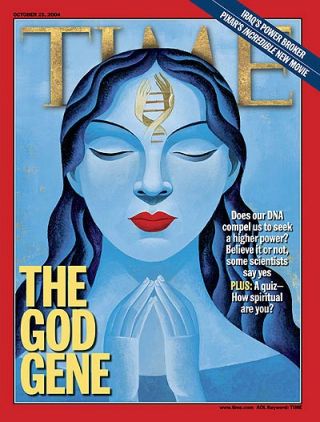
Time
Source: Time
What this means is that if you read about the god gene, the divorce gene, or research suggesting that the length and expression of a single gene explains your preference for The Spin Doctors (link is external), think again: Everything has a genetic contribution, so we should never get excited about the discovery of what is obvious. Complex human behavior is unlikely to be governed by a single gene. If one gene is too valuable, humans become too vulnerable. (See Law #4.)
2. The effect of being raised in the same family is smaller than the effect of genes.
3. A substantial portion of the variation in complex human behavioral traits is not accounted for by the effects of genes or families.
Much of what influences our personality has to do with the presence of life events, both positive and negative, and our response to choice points: Do I approach or avoid my co-worker who regularly demeans me? Do I wake up early and work out or sleep in? Do I ask out the girl I've had a crush on for months or do I keep my feelings to myself? No single decision matters, but the patterns do. The decisions we make, the people we surround ourselves with, and the behaviors we engage in are the building blocks for the quality of our lives. Small changes accumulate over time leading to large changes in who we become.
4. A typical human behavioral trait is associated with very many genetic variants, each of which accounts for a very small percentage of the behavioral variability.
Alliance/Shutterstock
Source: Alliance/Shutterstock
Instead of a single "divorce gene," it makes more sense to consider a series of temperamental qualities that influence the probability of divorce, including self-control, impulsivity, behavioral inhibition, distractibility, adaptability, persistence, and mood. For instance, low self-control, high impulsivity, low behavioral inhibition, high distractibility, low adaptability, low persistence, and highly frequent and enduring bad moods is a suboptimal profile for a long, healthy romantic relationship. Each of these qualities has a strong genetic basis; together, they help explain why there is a genetic contribution to whether or not someone gets divorced.
Knowing the origin of what matters most to human beings is invaluable. Behavioral genetics is part of this origin story. Let's take a moment to understand what a genetic contribution means and be skeptical of overly simplistic ideas about what humans do in the wild.

2015年10月13日

Want to Be Happier? It's as Easy as 2, 5, 11, 15, 20, 43

Mastering the lessons of 6 lucky numbers can benefit your mind and body.
Posted Jul 24, 2014 
 
 mimagephotography/ShutterstockIs it getting harder to fit all your health goals, work tasks, and personal pleasures into one day? When life feels overwhelming, just rely on your lucky numbers! No, I’m not inviting you to play in a “numbers racket.” The following numbers are “lucky” because they help you accomplish a worthwhile goal in minutes. These numbers are based on research findings and expert advice, not chance or a “wheel of fortune.” They work! Here they are:
Lucky Number: 2
David Allen, author of Getting Things Done, suggests that if a task you need to complete will take two minutes or less, just do it now! This "Two-Minute Rule" will keep small, onerous tasks from clogging your to-do list.
Lucky Number: 5
When you're frustrated with a difficult project at work or home, use the “Five-Minute Rule.” To stop procrastinating and get yourself going, tell yourself: “I will just work for five minutes on this project. Then, if I want, I can stop.” To use this rule to cultivate persistence, tell yourself, “I’ll just keep at this project for five minutes more. Then, if I want, I’ll stop.” You may decide to keep going, but even if you don't, you'll be five minutes closer to done. This wonderful idea comes from MJ Ryan, author of This Year I Will.
Lucky Number: 11
If you dislike exercise but still want to live longer, what is the least amount of brisk walking or moderate exercise you can do each day and still get a longevity benefit? The answer, based on extensive research by epidemiologist I-Min Lee of Harvard Medical School, is 11 minutes. People who exercised for 11 minutes per day added 1.8 years to their life, compared with non-exercisers. It's good to know you can reap the benefits of exercise with just a little effort. (How many daily minutes of exercise give you the greatest longevity benefit? See below.)
Lucky Number: 15
Are you tempted to pick up a third drink despite a vow of moderation? Are you yearning for a second helping of that devilish chocolate dessert? Is your craving for a cigarette almost too much to bear? If you’ve ever had intense cravings, just remember the number 15. According to research on cravings, most cravings last a surprisingly brief amount of time—about 15 minutes.  Relapse specialist Alan Marlatt describes cravings as waves—they build to a peak, then slowly break up. But you can learn to "surf" them without giving in. And knowing that your cravings will dissolve within 15 minutes is so reassuring—most of us can live with 15 minutes of discomfort on our way to achieving a valued goal.
Lucky Number: 20
You are trying hard to solve a problem, but the answer eludes you. So stop. Really! Relax. Take a break, up to 20 minutes long, and do something totally different—walk, nap, knit, or talk to a friend. When you return to the task, a miracle will have occurred: The answer was there all along! If you do crosswords, you already know the “aha moments” you can experience even after a short break. Why are such breaks so helpful? When you deliberately break out of your work pattern, your brain releases chemicals that counter the stress response. This brain change helps you relax and shift into a different, more creative mode of thinking—and then the answer “magically” appears. This phenomenon was termed “the breakout principle” by researchers Herbert Benson and William Proctor.
Lucky Number: 43
Ready to power up your exercise program from the minimum 11 minutes? Curious how many minutes of daily moderate exercise you need in order to reap the maximum numbers of extra years of life? The answer is 43 minutes per day. That could increase your life span by 4.2 years. (After 43 minutes, the longevity benefit is negligible.) Or, if you prefer, exercise for 22 minutes a day and add 3.4 years to your life. (Learn more here.)
2, 5, 11, 15, 20, 43. To increase your odds for good health, productivity—and sanity—bet on these lucky numbers.

10 Ways to Feel Better About Your Life, Today

7. Remember what you’ve accomplished.
Posted Oct 05, 2015 
 KieferPix/ShutterstockWhen we aren’t feeling good about our lives, it’s usually because one or two things went wrong; we focus on these things; and we get obsessive to the point of not being able to see the good that is all around us. Yet, little moments of appreciation can make the difference between a good day and a bad one.
Give it a try.
  1. Remember last night’s sunset.
    And make plans to watch it again tonight. That kind of beauty will help you find some balance within. At first, you may only be able to appreciate it mentally, but let it sink into your heart—that’s where you need it.
     
  2. Tell someone that you appreciate him or her.
    “Dinner was great” or “Thanks for being there” are words that will come back to you. Appreciation is not a one-way street: If you don't feel like you're being appreciated, take a look at how much you are giving.
     
  3. Do something nice for someone you don’t know, like letting them have your parking space at the mall.
    This will make you feel a tiny bit better about yourself and your life, because you’ve made someone else’s day nicer.
     
  4. If you get mad at life, look within.
    Check in with yourself and see if any of your buttons have gotten pushed. There is a reason you are upset, but it might not be what you think.
     
  5. Look for new things.
    A great exercise is to take a walk and look for 20 new things you have not seen before. Once you reach 20, you will have disengaged from your frustration. The situation may not have changed, but you have had a moment to get away from it so you can think more clearly.
     
  6. Volunteer in your community.
    Nothing makes me appreciate my life more than helping those less fortunate. You may have wealth, but what is its value if you can’t appreciate life? When you lend a helping hand, the warmth you receive in return will fill your heart.
     
  7. Remember what you’ve accomplished.
    Even if you aren’t feeling that great about things at the moment, recognizing that you have come a long way helps. You have come through some darkness before and you will again.
     
  8. Believe in yourself.
    If you know you are a good person, regardless of what anyone else has said, listen to your own thoughts and heart. As Eleanor Roosevelt once said, “No one can make you feel inferior without your consent.”
     
  9. If there are no people around, hang out with your pets.
    If you don’t have one, then go to a shelter or an adoption center and just pet one of those homeless creatures, because the love gets returned. I know several people who do this as a form of therapy, and their lives are better for it.
     
  10. Trust your inner voice.
    Ask yourself if you have done a good job with your life thus far. You won’t lie to yourself. And if you see some areas where you could use a tune-up, get yourself one. Your heart and head know where you are emotionally. Listen to what they have to say.
Appreciating your life is not supposed to be work. It’s a way of allowing yourself to forgive any transgressions and make the promise that you won’t go down that path again. It’s easy if you do things that you know will be appreciated.

2015年10月12日

20 Brutally Honest Things Women Turning 40 Want All Women In Their 30s To Know

 I will be 40 in less than a year. I would be lying if I said that turning the big 40 didn’t bother me. It seems that 40 is a number where I believe I should have finally ‘arrived’ in life, or my life should be the perfect picture of a successful wife, mother, business woman or whatever other demanding expectation I put upon myself when I was younger. My life right now is pretty good, but if I could have planned it all out or done things differently – it definitely would not look like how it actually turned out. I am a blessed mother of two children and I do have a few accomplishments under my belt but I sometimes compare my life to others and it just gets me down.
As I reflect being on this earth for almost 40 years and I rewind to when I was in my 30s, I would have definitely done a few things differently. Luckily, because of some of my past challenges in my life, I was forced to learn new tools.  Some of my past experiences forced me to do things differently which turned into a good thing eventually. Here are 20 brutally honest things women turning 40 want all women in their 30s to know.

1. Love and accept yourself – fully

I truly believe if I had accepted the good and bad parts of myself at a younger age, I would have avoided many of the wrong decisions that I made in my life. Once you know who you really are inside, you begin to accept and love yourself fully.  Once you truly love yourself from the inside, you are able to love and accept others which provides a much higher probability of maintaining healthy relationships.

2. Feed your soul

Whatever your passion, or whatever you enjoy in life, make sure you feed your soul with what inspires you. If you are not sure what your passion is, try new things and find different activities until you find a few that give you that feeling of warmth, freedom and acceptance inside.

3. Find a strong support network

For a long while, I tried to do everything in my life in my own power and with little help from others. I later realized having a strong support network of friends and safe people to share my life with is so rewarding. Finding and cultivating new relationships with others that will love and support you no matter what is so important to have in life.

4. Be authentic

During some of my harder times in life, I wore a pretty and smiling mask on my face no matter what I was going through. Only a few close people in my life knew what was really going on during my hardest trials. Once you begin to show others you have ups, downs and struggles in life just like everyone else, you become more trustworthy and sincere to others.

5. Live for you

A huge part of my life was taken up by taking care of everyone else which resulted in having no time for myself. My motives and reasons for doing things were wrong which in turn made my life much harder than it had to be. You cannot make everyone in your life happy – ever. Once you begin to make the best decisions for yourself instead of others, life gets easier.

6. Don’t compromise too much

I could have avoided a few bad relationships if I would have figured this out when I was younger. Compromise is required in any close relationship because we are all different and have different wants. Compromise is a good thing most of the time if the compromising is equal on both sides. Once you give up your wants and needs the majority of the time in any one relationship, it’s time to re-evaluate that relationship and decide if it really is healthy for you to be a part of it.

7. Travel more

This might be my biggest regret. I did travel some when I was younger before I had children and it was wonderful. Money can buy you material things or memories. If I had thought about it this way before, I would have stopped making the meaningless purchases on material things and made sure I spent my money on at least one new destination each year. Traveling creates a sense of freedom and opens your eyes to the way others live in different parts of the world.

8. Worry less

I struggled with anxiety and lots of worry in my past. Worrying triggered my anxiety and it became an ugly part of who I was for a long while. Once you realise that worrying will not change your outcome, you begin to accept whatever is going to happen to you. You realise you will be okay no matter what. Once I stopped worrying so much about everything, my stress levels decreased immensely.

9. Stop Comparing

Sometimes I feel like I should be done with Facebook altogether. Comparing your life to your best friend whom you know really well is one thing, but comparing your life to someone’s life on Facebook is detrimental. Once you realize that comparing your life to others does nothing but bring your own self worth down, you eventually stop. There will always be someone who is smarter, prettier or better off than me and I have accepted that. The moment I start comparing, I immediately change my thought pattern to what I am thankful for in my life and keep moving forward.

10. Forget expectations

I had the Disney syndrome growing up, you know the one that you will meet Prince Charming, get married and live happily ever after? Well Disney can suck it because that is not real life. After I was on failing marriage number 2, I just threw all of my expectations I placed upon others in the garbage. Once you realise you can still have dreams about your life but with dropping the expectations regarding other people, you really start to live your life in the moment. An expectation placed on someone else is actually just a premeditated resentment.

11. Live to work, not work to live

If I could do it all over again, I would have tried a myriad of different jobs when I was younger or researched a lot of different careers and chosen one that fit me best. Once you decide on a career path that you could really see yourself doing for the rest of your life, you then become someone in the workforce that truly lives to work because they love their career of choice. Many people are stuck in jobs they dislike just to garner a paycheck and that is not an ideal existence.

12. Save for the unexpected

This should be a no brainer but I did not do this when I was younger. I am now watching my parents live out their retirement and it has me thinking about all the things I need to do so that I am financially secure when I am older. Life will constantly be changing and probably continue to throw you unexpected curveballs so saving for upcoming hardships is a smart and sound decision.

13. Give back more

I found out later in my life that I enjoy helping others. For some this could entail volunteering time with a charity, or taking special care of a close friend that is going through a hard time. Giving a part of your time to do something that benefits you in no way, shape or form keeps you grounded and thankful for what you do have. It is so rewarding to forget about your problems in life by taking time to invest in someone else.  When you do something just out of the goodness of your heart and expect nothing at all in return, you surprisingly feel better about life no matter what is going on.

14. Forgive yourself and others

I lived a good part of my life bitter and angry about a few events that happened to me and for a while I truly believed it was 100% the other person’s fault. Once I realised that holding unforgiveness towards others and myself for past mistakes was holding me back from happiness, I made a change. It took me a while to be willing to forgive but I was able to work through it and experience freedom. Once you are able to truly let go of past hurts made by yourself or others, you see life and love in a positive light.

15. Don’t waste too much time on negative people

Sometimes it is hard to get away from negative people if they are your co-workers or your family. In some situations you do not have a choice but with actual friendships you can choose what type of friends you want to spend most of your time with. If you are on the end of a relationship where that person is a taker vs. a giver it’s time to set boundaries or slowly end the relationship. Once you begin to learn proper boundaries to set with people you would rather not have to deal with everyday, life becomes easier because you choose not to let that negative person affect you any longer.

16. No is a complete sentence

I have a hard time saying no. I want to say yes all the time and make everyone happy but that is impossible. If I do say no, many times I want to justify my no or explain the situation so the other person will feel better about my no. The older I get the more I realise that no really is a complete sentence and I do not have to justify every reason why I am not able to commit to an event or able do something for someone else. Once you are confident in your ‘no’, it’s easier to make decisions for yourself instead of others.

17. Think long and hard before you say ‘I do’

I am part of the divorce rate in America which is hard to admit but I now know what I want, desire and deserve in a mate. It is so easy to get caught up in the feelings and emotions of relationships. I considered the time invested with that person and I wanted more than what I currently had so I got married and hoped that things would change for the better. For myself in the end, they only got worse. If you don’t see longevity in your current relationship or you have too many “if onlys” with that person, then you might not be with your ideal mate. It’s much easier to end things with someone before they get too serious. If you have reservations about certain things in your relationship or you want to change core aspects of the personality of your partner, it is probably best to move on.

18. Stop and admire the little things

This is so simplistic but we currently live in a world where everyone is connected to an electronic device or the internet and it is becoming harder and harder to unplug and just enjoy everything that makes life worth living. Stop to enjoy a sunrise or sunset every once in a while, sit under the stars on a night with few clouds. Stop and smell the flowers. Go visit the ocean or the mountains and admire nature. We live in a world where Ferris Bueller is so right – “Life moves pretty fast, if you don’t stop and look around once in a while, you could miss it.”

19. Stop caring what others think of you

I so wish I would have figured this one out much sooner. I was so concerned with what others thought of me that I often times responded or did things for others because I thought that is what they wanted to hear or what they wanted me to do. Once I realised that what others think of me is really none of my business I was able to live life with right motives instead of wrong ones. Once you are able to be yourself and forget caring what other people think about you, life gets better because the worry and the expectation of pleasing others is removed. The truth is it is impossible to please everyone, so you need to focus on yourself and just wear the bikini anyway.

20. Embrace Change

When I was younger I wanted things to be predictable, to be stable and for the most part to stay the same. It felt safer to think that my life will be pretty much the same through the years. When I was then confronted with numerous changes all at one time, I did not handle it well. I have since realised that the only thing I can count on in life is change. Once you are able to embrace change and know that life can take a variety of different turns, you are up for the challenge and better suited to accept whatever comes your way.

20 Health Mistakes You Need to Stop Making Before You Turn 40

Nixing bad habits now can help you live a healthier life down the road.

Turn your health around

by Karen Pallarito
Want look and feel young into your 40s and beyond? Now's the time to hit the refresh button.

"When you're in your 20s and 30s, you have forever"—or so you think, explains Heather Provino, CEO of the workplace wellness company Provant Health Solutions Inc., in East Greenwich, R.I.

But health and lifestyle errors can sneak up on you in midlife and, next thing you know, a routine checkup finds your blood pressure's up or your blood sugar's out of whack.

"If you're not using 40 as that check-in point and that turnout time, those issues will start compounding," leading to chronic conditions, like heart disease and diabetes, says Provino, an exercise physiologist and sports psychologist.

Here are some common mishaps and tips to get you back on track.

Being addicted to your mobile phone

Are digital devices making us sick? A 2011 Harvard review links prolonged television viewing with an increased risk of type 2 diabetes, cardiovascular disease, and all-cause mortality. More recently, researchers at Brigham & Women's Hospital in Boston found that blue light—the kind emitted by tablets, cell phone, e-readers and other devices—disrupts the body's natural circadian rhythms, making it harder to get a good night's rest.

"We're creating a generation of sedentary behavior that wasn't natural, say, even 20 years ago," Provino cautions.

Tip: Take a 10-minute standing break every hour that you're using your screens.

Not making sleep a priority

Like your cell phone, your body and brain need time to reboot and recharge. Adults 18 to 64 require about 7 to 9 hours of sleep a night. Skimping on shuteye does a number to your health, including raising your risk of hypertension, stroke, and obesity. It may also be a factor in depression, and there's evidence that being sleep deprived promotes biological aging, making you look older than you are.

Tip: Create a relaxing bedtime ritual—no cell phones in bed, please—with these 7 tips for your best sleep ever.

Failing to floss

A good flossing regimen sweeps away sticky, germy plaque that can build up on teeth and under the gum line like cement. If you don't get rid of it, it can ruin your smile. Gum disease typically appears when people are in their 30s or 40s, and men are more likely develop it than women, says the National Institute of Dental and Craniofacial Research. Studies also suggest that diseased gums may be harbinger of heart problems.

Tip: If stringing floss around your pearly whites is a nuisance, try one of the many "interdental" picks, sticks, brushes, or water flossers on the market.

Skipping meals

Daytime fasting may seem like the perfect dieting hack. Wrong: You're more likely to overeat or splurge on junk food later in the day. Over time, missing meals can muck with your metabolism, setting you up for type 2 diabetes. Nearly two-thirds of adults with diabetes get diagnosed between ages 40 and 64.

Tip: Katharine Taber, MD, a board-certified gynecologist and director of the Women's Wellness Center at LifeBridge Health, based in Baltimore, urges patients to kick off the day with a healthy breakfast. "A, it helps with weight loss; B it gives you more energy and concentration throughout the day," she says.
 

Ignoring health warning signs

A wincing pain? A peculiar discharge? When your body offers clues that something's amiss, pay attention. Identifying health problems as early as possible often makes them more treatable. "The number of women who won't tell you they found a breast lump is astounding," Dr. Taber says."They just want to know if you (the OB/GYN) feel it." Many patients are afraid, embarrassed, or think they may be wrong, she explains.

Tip: Prepare a list of questions and concerns to share with your doctor before your visit.

Sneaking a cigarette (or two)

Attention tobacco cheaters: If you're stealing away for a smoke, you're a smoker, and that raises your risk for heart disease, lung cancer, stroke, and other nasty conditions. Snuffing out your cigarette habit before age 40 slashes the chance of premature death from smoking-related diseases by 90%. Quitting in your mid-40s to early 50s lowers your risk by two-thirds. In other words, you can reverse much of the damage to your body.

Tip: Visit Smokefree.gov for advice and free resources on breaking the nicotine addiction.

Eating too much sodium

Sodium has a stealthy way of holing up in people's diets even when they're not tipping the saltshaker. It's in bread, processed meats, soup, cheese, sauces and dressings, among other staples. Most people consume more sodium than their bodies require. The daily recommended max is about half a teaspoon. Too much of it can cause hypertension, a major cause of heart attack and stroke.

Tip: Read packaged food labels carefully and stay under 2,300 mg a day (1,500 if you have high blood pressure).

Being dehydrated all the time

Water nourishes every cell and organ in your body, including your skin. It's even more important to stay properly hydrated as you age because older adults may lose some of their sense of thirst. Indulging in a morning cup of joe or afternoon soda-pop counts toward your daily water intake, but straight-up water is better because it's caffeine- and sugar-free.

Tip: If you pee is dark yellow, it may be a sign that you need to boost your H2O intake. (It should be clear or light yellow).

Avoiding dairy products

Women who shirk dairy to shave calories from their diets or ward off gas and bloating aren't doing their skeletons any favors. "Calcium intake in the 20s and 30s is really, really important for preservation of bone health," says Lisa Larkin, MD, director of the University of Cincinnati Women's Health Center. "Peak bone mass is achieved at about age 30, and it starts to decline after that," she says.

Tip: If you're not consuming 1,000 mg of calcium a day through various food sources, consider taking a calcium supplement, Dr. Larkin advises.

Lying to your doctor

People lie, and doctors know it. In one survey, 77% of health professionals said at least one in four patients omit facts or lie about their health; 28% believe half or more withhold the truth. Since health issues become more prevalent as we age, even little white lies may pose a danger to your health.

Tip: Come clean: "Physicians can only address what they know about," says Dr. Larkin.

Skipping the weight room

A well-rounded exercise regimen wouldn't be complete without strength training. It can help you tone muscle, boost metabolism, and build strong bones. Research shows it improves flexibility, balance, and aerobic capacity, too. These fitness benefits become even more crucial as we age. Roughly half of all women 50 and older suffer hip, wrist, or spine fractures in their lifetime, but bone-building strength exercises can lower the risk of brittle-bone disease.

Tip: Incorporate free weights, weight machines, elastic bands, or resistance training using your own body weight (think push-ups and squats) into your fitness routine.

Not having sex

With young children and work obligations, sex often gets pushed aside in your 30s. But as the kids get older, sex should move back up your priority list, notes Dr. Taber. Maintaining a healthy sex life, even as you enter middle age, is an important part of intimacy. "It's harder to reinstitute a healthy sex life once you're neglected it," she says.

Tip: Talk to your doctor if sexual intercourse is uncomfortable—there are treatments available, adds Dr. Larkin. You should also read up on these 10 ways to deal with painful sex.

Sunbathing

Laying out in the sun or using tanning beds exposes skin to damaging ultraviolet radiation that prematurely ages the skin and greatly boosts skin cancer risk, including melanoma, the deadliest form of the disease. Using sunscreen and protective clothing can help. "It doesn't erase the damage from the past, but it's protective going forward, just like stopping smoking," says Ronald Brancaccio, MD, director of The Skin Institute of New York and clinical professor of dermatology at New York University School of Medicine.

Tip: Crave a sun-kissed glow? Fake it by applying a cosmetic bronzer. Here's how to do it in four steps  .

Sipping sweet drinks

You probably already know that drinking soda and other sugary beverages is a surefire way to pack on pounds. But if you think you're doing the right thing by swapping sugar-sweetened soft drinks for artificially sweetened versions, think again. The latest research suggests drinking diet soda is associated with weight gain, insulin resistance, and diabetes. A Tufts University study found women who drink cola—diet or regular—had lower bone mineral density. "You're actually pulling nutrients out of the body," says Monique Richard, RDN, owner of Nutrition-In-Sight, in Johnson City, Tenn. (Here's a rundown of all the reasons you need to ditch diet soda.)

Tip: Follow this guide to squash your soda habit for good.

Eating too much processed food

Grabbing a bag of chips before hitting the gym is not the optimal way to fuel your body. Over time, all that sugar, fat, and sodium—the secret to making processed foods tasty—can do a number on your waistline and your health. Replacing a diet packed with microwave meals, snacks, and processed meats with whole grains, fresh produce, and lean meats is the way to go. "It's very convenient to go through a drive-through, but it's also pretty convenient to boil some water and put it in some oatmeal," Richard reasons.

Tip: Pack your fridge and pantry with the 20 foods you should always have in your kitchen.

Bingeing on alcohol

Most of us know that consuming excessive amounts of alcohol is toxic to the body. "It's dehydrating, and it's a process that your body can't get over as quickly, especially as you get older," Richard says. Moderation is the key: no more than one drink per day for women and two for men.

Tip: One serving means a 5-ounce glass of wine, a 12-ounce beer, or a shot of distilled spirits. Here's how to pour a perfect serving of wine  .

Failing to discuss family health history

Like it or not, your genes matter. If, in your 30s, your physician doesn't know there's a history of breast or ovarian cancer in your family, she may not order the appropriate screening and surveillance tests to help identify problems early on, when they're more treatable.

Tip: Learn your family's medical history and share it at your next appointment. "That will impact recommendations from your physician," Dr. Larkin says.

Not making time for preventive care

Women in their 30s "don't really take the time to take care of themselves, and so stuff gets missed," says Dr. Larkin. So, if you're not monitoring your cholesterol, you could be setting yourself up for heart disease in your 40s and 50s. And if you're putting off annual pelvic exams, routine pap tests, and clinical breast exams, you could be missing early signs of cancer.

Tip: Taking preventive measures as a young adult can make a huge difference in your wellbeing as you get older. Stay on top of the 19 medical tests everyone needs.

Skipping recommended vaccines

Kids aren't the only ones who need their shots. A half-dozen or so immunizations and boosters—including vaccines that protect against influenza and chicken pox—are recommended for adults. Many others may be appropriate depending on a person's risk factors and vaccine history. About 50,000 adults die every year from vaccine-preventable diseases.

Tip: Getting vaccinated protects yourself and reduces your risk of getting sick and spreading the disease to others.



2015年10月9日

不可不知的抗壓新觀念!10個增加「韌性」的方法

文字:tianesu  VOGUE.TW |  來源:時報文化《韌性》 |  更新:10/8/2015  11 HOURS AGO
 
08
OCT
2015

不可不知的抗壓新觀念!10個增加「韌性」的方法

文字:tianesu  VOGUE.TW |  來源:時報文化《韌性》 |  更新:10/8/2015  11 HOURS AGO
不可不知的抗壓新觀念!10個增加「韌性」的方法
6 / 11

許多人覺得現在年輕人很幸福,其實並不然。儘管物質富足,但壓力卻不減反增;工作上要達到高度績效、家庭要合乎美滿的社會期待、同時要加強自己面對全球化競爭。這些都會導致「憂鬱」和「倦怠」。而韌性是不可不知的重要新觀念,也是每個人應該要努力練習的強大心力量。

德國暢銷20萬本新書《韌性》,就是透過各種研究實驗和觀察,檢證韌性對於人和抗壓力的影響。作者克莉絲蒂娜伯恩特提到美國明尼 蘇達州針對窮學生的研究發現:在餐館或加油站打工的窮困學生,因無法得到經濟上和家人關懷的支援,這些年輕人會比一般同學更沒自信並且憂鬱。然而十年之 後,這些學生長大成人,情況卻完全逆轉。窮困學生比出生好環境的同學更少有憂鬱情節。對此《韌性》一書認為這種情況與疫苗防疫接種相似:注入少量病原體的 功能就是為了是先練習抵禦疾病。逆境對人生而言也是這個道理。透過這樣的例子克莉絲蒂娜伯恩引用美國心理學會「通往韌性之路」的計畫分享了10個增加韌性的方法:

1. 多與社會接觸。
2. 別把危機視為無法解決的難題。
3. 接受「改變是人生的一部分」。
4. 嘗試達成目標。不好高騖遠,為自己設定切合實際的目標。
5. 果斷地行為。請盡自己所能克服困境,並採取主動,積極解決問題的態度。
6. 找尋自己。請期待各種可以認識自己的機會。許多經歷過悲慘時光的人都在事後表明,自己從困境中獲得了成長。
7. 以正面的觀點看待自己。相信自己的直覺及解決問題的能力。
8. 關注未來。即使身處困境,試著從長期著眼,以較大的格局去審視自己當前的處境。
9. 抱持最好的期待。試著培養樂觀的態度。想想自己要的是什麼,而非害怕什麼。
10. 照顧自己。請留心自己的需求和情感。規律運動,有助於強化可以克服困境的身體與心理。

吃斋的猪

猪现在的三餐多是吃蔬菜瓜果类。 偶尔蔬菜碗中加几片薄薄的肉片或鸡蛋增添点滋味。 吃素吃多了脸色也绿黄绿黄的。 本来都正在步入中老年人的步伐,脸色已经非常灰暗了,再加上营养不均匀的三餐。 猪脸越见丑陋,自己都不想看到镜中的自己。 这样的伙食也使猪脚步乏力,整天缺乏动力。 只想躺着不...