2016年1月11日

10 Surprisingly Simple Happiness Tips

Tell the truth, avoid narcissists, and stay focused on the future.

Posted Dec 29, 2015 
  Nadino/ShutterstockWe all want to be happy. Our search leads us to seek advice from mental health professionals, clergy, best-selling authors, and Buddhist monks.
But despite the wealth of available information, two constants remain: One, there is no recipe for happiness. We’re all unique with different biology, childhoods, life experiences, and support systems. Two, happiness is a habit—and that’s good news, because you can choose to be happier.
To make your happiness journey more attainable, here are 10 common themes that researchers have found which lead to happiness.
“Sometimes, you just have to throw away the map. A map is a life someone else already lived. It's more fun to make your own.” — Cora Carmack
1. Don’t expect happiness to come with a user’s manual.
Tipping Point author Malcolm Gladwell cites the food industry's pursuit of the perfect spaghetti sauce—half of people surveyed prefer chunky tomato while the other half prefer smooth—to settle a larger argument about the nature of choice and happiness. The concept of "everyone" does not exist when it comes to experiencing joy. You don’t do X, followed by Y, to find your Z(en). As a therapist, I appreciate this because the pursuit of happiness is not a passive process. Also, happiness is not a destination, but a fluid, ever-changing state of mind: Today’s satisfaction with chunky tomato sauce may switch to smooth sauce for next year.
“Money is not the point.” — Corbett Barr
2. Forget about chasing fame and money for the sake of chasing fame and money.
Continue to pursue your financial and success goals, but not at the expense of your value system. Not every CEO or millionaire is joyous. Research shows that lottery winners are no more happy a year after the initial money windfall. One study found that the overall happiness levels of lottery winners spiked when they won, but returned to pre-winning levels after just a few months. In terms of overall happiness, the lottery winners were not significantly happier than the non-winners. (But don’t let that stop you from playing Powerball to test the studies’ reliability and validity.)
“Life is either a daring adventure or nothing at all.” — Helen Keller
3. Continue to sharpen your mind.
Humans are wired for challenges. According to psychologist Mihaly Csikszentmihalyi, doing stimulating activities which put you in a state of flow—whether via work, raising a family, or pursuing artistic passions—means you’re more likely to realize your goals, and stave off boredom.
"Your mind can be your strongest muscle or your worst enemy. Train it well." — Unknown
4. Train your brain.
Healthy mental and lifestyle habits are integral to life satisfaction. Activities such as meditation, mindfulness-based practice, and developing positive thoughts improves your mood and your physical and emotional states. This article (link is external) offers in-depth details for achieving realistic, healthy thoughts, while this one teaches you how to decrease anxiety each and every day.
“Gratitude can transform common days into thanksgivings, turn routine jobs into joy, and change ordinary opportunities into blessings.” — William Arthur Ward
5. Embrace gratitude.
Conventional wisdom says that happiness will make us grateful, but that’s not the case. The core of gratitude is counting your blessings, not your burdens. Professor of Psychology and researcher Robert Emmons examined the effect of a grateful outlook on one's well-being. His findings showed that an intentional focus on blessings improved moods, coping skills, and physical and emotional well-being.
“If you want happiness for an hour, take a nap. If you want happiness for a day, go fishing. If you want happiness for a year, inherit a fortune. If you want happiness for a lifetime, help someone else.” — Chinese Proverb
6. Be generous.
Giving is truly better than receiving. Social scientist Michael Norton researches how money can buy happiness—when you don't spend it on yourself. The key is social spending that benefits not just you, but other people.
“Today, give a stranger one of your smiles. It might be the only sunshine he sees all day.” — H. Jackson Brown Jr.
7. Smile.
If this one brings back unpleasant childhood memories of mom saying "Smile!" to snap you out of a bad mood, the truth is that she may have been on to something. Smiling decreases stress and anxiety. While it's not easy to keep smiling in stressful situations, studies report that doing exactly that has health benefits. When recovering from a stressful situation, study participants who were smiling had lower heart rates than those with a neutral expression.
“Self-love forever creeps out, like a snake, to sting anything which happens to stumble upon it.” — George Gordon Noel Byron
8. Steer clear of mean people.
One word: Narcissists. Studies suggest that empathy appears to be on the decrease, while narcissism has been increasing across different cultures for the past three decades, according to the Narcissistic Personality Inventory (NPI). If you find yourself in the desperate position of trying to co-parent with a narcissist, here’s a popular article to help you.
 “Three things cannot be long hidden: the sun, the moon, and the truth.” — Buddha
9. Tell the truth.
One of the best therapy lessons I ever got was learning that the true goal in therapy is to help your clients understand and accept their truth. Lying expert Robert Feldman found that about 60 percent of people have a hard time getting through a 10-minute conversation without lying at least twice. Besides a lot of energy devoted to deceit, there's the byproduct of psychosocial stress. Discovering and embracing your true self reduces stress and increases authenticity.
"I may be a senior. But so what? I’m still hot.” — Betty White
10. Look forward to your golden years.
According to the experts, life is like sipping fine wine. "The good news is that with age comes happiness," says University of Chicago sociologist Yang Yang. "Life gets better in one's perception as one ages.” Yang found that a certain amount of distress in old age is inevitable—aches, pains and deaths of loved ones and friends. But older people generally have learned to be more content with what they have than younger adults. Cheers!


The One Quality Guaranteed to Make You More Attractive

Spoiler alert: It has nothing to do with hair, eyes, or muscles.
Posted Jul 13, 2015 
 
 Air Images/ShutterstockI was recently in Las Vegas, at a conference for insurance agents. I had been asked to speak to the agents' spouses. The day before my presentation, I was in an elevator with a group of people and overheard a conversation between a wife and her husband in which she berated him for losing a few dollars in the casino. That conversation would become the example that I would later use to introduce the subject of my presentation—the importance of being a supportive spouse, and one of the three keys to becoming an attractive mate and maintaining the love of your partner.

Flash back to ancient times, as two young cave dwellers return home from a hunt to report separately to their mates, “I didn’t do well. I caught nothing. Everyone else got something.” The cavewoman who stroked her partner's face soothingly and said, “Don’t worry, you will be the best tomorrow. I know you will. I believe you will,” both supported him and strengthened their bond. The cavewoman who retorted, “You caught nothing?! How could you catch nothing?!” did the opposite.
Eons later, when these couples’ descendants attended a conference in Las Vegas, which do you think had a better time?
We all want to be attractive to our mate; we all want our mate to desire us. And while a look in the mirror might lead you to think you’re a beauty, if you’re an unsupportive husband or wife, you’re more likely a beast.
Being supportive to your partner when she or he is feeling down or has experienced a setback rebuilds their confidence, and it is confidence, and the positive feelings it breeds, that fuels their belief that they can rebound and be more successful tomorrow. This is one of the evolutionary functions of support: It helps people recover from adversity and increases their chances to survive. Being a supportive mate makes you more attractive because, over time, a supportive partner is perceived as a confidence builder. 
We all want to feel confident, so it is only natural that we would be attracted to people who build our confidence. “I couldn’t have done it without my spouse,” is an homage to the supportive partner. Being supportive to a partner makes you desirable; he or she wants to be with you because your support provides them with positive energy. And there is overwhelming contemporary research indicating that marital discord is often rooted in a lack of support.  
How do you express support to your partner (or, for that matter, to your child, assistant, staff, or team)? One way is to be encouraging by making direct statements that you believe in their ability to be successful in their endeavors. Be a positive thinker for them, especially when they have setbacks—because your support helps them make a comeback.
When your partner experiences success, express pride; too many people feel threatened by a partner’s accomplishments. And when he or she comes to you with a problem or shares a troublesome situation from work or with a friend, demonstrate support by simply listening in a non-evaluative manner. Help him or her clarify and validate feelings, and help them problem solve—if asked. Too many of us respond too quickly with “solutions” or with blame for the individual for creating the plight, or are simply dismissive—“It’s not a big deal. Forget about it.”

The (Only) 5 Fears We All Share

When we know where they really come from, we can start to control them.
Posted Mar 22, 2012 
 President Franklin Roosevelt famously asserted, "The only thing we have to fear, is fear itself."
I think he was right: Fear of fear probably causes more problems in our lives than fear itself.
That claim needs a bit of explaining, I know.
Fear has gotten a bad rap among most human beings. And it's not nearly as complicated as we try to make it. A simple and useful definition of fear is: An anxious feeling, caused by our anticipation
of some imagined event or experience.

Medical experts tell us that the anxious feeling we get when we're afraid is a standardized biological reaction. It's pretty much the same set of body signals, whether we're afraid of getting bitten by a dog, getting turned down for a date, or getting our taxes audited.
Fear, like all other emotions, is basically information. It offers us knowledge and understanding—if we choose to accept it—of our psychobiological status.
And there are only five basic fears, out of which almost all of our other so-called fears are manufactured. These are:
  1. Extinction—the fear of annihilation, of ceasing to exist. This is a more fundamental way to express it than just calling it "fear of death." The idea of no longer being arouses a primary existential anxiety in all normal humans. Consider that panicky feeling you get when you look over the edge of a high building.
  2. Mutilation—the fear of losing any part of our precious bodily structure; the thought of having our body's boundaries invaded, or of losing the integrity of any organ, body part, or natural function. Anxiety about animals, such as bugs, spiders, snakes, and other creepy things arises from fear of mutilation.
  3. Loss of Autonomy—the fear of being immobilized, paralyzed, restricted, enveloped, overwhelmed, entrapped, imprisoned, smothered, or otherwise controlled by circumstances beyond our control. In physical form, it's commonly known as claustrophobia, but it also extends to our social interactions and relationships.
  4. Separation—the fear of abandonment, rejection, and loss of connectedness; of becoming a non-person—not wanted, respected, or valued by anyone else. The "silent treatment," when imposed by a group, can have a devastating psychological effect on its target.
  5. Ego-death—the fear of humiliation, shame, or any other mechanism of profound self-disapproval that threatens the loss of integrity of the Self; the fear of the shattering or disintegration of one's constructed sense of lovability, capability, and worthiness.
That's all—just those five. They can be thought of as forming a simple hierarchy, or "feararchy":
 The Feararchy
Think about the various common labels we put on our fears. Start with the easy ones: fear of heights or falling is basically the fear of extinction (possibly accompanied by significant mutilation, but that's sort of secondary). Fear of failure? Read it as fear of ego-death. Fear of rejection? That's fear of separation, and probably also fear of ego-death. The terror many people have at the idea of having to speak in public is basically fear of ego-death. Fear of intimacy, or "fear of commitment," is basically fear of losing one's autonomy.
Some other emotions we know by various popular names are just aliases for these primary fears. If you track them down to their most basic levels, the basic fears show through. Jealousy, for example, is an expression of the fear of separation, or devaluation: "She'll value him more than she values me." At its extreme, it can express the fear of ego-death: "I'll be a worthless person." Envy works the same way.
Shame and guilt express the fear of—or the actual condition of—separation and even ego-death. The same is true for embarrassment and humiliation.
Fear is often the base emotion on which anger floats. Oppressed people rage against their oppressors because they fear—or actually experience—loss of autonomy and even ego-death. The destruction of a culture or a religion by an invading occupier may be experienced as a kind of collective ego-death. Those who make us fearful will also make us angry.
Religious bigotry and intolerance may express the fear of ego-death on a cosmic level, and can even extend to existential anxiety: "If my god isn't the right god, or the best god, then I'll be stuck without a god. Without god on my side, I'll be at the mercy of the impersonal forces of the environment. My ticket could be canceled at any moment, without a reason."
Some of our fears, of course, have basic survival value. Others, however, are learned reflexes that can be weakened or re-learned.
That strange idea of "fearing our fears" becomes less strange when we realize that many of our avoidance reactions—turning down an invitation to a party if we tend to be uncomfortable in groups; putting off a doctor's appointment; or not asking for a raise—are instant reflexes that are reactions to the memories of fear. They happen so quickly that we don't actually experience the full effect of the fear. We experience a "micro-fear"—a reaction that's a kind of shorthand code for the real fear. This reflex reaction has the same effect of causing us to evade and avoid as the real fear. This is why it's fairly accurate to say that many of our so-called fear reactions are actually the fears of fears.
When we let go of our notion of fear as the welling up of evil forces within us—the Freudian motif—and begin to see fear and its companion emotions as basically information, we can think about them consciously. And the more clearly and calmly we can articulate the origins of the fear, the less our fears will frighten us and control us.

5 Exercises That Will Change Your Life

Jan 11, 2016

Functional training gives you the kind of strength that matters at the end of the day. This type of training will give you power in your daily life for practical movements like hauling your cooler to the beach, moving furniture, or carrying a toddler. So instead of measuring your strength by how much weight you can bench press (or curl, or squat), get fit where it counts by doing exercises that stem from natural, everyday movements like bending, pushing, and twisting.
Try this 5-move functional workout to feel the power, fast!

1. T Push-up

Start in push-up position with your hands directly beneath your shoulders. Lower into a push-up, and as you return to starting position, rotate your torso to the left raising your left arm up into the air so that you are in a T position. You will need to engage your core, and balance on your right hand and sides of your feet. Hold this position for a count of two, and return to push-up position. Repeat, next time twisting to the right side and raising your right arm. Complete 3 rounds of 8 push-ups.
T-PUSHUP

2. Squat with Overhead Press

Stand hip-width apart holding two dumbbells at your shoulders. Squat down until your knees are bent at a 90-degree angle, keeping your weight back on your heels. Your torso should bend forward slightly with your knees tracking over your feet, without going past them. As you come back to standing, press the dumbbells up over your head to a full extension. As you lower back into another squat, lower the weights back down to starting position. Repeat for 3 rounds of 10 squats with overhead presses.
SQUAT-WITH-OVERHEAD-PRESS

3. Reverse Wood Chop with Dumbbell

With your feet in a wide stance and knees slightly bent, hold a dumbbell in both hands by your right hip. From here, rotate your torso and engage your abs to bring the dumbbell up to your left shoulder in a fluid motion. Lower the weight back down and repeat. Remember to keep your abs engaged even as you lower the weight. Repeat for 3 rounds of 10 on each side.
WOOD-CHOP-WITH-DUMBBELL

4. Hip Extension with Reverse Fly

This exercise will test your balance while working your back, shoulders, and legs. Stand with your weight on your right foot, holding a light dumbbell in each hand at your sides. Keeping your body in a straight line, lean forward while bringing your left leg out in a straight line behind you. As you lean forward, raise your arms out to the side into a T position. Your chest should be parallel to floor with your leg in a straight line. Hold for a count, and return to neutral. Repeat for 3 rounds of 10 on each leg.
HIP-EXTENSION-WITH-REVERSE-FLY

5. Russian Twists

This move will work your obliques and also test your balance. Sit on your butt with your knees bent and feet flat on the ground, holding a dumbbell with both hands. Lean back so that your torso is at a 45-degree angle to the floor. (If you’re more advanced, lift your feet off the ground and cross them at the ankles while balancing on your butt.) From this position, rotate your torso to the left and touch the dumbbell to the ground next to your body. Next, twist back over to the right tapping the weight to the ground on the right side of your body. That’s one rep. Repeat back and forth all while balancing, moving as quickly as possible. Repeat for 3 rounds of 20 twists.
RUSSIAN-TWIST
Looking for more workout ideas? Try 4 Fat Burning Exercises That Improve Your Agility!
Jennifer Cohen is a leading fitness authority, TV personality, best-selling author, and entrepreneur. With her signature, straight-talking approach to wellness, Jennifer was the featured trainer on The CW’s Shedding for the Wedding, mentoring the contestants’ to lose hundreds of pounds before their big day, and she appears regularly on NBC’s Today Show, Extra, The Doctors and Good Morning America. Connect with Jennifer on Facebook, Twitter, G+ and on Pinterest.

2016年1月8日

4 Lifestyle Changes That Will Boost Your Mental Health

Research proves an undeniable mind-body connection.
Posted Apr 21, 2015 
 Blazej Lyjak/ShutterstockWhen we seek help for a mental health condition, we can expect to hear about various medications and treatment options, but what’s often missing from the conversation is any talk of lifestyle changes. In a recent University of Illinois study (link is external), about half of those with symptoms of mental illness reported that they receive no wellness advice from their health care provider.
That’s a lamentable oversight because lifestyle changes—things as simple as nutrition and exercise (link is external)—can have a significant impact on quality of life, for any of us, but especially for those dealing with issues such as depression, anxiety, bipolar disorder and schizophrenia. They can also help minimize the development of risk factors that can lead to conditions like diabetes, cardiovascular disease, and hypertension, all of which are seen at higher rates in those with mental illness, the study noted.
If you are dealing with a mental health challenge, take the initiative when speaking to your clinician. Ask for specifics on what changes you can safely make in your daily life to improve your mental health; there’s no single answer. But research has shown that lifestyle changes in several key categories can pay healthy dividends for most. Among the most powerful:
1. Enhance Your Diet
Research shows that our diet can influence our mental health, for both good and bad. Fruits and vegetable are associated with better mental well-being, according to recent research (link is external) from the University of Warwick. That’s important because mental well-being—feelings of optimism, happiness, self-esteem and resilience—can help protect not only against mental health problems but physical ones as well.
Fatty foods, on the other hand, may increase the risk for psychiatric symptoms by changing the bacteria that live in our gut, according to new research (link is external). A study done with mice showed increased anxiety, impaired memory, repetitive behavior, and brain inflammation as a result of a high-fat diet. Some fats, however, fall into the “good” category. Omega-3 fatty acids such as are found in salmon, for example, may help (link is external) with some forms of depression.
Sugar, of course, should have only a minimal place in your diet. Not only can it spark rapid weight gain and an addictive response in some, it has been linked to higher rates of depression and can make mental health symptoms worse, according to the National Alliance on Mental Illness (link is external) (NAMI).
2. Make Exercise a Priority
You’ll want to check with your doctor before you start any exercise regime, but physical activity has been shown to have significant benefits for those dealing with mental health issues. A Southern Methodist University study (link is external) labeled exercise a magic drug for those with anxiety and depression disorders and called on doctors to more widely prescribe it. Research (link is external) shows even low levels of activity—things such as walking or gardening for half an hour a day—can help ward off depression now and even later in life. Exercise has also been shown (link is external) to improve the mental and physical health of those with schizophrenia. (One note: If you have bipolar disorder, be aware that exercise can trigger mania in some. Get your doctor’s OK before adding new forms of physical activity to your life.)
As a bonus, exercise helps not only with mental health and fitness but also with weight control. This is especially important because weight gain is a side effect of many medications for mental illness. Extra pounds may not only make you less healthy and more prone to developing illnesses such as diabetes, they can also add to your mental distress.
3. Practice Techniques to Reduce Stress
Stress (link is external)feeds mental illness, and mental illness feeds stress. Taking steps to minimize the stress in your life can help slow this vicious cycle. Consider adopting techniques such as mindfulness meditation; a Carnegie Mellon University study (link is external) found that even 25 minutes a day for three days in a row can reduce stress and build resilience. And a Johns Hopkins research analysis (link is external)determined that meditation can improve symptoms of anxiety and depression.
Yoga is another powerful choice for stress reduction, as well as being good exercise. A Queen’s University study (link is external) found it can even help us view the world in a less negative, less threatening way, which can be a huge benefit for those with mental health disorders. (Again, a note for those with bipolar disorder: A recent study (link is external) found risks as well as benefits in yoga. According to a recent study, some with bipolar disorder found it a “life-changing” positive, while a minority reported it can intensify both high and low moods.)
4. Get Enough Sleep
We all crave a refreshing night’s sleep, but don’t always get it. We can boost our odds by committing ourselves to good sleep hygiene (link is external). That means going to bed and getting up at a consistent time, getting sufficient exercise (earlier in the day rather than late at night), avoiding heavy evening meals and caffeine, practicing relaxation techniques, and forgoing activities that get in the way of our shuteye, such as those Netflix marathons. If you’re still having trouble, don’t turn automatically to sleep aids, which research (link is external) shows may actually shorten your lifespan. See your doctor or a sleep specialist for help.
Making lifestyle changes in support of your sleep is well worth the effort. Poor sleep has multiple negatives: Studies show fatigue makes it harder to choose healthy foods, it’s been linked to obesity and cell damage (link is external), and it can make mental illness symptoms worse. Sleep deprivation has been shown, for example, to trigger schizophrenia symptoms (link is external). Consistently good sleep, on the other hand, can help keep stress at bay, as well as boost mood, protect the brain (link is external) and give us the energy we need to deal with all that life throws at us.

10 Ways Walking Changed My Life

How Walking Changed My Life
Sarah Kusch is a fitness phenomenon. A nationally respected, certified trainer, Sarah has done every workout—from CrossFit to Zumba. But it wasn't until she rediscovered walking a few years ago that she realized she had found the perfect activity. "I get benefits from walking that I can't get from more intense exercise routines," she says. Her newfound love of walking inspired Sarah to develop and coach the brand new 21-Day Walk a Little, Lose a Lot Challenge, a RodaleU course that starts Jan. 1, 2016. Sarah will coach students through this 3-week transformation that will have you shedding pounds, eating better, and bursting with energy! Read on to learn how walking changed Sarah's life, and be sure to check out her Challenge so you can get the same results. —The Editors of Prevention
1. Mental Clarity and Emotional Balance
You know how some days everything just seems out of whack? When you just feel down for no good reason? The easiest fix for me is to get up and get out for a walk. Within 15 minutes I've reset my focus and I feel like I've walked my cares away. I'm reminded that nothing is worth stressing over. When I'm on a walk, I can solve problems—no obstacle is too much to overcome.
2. Creativity
Creativity
Photograph by Yuji Sakai/Getty Images
On a walk, I'm able to relax my mind and let it wander, and just take in the people and scenery. Whenever I'm stuck while trying to write or come up with a new fitness program, I lace up my walking shoes and head out the door. I know for a fact that on my walk, something or someone will spark a new thought. The simple act of letting go and wandering helps me access ideas I've filed away in my head.
3. Recovery
For years, my career has required high-impact, physically demanding work. Walking is a respite from this while still giving me the workout I crave. I remember a day on which I felt physically worn down yet I was planning to go running. My body just said no, so I went for a walk instead. What happened next was amazing: I worked up a sweat without killing my joints! I felt rejuvenated and inspired, and I had a sense of accomplishment. Even better: I burned the same amount of calories in my 40 minutes of walking that I would have in 25 minutes of running. And those extra 15 minutes were priceless because they helped my body and brain recover.

4. People
I have met so many interesting people walking in new cities or places. In fact, I met my best friend through walking: We happened to both be out striding and we struck up a chat. We had so much in common that in no time, we became friends. And now she's one of the most important people in my life.
5. Stress Relief
Stress relief
Photograph by SelectStock/Getty Images
A walk provides almost instantaneous stress relief. Numerous studies show that it can lower levels of stress hormones. But I know from personal experience that when I am feeling crazed and overwhelmed, I need a walk. Immediately, I begin to feel better physically, mentally, and spiritually.
Stress hormones can cause weight gain, memory loss, and high blood pressure; I'll take my Rx of walking, please!!!
6. Hip Mobility
My hips can lock up, thanks to my profession of leading high-intensity, demanding workouts. Since I started walking, my hip mobility and flexibility is much improved. I also believe that walking breaks up lactic acid in the muscles, which helps me recover and allows me to build more lean muscle.
MORE: 11 Highly Effective Solutions For Sciatic Nerve Pain
7. Better Perspective
When I started walking around my neighborhood, I looked at the nature, people, and surroundings in a different way. I live in Santa Monica, CA, which is a pretty busy city. It's easy to rush around in your car and miss your surroundings. Once I began walking, I discovered beautiful gardens and houses that I had never noticed. I began greeting the people I see every day, getting to know them and their dogs. I was able to tap into a small-town vibe in an otherwise big city.
8. A New Kind of Toning
After walking for a few months, I became aware that I was targeting and building muscles that my other routines neglected. Then I noticed my legs were looking better than they ever had; the arm pumping during walking improved my upper back definition and increased my range of motion, opening up my shoulder blades.

9. Cultural Exchange
Cultural exchange
Photograph by Cultura RM/Philipp Nemenz/Getty Images
I've been traveling a lot, so I've been walking everywhere. Instead of relying on a car in a new city, I lace up my shoes and take to the sidewalk. Now I have interactions with locals that I would have missed in the past. I've found shops and restaurants that are off the beaten path. In France, I was walking with my daughter and we stopped to chat with an elderly man. He mentioned that he owned the restaurant we were standing in front of, and then he offered to take us to the kitchen and teach us how to make some French dishes. This was a once-in-a-lifetime experience, made possible by walking.
10. It's Just Fun!
Last and definitely not least, walking has added so much joy to my life! Movement is a gift: I always look forward to a walk. I never see it as something I have to do—I want to do it.

2016年1月7日

The 3 Most Common Causes of Insecurity and How to Beat Them

15 tools to help you bounce back when you're feeling down about yourself.
Posted Dec 06, 2015 
 Stefano Tinti/ShutterstockDo you find yourself feeling filled with self-doubt and short on confidence? Despite your accomplishments, do you feel like a fraud destined to be exposed? Do you feel that you don’t deserve lasting love and that partners will inevitably leave you? Do you stay at home, afraid to venture out and meet new people because you don’t feel you have enough to offer? Do you feel overweight, boring, stupid, guilty, or ugly?
Most of us feel insecure sometimes, but some of us feel insecure most of the time. The kind of childhood you had, past traumas, recent experiences of failure or rejection, loneliness, social anxiety, negative beliefs about yourself, perfectionism, or having a critical parent or partner can all contribute to insecurity. Following are the 3 most common forms—and how to begin to cope with them.
Type 1: Insecurity Based on Recent Failure or Rejection
Recent events in our lives can greatly affect both our mood and the way we feel about ourselves. Research on happiness suggests that up to 40% of our “happiness quotient” is based on recent life events. The biggest negative contributor to happiness is the ending of a relationship, followed by the death of a spouse, job loss, and negative health events. Since unhappiness also influences your self-esteem, failure and rejection can deliver a double whammy to your confidence. In his book Emotional First Aid: Healing Rejection, Guilt, Failure and Other Everyday Hurts, Psychology Today blogger Guy Winch states that rejection inevitably leads us to see both ourselves and other people more negatively, at least for a time. And those of us who have lower self-esteem to begin with are more reactive to failure. It’s as if an experience like losing your job grabs old negative beliefs about your self-worth and activates them. It may help to understand that failure is a nearly ubiquitous experience: Before becoming president, Abraham Lincoln lost his job, was defeated for nomination to Congress, and failed at least twice in Senate bids. Persevering despite setbacks can lead to eventual successes—which raise your self-esteem.
Below are some tools you can use to overcome failure- or rejection-based insecurity:
  1. Give yourself time to heal and adapt to the new normal.
  2. Get out and engage with life, following your interests and curiosity.
  3. Reach out to friends and family for distraction and comfort.
  4. Get feedback from people you trust.
  5. Persevere and keep moving towards your goals.
  6. Be willing to try a different strategy if necessary.
Type 2: Lack of Confidence Because of Social Anxiety
Many of us experience a lack of confidence in social situations like parties, family gatherings, interviews, and dates. The fear of being evaluated by others—and found to be lacking—can lead you to feel anxious and self-conscious. As a result, you may avoid social situations, experience anxiety when you anticipate social events, or feel self-conscious and uncomfortable during them. Past experience can feed your sense of not belonging, not feeling important or interesting, or just not being good enough. Many of my clients describe how being bullied or excluded from a group of friends in middle school or high school continues to negatively affect their confidence as adults. If you grew up with critical parents, or parents who pressured you to be popular and successful, you may also be over-sensitized to how others perceive you. This type of insecurity is generally based on distorted beliefs about your self-worth—and about the extent to which other people are evaluating you. Most of the time, people are more focused on how they are coming across than on judging others. Those who do judge and exclude are often covering up insecurities of their own and so their opinions may be less than accurate; they may value superficial attributes instead of character and integrity.
Below are some tools to combat insecurity in social situations:
  1. Talk back to your inner critic. Remind yourself of all the reasons that you can be interesting and fun or would be a good friend or partner.
  2. Prepare in advance. Think of some things you can talk about—current events, movies you’ve seen, hobbies, your job, or your family.
  3. Avoiding social situation just makes things worse. So go to a party or on a date even if you're nervous. Your anxiety should decrease once you get engaged with others—if not the first or second time, then once you get used to showing up.
  4. Set yourself a limited, realistic goal like talking to two new people or finding out more about one person’s work and hobbies.  
  5. Deliberately focus on others to combat intense self-focus. Put on your observer hat and notice what other people seem to be feeling and doing. Do you notice any similarities or skills you can learn from them?
Type 3: Insecurity Driven by Perfectionism
Some of us have very high standards for everything we do. You may want the highest grades, the best job, the perfect figure, the most beautifully decorated apartment or house, neat and polite kids, or the ideal partner. Unfortunately, life doesn’t always turn out exactly the way we want, even if we work extra hard. There is a piece of the outcome that is at least to some degree out of our control. Bosses may be critical, jobs may be scarce, partners may resist commitment, or you may have genes that make it difficult to be skinny. If you are constantly disappointed and blaming yourself for being anything less than perfect, you will start to feel insecure and unworthy. While trying your best and working hard can give you an advantage, other aspects of perfectionism that are unhealthy. Beating up on yourself and constantly worrying about not being good enough can lead to depression and anxiety, eating disorders, or chronic fatigue.
Below are some ways to combat perfectionism:
  1. Try to evaluate yourself based on how much effort you put in, which is controllable, rather than on the outcome, which is dependent on external factors.  
  2. Think about how much difference it would actually make if your work were 10 percent better. Would the time and energy spent in checking and re-checking or answering every email really be worth it?
  3. Perfectionism is often based on all- or nothing thinking, so try to find the grey areas. Is there a more compassionate or understanding way to view a situation? Are you taking your circumstances into account when you evaluate yourself? Is there something you learned or achieved even if the end result wasn’t perfect?
  4. Perfectionists often have conditional self-esteem: They like themselves when they are on top and dislike themselves when things don't go their way. Can you learn to like yourself even when you are not doing well? Focus on inner qualities like your character, sincerity, or good values, rather than just on what grades you get, how much you get paid, or how many people like you.
     

Why Your Eyes Are (Literally) the Window to Your Soul

Pupils never lie.
Posted Dec 31, 2015 
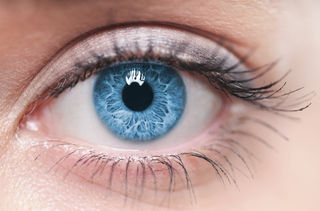
  Piotr Krzeslak/ShutterstockPeople often call eyes the windows to the soul. But what exactly do we see when we gaze into the eyes of another person? In fact, the eyes do provide lots of information about another person’s emotional state.
When people are sad or worried, they furrow their brow, which makes the eyes look smaller. Yet when people are cheerful, we correctly call them “bright eyed.” That’s because people raise their eyebrows when they’re happy, making the eyes look bigger and brighter.
We can tell a true (or Duchenne) smile from a fake by looking at a person's eyes. The mouth shape of a smile is easy to fake—we do it all the time out of politeness. But the eyes are the giveaway: When we’re truly happy, we not only smile but also crinkle the corners of our eyes in a “crow’s feet” pattern. But when people fake a smile, they usually forget about their eyes.
If the eye is the window into the soul, the pupil is—quite literally—an opening into the eye. The pupil acts like the aperture on a camera, dilating or contracting to regulate the amount of light coming into the eye. We all know that our pupils get smaller in the light and bigger in the dark. This is the pupillary light response.
In an article published in a recent issue of Current Directions in Psychological Science, psychologists Sebastiaan Mathôt and Stefan Van der Stigchel argue that there’s a lot more to the pupillary light response than, well, meets the eye. They claim that the size of the pupils tells us a lot about the emotions and intentions of their owners.
According to the researchers, the pupillary light response isn’t just a mechanical reaction to ambient light. Rather, as we shift our gaze from one spot to another, our pupils adjust their size in advance to the amount of light we expect to encounter at the new location.
Consider working at a computer: Most of the time, our gaze is fixed on the bright screen, so our pupils are contracted. But every now and then, we glance down at the keyboard, as when we need to reposition our fingers. The authors of the article claim that the pupils begin to dilate even before the downward eye movement begins. Because the pupillary light response is relatively slow—about a quarter of a second—anticipating the amount of light at the new location improves vision once our gaze gets there. (All of this, of course, operates below the level of consciousness.)
The pupillary light response is only one reason why the pupils change size. They also dilate when we’re aroused. The body has an alarm network called the autonomic nervous system that prepares us to take action whenever we detect a threat—or an opportunity—in our environment.
Encounter a bear while walking through the woods, and your autonomic nervous system goes on alert. Your heart and breath rates increase, you begin to sweat as your muscles tense up, and, among other bodily reactions, your pupils dilate. The autonomic nervous system prepares your body to take action against the threat—perhaps scampering up the nearest tree.
We also need to take action when we encounter opportunities. Meet an attractive person at a party, and what happens to your body? Your heart and breathing rates increase, you begin to sweat—and your pupils dilate.
Psychologists consider pupil dilation to be an honest cue to sexual or social interest. That’s because pupil size isn’t under your voluntary control. Let’s say you’re trying to fake interest as your coworker recounts every play in his weekend golf game. You can force a smile. You might even remember to crinkle the corners of your eyes, to make that smile look real. But your tiny pupils will reveal your lack of interest.
Arousal increases pupil size irrespective of the amount of ambient light present because optimal pupil size involves a trade-off between two factors. The first is visual acuity, or how well you can see the details of whatever you’re looking at. In this case, you need “Goldilocks” pupils—not too bright and not too dark, with just the right amount of light coming in. Thus, the pupillary light response is important for visual acuity.
The second factor is visual sensitivity, or how well you can detect something that’s in the environment. If you want to really see what’s out there, you need to have your eyes—especially your pupils—wide open. This is where the connection between arousal and pupil dilation comes in.
Psychologists consider pupil size in terms of the two functions of vision—exploration and exploitation. When we’re exploring our environments, we’re on the lookout for threats and opportunities, so we’re in a heightened state of arousal. Visual sensitivity is most important in exploration, so our pupils are wide open, taking in as much visual information as possible.
Once we’ve identified an object of interest and have it under our control, we shift to exploitation mode: We need to examine the item carefully to find all the ways we can use it, to understand it as fully as possible. Now, visual acuity is most important, and our pupils dilate or contract so that just the right amount of light comes in.
The so-called pupillary light response isn’t just a mechanical reaction to the amount of ambient light, as is the aperture on a camera. Instead, the pupils also adjust according to our emotions and expectations. Thus, the eyes may be the windows to the soul, but the pupils tell a lot about what’s going on in the mind of another person.

What to look for in social anxiety


What to look for in social anxiety Made with Flare More Info
People face anxiety-causing situations regularly. Expectations at school, work, or home, as well as in relationships can be particularly troubling.
It’s different with anxiety disorders. You’re not just nervous. Your feelings remain. In fact, the anxiety can get worse and can negatively affect your overall health.
When you have social anxiety, you may be more likely to have one or more of the following:
  • Be nervous being around, especially talking, with others, often to the point of blushing, sweating, or trembling
  • Hyper aware of yourself, your appearance, and your actions
  • Worry where others are or will be located or that others will judge you
  • Avoid places where others frequent (like restaurants, movie theatres, sports games, parties)
  • Find it difficult to make and keep friends.
Social anxiety can surface with a specific type of interaction (like public speaking) or be broad (such as being around anyone except their immediate family).
Social anxiety is most often diagnosed after symptoms have exhibited for at least 6 months. It usually starts in one’s youth and (without proper care) can last the remainder of one’s life.
If you think you have social anxiety, talk to your doctor about your symptoms. Get an exam to see if general anxiety disorder is the true cause of your symptoms. Then see a mental health specialist for treatment.
If you are one of millions of people who prefer natural treatments to pharmaceutical medications, Truehope could be the answer you have been searching for. If you suffer from symptoms of social anxiety and you want to treat the cause effectively rather than cover up the symptoms with medication, EMPowerplus Advanced can help.

2016年1月6日

How to Get Your Way With Body Language

happy-couple

Express yourself

by Brittani Renaud
From Health magazine
Did you know that the way you stand can make you more persuasive—or more attractive to your date? And the way you hold your arms can be a tip off that you're tense? Send out the best possible message to your guy, your friends, and your coworkers with this quick primer.friends-body-language

Be a copycat

Mirroring someone else's body language is a great way to show that the two of you are in sync. In fact, when you talk to a close friend, you may find yourself matching her posture—she leans forward, you lean forward; she takes a sip of her latte, you take a sip.

"You're saying, 'I feel comfortable and at ease,'" says Patti Wood, MA, a body language expert in Atlanta. "And when someone mirrors you, it calms you." This move can also show empathy. When listening to your child, a friend, or even a client describe a problem, matching their posture and tone of voice shows them that you truly understand what they're going through.body-language

Take up space

Do you keep your arms close to your sides or folded in front of you? This makes your body more compact, which sends out the signal that you're not only closed but subordinate. "When you take up less space, you appear and feel less powerful, and people may treat you that way," Wood notes.

If you want to command respect, whether it's from a co-worker or a family member, take up a little more space. Remember to stand up straight and relaxed, with your feet 6 to 7 inches apart.body-language

Hold your head up

There's a good reason why "jump for joy" is a cliché. When you feel happy and confident, your body automatically lifts up, Wood says. You may raise your head, shoulders, and/or chest, and momentarily push up on the balls of your feet. Feeling down? Hold up your head, bring your shoulders back, sit up, and smile. "It can change your mood in less than a fraction of a second," Wood says. Believe it or not, our body movements actually change our feelings.
 cross-arms-body-language

Watch your arms

Though anything from stress to an overly air-conditioned room may prompt you to cross your arms, people assume you're trying to keep something inside or someone out when you get in this stance. You might unconsciously do it at a party to keep others at bay or at work as a way of holding back your real opinion. To appear more approachable, leave arms by your sides or gesture with them.
 couple-body-language

Open up

If you're physically attracted to a date (or your husband on date night), you might reach out with open palms or push your hair behind your ear with your palm facing out. "That's a signal to his brain that you're open to seduction," Wood says. Similarly, turning the upper part of your chest—what Wood calls "the heart window"—toward a person and pointing your toes toward him show a desire to connect, whether it's a romantic interest or a potential new friend.

8 Ways to Fall in Lust With Your Body

Get ready to get turned on...by you. These simple strategies will help you reclaim your sexiest self. 
 bubble-bath-lust-body

Love your sexy skin

by Colleen Oakley
From Health magazine
When was the last time you felt truly sexy? If you're having trouble recalling, you're not alone. "When women spend their days working hard, they often pay little attention to their sensual selves," says Lisa Schrader, author of Kama Sutra 52. Try these tips and tricks to awaken your inner sex goddess.
 woman-red-lipstick

Wear red

Whether it's crimson lipstick or a scarlet dress, rocking this hue can up your lust factor. "It stimulates your sexual appetite," says Elizabeth Harper, author of Wishing: How to Fulfill Your Heart's Desires.
 purple-underwear

Go commando

Date night? Skip underwear, says Ramani Durvasula, PhD, a professor of psychology at California State University, Los Angeles. "You'll feel a bit naughty and very sexy."
 work-up-sweat

Work up a sweat

Women who exercise regularly feel more desirable, a study conducted at the University of Arkansas in Fayetteville reveals.
 turn-yourself-on-jewelry

Slip on dangly jewelry

Turn yourself on with pieces that tease your favorite body parts, such as a necklace that gently brushes your cleavage, says Stephanie Buehler, a psychologist and sex therapist in Irvine, California.
 woman-mirror-reflection

Show off your assets

Need a lift? Skip the roomy sweats and slip into clothes that gently hug your body, advises Scarlett De Bease, president of Scarlett New York Image Consulting. Don't you feel flirtier already? wax-more-sensitive-body

Dare to go bare

Ask to take off more than usual at your next bikini wax. "Removing hair down there will make you more sensitive and aware of your body," says Sheila Kelley, founder of S Factor Fitness, a pole-dancing workout.strong-muscles-high-heels

Forget the ballet flats

Wearing high heels strengthens the muscles of your pelvic floor, which can potentially increase your sexual satisfaction, Italian research shows. Besides, strutting your stuff in pumps is sexy! woman-undressing-stockings

Undress like someone's watching

"Instead of shuffling off your clothes exhaustedly, make it playful," Kelley suggests. Slowly and sensuously peel off each layer. Then slip into a sexy camisole...or nothing at all. You'll be head over heels for yourself in no time.

吃斋的猪

猪现在的三餐多是吃蔬菜瓜果类。 偶尔蔬菜碗中加几片薄薄的肉片或鸡蛋增添点滋味。 吃素吃多了脸色也绿黄绿黄的。 本来都正在步入中老年人的步伐,脸色已经非常灰暗了,再加上营养不均匀的三餐。 猪脸越见丑陋,自己都不想看到镜中的自己。 这样的伙食也使猪脚步乏力,整天缺乏动力。 只想躺着不...