2016年1月6日

7 fearless ways successful people think

0923-avoid2
Successful people think with strong minds. They prepare themselves mentally every day so they are prepared to face the challenges in their lives that may arise. These seven fearless ways of thinking, compiled from Forbes, are ones you may want to consider implementing yourself:

1) Move On

Fearless people, successful people, are not afraid to move on in life. They do not “waste time feeling sorry for themselves,” because they know it is not productive to their end goal. “They have learned to take responsibility for their actions and outcomes, and have an inherent understanding of the fact that frequently life is not fair.” At the end of the day, fair is a child’s word. When people realize this, they stop dwelling on the past and bounce back from mistakes faster. This allows them to be more successful in life because they do not waste time being upset about things they cannot change. Instead, they use that time to productively work on conquering new goals.

2) Keep Their Power

“Mentally strong people avoid giving others the power to make them feel inferior or bad.” Rather than allowing the thoughts of the many different people they come across affect their way of thinking, successful people realize that everybody has different opinions and that not everybody’s opinions matter or should be taken personally. They know they are “in control of their actions and emotions. They know their strength is in their ability to manage the way they respond.” Even when the chips are down and the insults feel personal, successful people find a way to look ahead and ignore the people tearing them down.

3) Accept Change

There is an old adage that claims the only things that are certain in life are death and change. “Mentally strong people embrace change and they welcome challenge.” In order to change yourself, you have to challenge yourself. If you are not challenging yourself, you are going to stay in the same spot for the rest of your life or ultimately begin to slip backwards. Mentally strong people, fearless people, successful people think in a way that will allow them to make changes in their life and accept changes that come so that they can get stronger with each day. “An environment of change and even uncertainty can energize a mentally strong person and bring out their best.”

4) Take Calculated Risks

“A mentally strong person is willing to take calculated risks.” Successful people think that risks sometimes bring out the best results in life. They aren’t careless, but rather “weigh the risks and benefits thoroughly, and will fully assess the potential downsides and even the worst-case scenarios before they take action.” They don’t shy away from risks, but they don’t plunge into ones without thinking them through first. However, it is the risks in life that make life interesting and sometimes bring out the most incredible results. Successful people are wiling to take this chance when it makes sense to them.

5) Applaud Others’ Successes

Jealousy and resentment are both emotions that can be incredibly prohibiting to one’s success. “It takes strength of character to feel genuine joy and excitement for other people’s success. Mentally strong people have this ability.” You only get what you work for in life. Dwelling on the idea of unfair successes will get you nowhere. Successful people think, and they think correctly, that the successes of other people are not inversely tied with their own failures. They can recognize the difference between their own successes and the successes of others and realize that even if there is a possible connection, the focus that will provide the most beneficial outcome is for them to focus on their own journeys and successes.

6) Remain Resilient

“Every failure is a chance to improve.” Successful people fail, too. The difference is that they get back up and keep fighting. No successful person is where they are today because they just slipped through life as casually as an afternoon breeze in the autumn. Every person in this world who is truly successful has been tenacious and hard-working. “Mentally strong people are willing to fail again and again, as long as the learning experience from every ’failure’ can bring them closer to their ultimate goals.” Sometimes failure teaches you more than a win ever could.

7) Earn Their Wins

Successful people think in terms of earning potential. They do not “feel the world owes them anything. Particularly in the current economy, executives and employees at every level are gaining the realization that the world does not owe them.” In order to be successful, it is vital that you think with a strong mind and work for your successes. They will never be handed to you on a silver platter. You must earn them and even when you think you’ve earned them, realize that sometimes you have to work four times as hard as you could have ever expected to get somewhere. Yet, successful people think, and think correctly, that if they work hard enough they will eventually earn the wins they want in life. The world may not owe them anything, but the world is much more likely to give them things if they work hard for them.
Source: Forbes
 http://ziglarvault.com/7-fearless-ways-successful-people-think/

7 Ways 'Fearless' People Conquer Fear

5. They overprepare but they don't overreact.
Posted Dec 07, 2015 
 Stefano Tinti/ShutterstockYou may believe that brave and courageous people have no fear. Wrong. Courageous people are as afraid as anyone else. It is actually their fear that makes them courageous, not the lack of it. But they manage their fear differently. It’s not a stretch to say that people who truly have no fear are either sociopaths or have severe brain damage. For the rest of us, being "fearless" means knowing how to leverage fear. How do fearless people do that? How do they become fearless without being thoughtless?
1. They respect fear.
Fearless people are not afraid to be afraid. They are comfortable acknowledging their fear. They know fear is hardwired into our nervous system and therefore impossible to shut down. They understand that the role of fear is to warn and protect, not to scare and prevent. For them fear is not an enemy. It is an ally that guides them through high-stakes situations and ensures goal achievement.
2. They understand the mechanics of fear.
Fearless people recognize that fear is a complex experience made up of interactive physical, emotional, and mental components. They know that fear goes beyond feelings of worry and dread, and that their own thoughts can exacerbate their fears by making things seem scarier than they really are. They understand that their own actions can determine the degree of impact fear will have on their lives.
3. They explore the origin of their fear.
When fear arises, fearless people don’t let it linger. They want to know what is causing it. Fearless people realize that fear is not so much about what scares you but about why it scares you. And there are 3 main reasons why something scares you:
  • Biology: You are designed to be scared of it. There are a number of things that we are genetically predisposed to be afraid of—snakes, for example.
     
  • Past experience: It (or something very similar) scared you a lot in the past. Fear can be learned and conditioned. If you have been in a bad car accident, you may become afraid of driving.
     
  • Forecasting: You worry about the future. Fear emerges when you expect that your predicament or your actions could have serious and harmful consequences for your life, your health, your freedom, your relationships, or your self-esteem.
4. They focus on building confidence.
There is no better antidote to fear than self-confidence. The more confident you are about your ability to handle what scares you, the more secure you will feel. Building confidence is a result of acquiring knowledge, mastering a skill, and gaining experience. Getting the facts lessens the intensity of fear by making things seem less scary and more preventable. Mastering a skill, whether public speaking or job interviewing, shifts your focus from fear of failing to active coping. Finally, the more experience, direct or vicarious, you gain, the less of a barrier to success fear becomes.
5. They overprepare without overreacting.
Fearless people don’t spend time worrying about the worst-case scenario—they prepare for it. They make a plan, and they have a backup plan. They overprepare without overreacting, obsessing, or ruminating. In Chapman University survey, more than 50% of respondents stated that they were very afraid they would experience a natural or manmade disaster in their lifetime, and 86% believed that preparing ahead of time (e.g., putting together an emergency kit) would increase their odds of survival significantly. Yet, only one in four had actually made any efforts to prepare for such an event. Imagine how much more scared those three out of four people will be when the Weather Channel outlines the path of a powerful hurricane.
6. They take action despite their fear, not because of it.
Ultimately, what determines the outcomes you achieve in life are the actions you do or do not take. And fear will interfere. Fear-engineered actions range from tackling what scares you head on to working through it despite your fear. Fearless people strategize. They plan and evaluate their actions. They know when to push forward and when to pull back. They know what risks are worth taking and which ones they should avoid. And when things get out of hand. . .
7. They are not afraid to ask for help.
Despite its incredible evolutionary value, fear is not a fun feeling. It is an inherently unpleasant experience that causes physical discomfort, emotional distress, and mental turmoil. When a person doesn't deal with fear properly, it can become pathological. According to the National Institute of Mental Health, almost one out of five adults will suffer from an anxiety disorder in a given year. The psychiatric literature reports over 100 phobias, disorders which manifest in a persistent and irrational fear of objects or situations. Fearless people know when to seek help. When a worry becomes excessive and anxiety interferes with daily life, it is time to consult a professional.

2016年1月5日

5 New Breakfast Superfoods

These easy-to-use toppings and mix-ins enhance the most important meal of the day.
 healthy-breakfast

Star ingredients

by Sunny Sea Gold
From Health magazine
You already know it's important to start your day off right. Now it's time to kick it up a notch nutritionally, with these easy ideas from Jackie Newgent, RD, author of 1,000 Low-Calorie Recipes.

The best part? You don't have to change your regular morning menu. Just add these five nutrient-packed ingredients.
 breakfast-flax

Flax

Sprinkle 1 tablespoon ground flaxseed in your bowl of oatmeal for brain-boosting omega-3 fats and two extra grams of fiber.
 breakfast-pistachios

Pistachios

Spread toast with chocolate nut spread; add chopped pistachios for cholesterol-lowering phytosterols.
 breakfast-turmeric

Turmeric

Toss a pinch of ground turmeric into beaten eggs to add earthiness and cancer-fighting antioxidants to a veggie omelet.
breakfast-hummus

Hummus

Schmear half a toasted whole-grain bagel with two tablepoons hummus for a creamy topping packed with fiber and filling protein.
breakfast-berries

Berries

Top pancakes or waffles with one half-cup of mashed raspberries to get more than 20 percent of your daily vitamin C needs.

What Really Happens During a Therapy Session

No, you don't have to talk about your mother (unless you want to).
Posted Dec 05, 2015 
 wavebreakmedia/ShutterstockWhen you take your car to the car mechanic, you know what’s going to happen: Your car will get repaired.
When you break a bone and visit your doctor, you know what’s going to happen: Your bone will be set in a splint or cast and eventually heal.
But when you make an appointment to see a therapist, do you know what’s going to happen? Many people aren’t quite certain. Will you just talk? Will you have to discuss your childhood? Will you be “hypnotized?" And what’s the “point” of seeing a therapist, anyway? Why not just talk to a friend?
There is a great deal of uncertainty in our society about what actually happens during a therapy session, what types of issues and problems are suitable for therapy, and what benefits a therapy session can provide. I’d like to address a few typical questions—and misconceptions—about what therapy is, what it isn’t, and how it really works.
Q: Do I have to be “sick” or “disturbed” to go see a therapist?
A: No. Thinking that one has to be “seriously disturbed” in order to see a therapist is a myth.
While some therapists do specialize in severe emotional disturbances—including schizophrenia or suicidal thoughts—many focus on simply helping clients work through far more typical, everyday challenges like mapping out a career change, improving parenting skills, strengthening stress management skills, or navigating a divorce. Just as some physicians specialize in curing life-threatening illnesses, while others treat “everyday” illnesses like flus, coughs, and colds, psychotherapists can serve a wide range of clients with a range of needs and goals, too.
In fact, most of my clients are successful, high-achieving people who are quite healthy, overall. Most are challenged by a specific, personal goal—like losing weight, creating more work-life balance, finding ways to parent more effectively, or feeling anxious about dating again after a rough break up.
Q: How can I choose the right therapist for my goal/situation?
A: Choosing a therapist is like choosing any other service provider—it’s a good idea to visit the practitioner’s website, and read client testimonials or reviews (if they have any—many do not, for confidentiality reasons). It's also good to ask friends and family members, or your physician, for referrals (and of course, check to see who is covered in your health insurance network).
If you are hoping to work on a specific issue—overeating, smoking, making a career change—try to find a therapist with expertise in that area. Many list their specialties or areas of focus on their websites. There are therapists who specialize in relationship issues, parenting issues, anger management, weight issues, or sexuality—pretty much any issue, goal, or situation you can imagine. If you’re not sure about someone’s expertise, just call them and ask. If they can’t be of assistance with your issue, they may be able to refer you to someone who can.
Q: What actually happens during a therapy session?
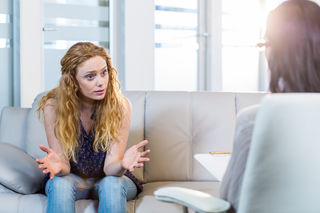
A: Each session is, essentially, a problem-solving session. You describe your current situation, and your feelings about it, and then the therapist uses their expertise to assist you in trying to resolve that problem so you can move closer to having the life you wish to have.
At the beginning of a session, the therapist typically invites you to share what’s been going on in your life, what’s on your mind, what’s bothering you, or whether there are any goals you’d like to discuss. You’ll be invited to speak openly. The therapist will listen and may take notes as you speak; some, like myself, take notes after a session. You won’t be criticized, interrupted or judged as you speak. Your conversation will be kept in the strictest confidentiality. This is a special, unique type of conversation in which you can say exactly what you feel—total honesty—without worrying that you’re going to hurt someone’s feelings, damage a relationship, or be penalized in any way. Anything you want—or need—to say is OK.
Some therapists (like myself) may give clients some homework to complete after a session. That homework might be to set up an online dating profile and reach out for a first date, or to exercise three times a week. It may be to spend some time each day pounding a pillow to safely release pent-up emotions, make a nightly journal entry, or any number of “steps” and “challenges” relevant to your goals. During your next session, you might share your progress and address any areas where you got frustrated, stuck, or off-track.
Of course, every therapist is different, every client is unique, and every therapist-client relationship is distinct as well—which means that there is no universal description of a therapy session. Some therapists employ dream interpretation in their work. Others bring music or art therapy into their work. Others incorporate hypnotherapy, life coaching, meditation, visualization, or role-playing exercises to “rehearse” challenging conversations. The list goes on and on. Ultimately, regardless of their approach, a therapist will listen without judgment and help clients try to find solutions to the challenges they face.
Q: Will I have to talk about my childhood?
A: Not necessarily. Many people think that visiting a therapist means digging up old skeletons from your childhood, or talking about how awful your mother was, etc. That is a myth. What you talk about during a therapy session will largely depend on your unique situation and goals. And depending on your goals, you may not actually talk about your past that much. The focus of your therapy is as likely to be your present-day reality and the future that you wish to create.
That being said, if you REALLY do NOT want to discuss your childhood, the intensity of your desire NOT to talk about it might suggest that you should! When people have strong negative emotions—about their childhood or any other topic—it’s typically worth doing some excavating to figure out why that is. Whatever is causing them to feel such strong emotions about the past is more than likely impacting their present-day life in some way, too.
Q: How long will I have to go to therapy?
A: This varies from person to person. I’ve had clients who booked one session, we worked out their issue(s), and they were all set: They marched out and didn’t need a follow-up session. Sometimes, one brave, honest conversation is really all you need.
Other clients have booked sessions with me over a period of several weeks or months, focusing on one issue, resolving that issue, then perhaps moving on to a different challenge. Then there are other clients who I’ve been working with for some time—they appreciate having a weekly, bi-weekly, or monthly “check-in.” They may share their feelings, sharpen their life skills as needed, or perhaps enjoy a deeply nourishing guided meditation or hypnotherapy experience to de-stress. As one client put it, “Every two weeks when I meet with you, I leave your office feeling like you pressed my reset button.”
Therapy is really about whatever a client needs—a one-time conversation, a temporary source of support during a life transition, or an ongoing experience to optimize health physically, mentally, emotionally and spiritually.
Q: Is meeting with a therapist over the phone—or through video chat—just as effective as meeting in person?
A: That depends on your personality and preferences. In the state of Hawaii, where I live, at least one insurer that I know of covers doing therapy virtually via video chat (like Skype or Facetime). This makes it a convenient option for people. Many of my clients do enjoy having some, or all, of their sessions via video chat because it means they don’t have to take time out of their busy schedules to drive, park, and so on. They can just close their bedroom or office door, pick up the phone or log in, and away we go—very convenient.
Where feasible, I suggest trying out both ways—do a traditional, in-person therapy session and then try a video session—and see which format is the best fit for you.
Q: Why see a therapist? Why not just talk to a friend or someone in my family?
A: If you are blessed with caring, supportive family members and friends, by all means, share your feelings, goals, and dreams with those people. They are a big part of your support network, and their insights and encouragement can be very helpful. However, people who already know you might not always be completely objective when listening to you. For example, you may want to change your career, and you confess this dream to your wife. She may want to support you 100%, and try her very best to do so, but she may also be dealing with emotions of her own—such as anxiety about how a career shift will change your lives, not to mention your income. These emotions could make it difficult for her to listen and support you objectively.
This is why working with a therapist can be so valuable. It's a unique opportunity to share everything you’re feeling, and everything you want to create, without anyone interrupting you, imposing his or her own anxieties onto the conversation, or telling you that you’re “wrong” or that you “can’t.”
A therapy session is a space where you don’t have to worry about hurting anyone else’s feelings—you can be totally honest. It also means you have the potential to solve problems faster and with greater success. In the long run, that’s better for you and everyone else involved in your life, too.
To sum it up:
Therapy is a valuable tool that can help you to solve problems, set and achieve goals, improve your communication skills, or teach you new ways to track your emotions and keep your stress levels in check. It can help you to build the life, career, and relationship that you want. Does everybody need it? No. But if you are curious about working with a therapist, that curiosity is worth pursuing. Consider setting up one or two sessions, keep an open mind, and see how things unfold. You have very little to lose and, potentially, a lot of clarity, self-understanding, and long-lasting happiness to gain.
Suzanne Gelb, Ph.D., J.D, is a clinical psychologist and life coach. She believes that it is never too late to become the person you want to be: Strong. Confident. Calm. Creative. Free of all of the burdens that have held you back—no matter what has happened in the past. Her insights on personal growth have been featured on more than 200 radio programs, 200 TV interviews and online at Time, Forbes, Newsweek, The Huffington Post, NBC's Today, The Daily Love, Positively Positive, and much more. Step into her virtual office (link is external), explore her blog (link is external), book a session (link is external), or sign up (link is external) to receive a free meditation and her writings on health, happiness and self-respect.
Disclaimer: This article is for informational purposes only. It is not a substitute for professional or psychological advice, diagnosis, or treatment. Always contact your qualified health provider before implementing any new personal growth or wellness technique and with any questions about your well-being.
Copyright © 2015 Dr. Suzanne Gelb, All rights reserved.

How 4th Grade Predicts Your Future

Two simple questions in grade school tell us so much about the rest of your life
Posted Jun 07, 2015 
 Remember recess? Running around a huge playground, screaming, laughing, rolling down hills?
Which kid were you? Were you part of the horde playing a massive game of tag? Did you sit with a special friend, happy to play together in your own world where no one else existed? Or did you walk around the perimeter of the playground, holding a stick, talking to a worm, watching, but not joining your peers?
Doesn't this all seem like it happened a million years ago?
Now you are an adult, and it's lunchtime. You look up from your desk and see a few familiar patterns as folks gather to go out for food. There's Jim, standing by the elevator, surrounded by 4-5 of his friends who laugh at every one of his jokes. There's Maria and her group eating salads in the lounge, usually talking about their co-workers. George always stays at his desk, usually claiming that he has too much work to do, but you kind of get the feeling that no one has ever invited him to join them anyway.
www.chicagonow.com, common
Source: www.chicagonow.com, common
A growing body of psychological research is revealing a few remarkable connections between our childhood experiences with peers and our lives in adulthood. Sometimes in not so obvious ways. Just by knowing how well you were liked by peers in 4th grade allows us to make pretty good predictions about your life as an adult today – across a whole range of domains.
In psychological research, this kind of work is done by asking even very young children to answer to very simple questions. In safe, discrete ways, we ask kids to tell us which of their classmates they like the most and which they dislike the most. This reliably identifies five groups of children who grow up to have very different lives.
  • Of course, one of these groups includes the "Accepted" kids, the ones picked by virtually all of their peers as someone that is liked the most, and almost never picked as someone that others dislike.
  • "Rejected" kids are their opposite; often picked as disliked and rarely picked as liked.
  • "Neglected" kids, as their name implies, are very rarely picked for either question. They seem to be somewhat invisible - kids don't really notice them much at all. In contrast,
  • "Controversial" kids are highly visible, known by everyone - but in a love-hate relationship with their peers. Controversial kids are nominated by their peers as liked and as disliked in pretty equal proportions.
  • The rest of the kids are "Average," but most tend to veer towards one of the other groups.
Remarkably, these groups can be fairly stable as we grow up. Rejected kids tend to stay that way from elementary school into high school, and sometimes even into adulthood. It doesn't matter if they change schools or get a makeover in a move starring Freddie Prinze Jr.; Rejected kids become rejected all over again, very quickly. Same for Accepted and Controversial kids too!
Maybe this is why the effects of these early peer experiences are so enduring. Which category fit you in elementary school? Has it affected you as an adult?
If you were Rejected, research suggests that you are up to twice as likely to experience depression or anxiety as an adult. You make less money than others with similar experience. You may have had more difficulty finding a stable romantic partner, and if you did, you have been a little less secure in that relationship than others (often feeling like maybe you were not loved, or worthy of love). Being Rejected in childhood actually changes brain wiring in ways that make you process the world around you a little differently (i.e., do you think that others are being mean to you, when they are not?), and you may even care more about external validation (i.e., seeking praise and reassurance) than intrinsic reinforcement. Being Rejected even has triggered dormant DNA in your cells to increase your risk for inflammatory disease later in life.
Were you Controversial? If so (and if you were also physically attractive), you may have grown up to be one the dominant, high status adolescents in high school (think The Plastics, or A-listers) who bullied others to stay at the top of the teenage food chain. You probably started using illegal substances earlier in life, having unprotected sex, and your chances of teenage pregnancy (or getting someone pregnant before the age of 17) was much higher than others. As an adult, research says that you may have some difficulties with substance use and addiction now, you are focused more on beauty and power than others, and you may even look older now than many of your classmates the same age as you.
Were you Neglected? Surprisingly, many of these kids turn out to be pretty OK. Neglected kids are most likely to switch categories as they grow up. A Neglected 4th grader is just as likely to be Neglected, Accepted, or Rejected by high school. If you playing by yourself was your own choice, or if you were simply not very interested in others, then you may have been completely content with forging your own path as you grew up. If you were Neglected because you always felt too apprehensive to approach others, however, then there is a good chance you have continued to experience significant anxiety throughout your life. Research suggests that dating was not an easy experience for you, and you may have even chosen a career path that allowed you to minimize social situations that were especially scary (public speaking, recruiting, in-person sales).
If you were Accepted, then you have probably had a very different life than the others. You are confident and optimistic, maybe even a little too much sometimes. You are comfortable developing new relationships at work and in your personal life, and you have used that to your advantage. Perhaps you are a leader, maybe you are the social butterfly of your neighborhood, and maybe you have committed yourself to deep personal relationships with friends and family. If you have an argument, you are less likely to think about retaliation and more likely to think of ways to resolve conflict by strengthening your relationship. Whatever you are doing, you are more likely than any of your elementary school playmates to feel like your life has meaning and you are flourishing.
Of course, not everyone who was Rejected turns out to have difficulties, just as not everyone who was Accepted has a lifetime of success. However, findings have been remarkably consistent in suggesting that this simple classification into five groups of likeability in elementary school is a stronger predictor of our adult lives than we ever thought. In fact, we even have some evidence to suggest that how likeable you were in elementary school is affecting how you parent your own children, and how liked they will be as they grow up.

2016年1月4日

19 Ways Your Body Changes When You Fall in Love

Those butterflies in your stomach aren't just in your head. Here are some of the ways falling in love can affect your body.

 How your body responds to love

 How your body responds to love

by Lindsay Tigar
Butterflies in your stomach, a racing heartbeat—you probably remember those symptoms well from your first middle school crush. As an adult, they're actually your body's subtle clues that you're falling in love (or lust, at least). At the start of a relationship, a series of truly fascinating chemical reactions occur throughout your nervous system and hormones. From the first time you meet to climbing under the sheets, here's what's happening to your body as you fall in love.
 Being in love is like a drug addiction

Being in love is like a drug addiction

Kesha wasn't too far off when she described love as a drug, according to a 2010 study conducted at Rutgers University. Researchers concluded that falling in love is much like the sensation of feeling addicted to drugs with the release of euphoria, including brain chemicals like dopamine, oxytocin, adrenaline, and vasopressin. Kat Van Kirk, PhD, a clinical sexologist and licensed marriage and family therapist, says these chemicals are released throughout different points of attraction, and help bond you with your partner. Like drugs, the more time you spend with this person, the more addicted you become, she says. 

 body in love being drunk

It's also like being drunk

Having a few too many glasses of wine makes you less inhibited, fearful, and anxious, and more aggressive and boastful—and so does oxytocin, the "love hormone," according to a University of Birmingham study. Researchers pooled existing research into the effects of both oxytocin and alcohol and although they impact different parts of the brain, they have similar outcomes.

 body in love cheeks flush, palms sweat, and heart races

 Your cheeks flush, palms sweat, and heart races

 Before a big date, you might notice your heart rate tick up and your hands get sweatier. It's not just a nervous tick that causes your anxiety to rise; it's actually the stimulation of adrenaline and norepinephrine, says Dr. Kirk. "This can lead to having a physical sensation of craving and the desire to focus your attention on that specific person," she says. 

 body in love Your pupils dilate

 Your pupils dilate

When you're attracted to someone—sitting across from you at the bar, on the street, laying in bed together—there is a stimulation in your nervous system's sympathetic branch, which causes your eyes to dilate, says Dr. Kirk. (Go ahead, you can test it with your partner—it's fun!)

 body in love You may feel a little sick

 You may feel a little sick

It's normal to lose your appetite or feel uneasy when you've just started seeing someone new. That's your body's way of telling you that you really like that person. "Lovesickness may actually be the stress hormone cortisol contracting the blood vessels in your stomach, making you feel sick," Dr. Kirk says. This usually fades over time as you become more comfortable with your boyfriend or girlfriend—but could also partially explain why many brides and grooms feel like they can't eat at their wedding.

 body in love superpowers

Being in love might give you superpowers

Ever heard stories of panicked moms lifting cars off their trapped children? While it might seem insane that the combination of love and fear can give you sudden superhuman strength in an emergency, anecdotal evidence suggests it really can happen. (It's pretty much impossible to scientifically research this phenomenon, called hysterical strength, because it's difficult to replicate those conditions for a study.) It's not just parents who have experienced hysterical strength; people who are in love have, as well. "The oxytocin released in your system when you fall in love can actually increase your tolerance for physical pain," Dr. Kirk says. Move aside, Prince Charming—love will save the day.
 body in love eyes

 You won't be able to keep your eyes off your partner

There's a scientific reason why you have photos of your love set as your smartphone background or framed on your desk. The desire to literally look at your partner's face comes from the brain's release of dopamine, says Dr. Kirk. "This is the same effect on the brain as taking cocaine because it stimulates the desire/reward response related to intense pleasure," she says. In other words, when you scroll through photos from your vacation together, you get a surge of energy, as your desire is being fulfilled.

 body in love voice

 Your voice might actually get higher

Once you're past that crush stage and you're deepening your connection and commitment to your partner, you might notice other odd changes in your body—including your voice getting higher (yes, really). According to a study published in 2011 in the Journal of Evolutionary Psychology, researchers found that when women spoke to men they were more attracted to physically, their voice tended to get higher and more feminine. So if you're a bit softer with your partner than you are with your co-worker who keeps missing your deadlines, blame it on love. body in love worry

You will worry when they're not around

When we're separated from our partner for brief or extended periods of time, we respond like a drug addict who is coming off of their addiction, says Serena Goldstein, a naturopathic doctor in New York City. "Corticotrophin releasing factor is increased as part of a stress response when we are away from our partner, contributing to anxiety and depression," she says. Those couples who are in long distance relationships learn to cope with this feeling, often through developing attachments to their partner's voice as a way to stay connected to him or her.
 body in love hormones

Falling in love may mess with your hormones

During the honeymoon phase of a relationship—the first one to two years when you go ga-ga every time you see your sweetie—your hormones go haywire. According to a 2004 study published in Psychoneuroendocrinology, cortisol (the stress hormone) increases in both men and women. And during this time, testosterone, the male sex hormone, decreases in men and increases in women.


body in love break your heart

Love can literally break your heart

You can die of a broken heart—it's a scientific fact, according to the American Heart Association. The scientific term is "stress-induced cardiomyopathy" and it can strike even the healthiest person when their stress hormones surge during an emotionally stressful event, such as the death of a partner, divorce, or even a bad breakup. Symptoms often mimic those of a heart attack and include shortness of breath, irregular heartbeat, and chest pain. While broken heart syndrome can cause permanent damage to the heart and, in rare cases, even death, the good news is that most cases are treatable and can be fully resolved within a few weeks.

body in love sex drive high

Your sex drive is the highest at the very beginning

At the beginning of a relationship, couples can't keep their hands off each other, but it can be tough to keep that spark alive long-term, especially for women, according to a study published in the Journal of Sex & Marital Therapy. Researchers from the University of Geulph in Ontario, Canada surveyed 170 men and women in monogamous heterosexual relationships about relationship satisfaction, sexual satisfaction and sexual desire. Researchers found that although the guys' sexual appetite held steady over time, women experienced a .02 drop on the Female Sexual Function Index for every month they remained in a relationship. If you start to feel your sex drive starting to cool, try these everyday libido-boosting habits to crank it back up.
 body in love few pounds

You may put on a few pounds

You'll hear jokes that people "let themselves go" when they're in a happy relationship, and there may be some truth to that stereotype. In a 2012 review in the Journal of Obesity, researchers found that people tend to gain weight as they settle into marriage. Another study found that after moving in with a man, women tend to eat more high-fat, high-sugar foods, and further research found that newly married young women gained 24 pounds in the first five years after getting married. Cynthia Sass, MPH, RD, Health's contributing nutrition editor, sees this happen firsthand to many of her clients, and has five tips for beating relationship pudge.
body in love marriage

If you get married, you may live a longer, healthier life

Tying the knot may lengthen your life. According Duke University Medical Center study, those who entered their 40s married had fewer risk factors for premature death than those who were divorced or never married. Another study from NYU Langone Medical Center in New York found that both married men and women may have stronger hearts than those who've never walked down the aisle. Men especially have stronger hearts thanks to their wives, with 5% lower odds of any vascular disease, according to the research. body in love strong bones

It may strengthen a man's bones

More good news for men who decide to couple up: a UCLA study found that men in stable relationships or marriages after the age of 25 have stronger bones. But the study had one catch: only those with supportive women in their lives actually saw the benefits from the long-term relationship. Those with ladies who weren't as loving or emotionally supportive didn't reap the same bone-building rewards.
body in love trouble sleeping

You might have trouble sleeping

Staying awake dreaming of that Tinder match date that went surprisingly well? Those feel-good crush-like symptoms may disrupt your sleep. According to a study of adolescents, when you're in those initial stages of euphoria, you feel more energized and positive in the early morning and evenings, causing you to not sleep as well, or have restless sleep. Dr. Kat says that all of those hormones bouncing around when you're thinking about your could-be relationship can also affect your ability to focus during the day, too.
 body in love creativity

Your creativity may be sparked

Though many famous writers have credited depression as the source of their inspiration, a 2015 study published in the Journal of Family Issues found that when you're in a relationship, your creativity may be ignited. Why? Researchers concluded that many people in love start to focus on the long-term, as opposed to the short-term, giving them a more holistic approach to their projects and passions, changing the way they process information. In other words, when you're dating, you're overanalyzing, but when you're in love, you allow yourself to dream a little more.

body in love sexually adventurous

It'll make you more sexually adventurous

Penn State sociologists who interviewed women in Pennsylvania, New Jersey, and New York found that when they're in a committed relationship, women are more keen to try something new—including in the bedroom. It also makes the whole experience of getting it on overall more satisfying for women, and could make them more open to experimenting. Good news for dudes who are willing to commit!
 body in love chronic pain

It can ease chronic pain

A passionate, all-consuming relationship may work just as well as medication at easing chronic pain, according to a 2010 Stanford University School of Medicine study. Intense feelings of love activate the same areas of the brain as painkillers, say researchers. Doctors aren't quite ready to prescribe love affairs as replacements for drugs, but are optimistic that understanding how neural-reward pathways triggered by love will help them develop new methods to treat pain. 

5 Things to Know About Exercising During Your Period

If you tend to ditch the gym during that time of the month, here’s something to think about: A woman named Kiran Gandhi recently made news for running the London Marathon during her period—without a tampon. She did it to raise awareness for women who lack access to feminine care products, and crossed the finish line with blood-soaked tights. So if she could run 26.2 miles bleeding freely, then the rest of us can probably handle a 45-minute Spin class, right? Yes, absolutely—in fact, multiple studies show menstruating women feel better when they get moving.
Here, everything you need to know about exercising on your period (your call whether you want to raise awareness about it).

It helps with annoying period-related symptoms

It may seem like the last thing you want to do when you have your period, but working out can help relieve the symptoms that make getting your period so annoying in the first place.”The more active you are [overall] and more regular you are with your activity, the better your periods end up being—less cramping, less heavy flow,” explains Stacy Sims, PhD, an exercise physiologist for USA Cycling Women’s Track Endurance Program and co-founder of Osmo Nutrition.
Case in point: when you sweat, water leaves the body, which can relieve uncomfortable belly bloat. Exercise also releases mood-boosting endorphins, which anecdotal evidence suggests might at least take your mind off discomfort or pain. And, a recent study revealed a correlation between higher levels of physical fitness and fewer PMS symptoms.

It may be the best time to do HIIT

The best workout to do during your period? High-intensity interval training, Sims says. “When your period starts, your estrogen and progesterone levels drop. And because of this, women can access carbohydrate/glycogen easily, as compared to high-estrogen time periods [when we] rely more on the slow breakdown of fat.” In other words, this hormone shift makes fuel more accessible to your body, allowing you to push harder and get more out of short, fast-paced workouts than you would during other times of the month.

It keeps you cool

Really. Turns out your body temperature is actually lower during your period, which is a low-hormone phase. “This increases time to fatigue, and allows the body to store more heat without hitting the tipping point of central nervous system fatigue,” Sims says. Not to mention, during this time we can tolerate hotter and more humid climates (hello, hot yoga!),  Sims adds.

You can make it more comfortable

Know your period is coming up? Don’t let the pain sneak up on you. It’s totally fine to take an over-the-counter NSAID pain reliever, like naproxen or ibuprofen, 24 to 48 hours before your period is due. This way, you can sidestep your symptoms before they keep you home from the gym. If you forget, be sure to take them at the first twinge of pain.
If you’re like Gandhi and find tampons uncomfortable during exercise, there’s no shortage of products to try: pads, liners, and now menstrual cups and even specialized period-proof underwear.

It’s okay to give yourself a break

All this said, if you’re really just not feeling it, don’t beat yourself up for not going all out. Even just a gentle stroll counts as exercise, and it may help you feel better. “Your best bet is to do some light and easy movement that helps reduce inflammation via blood flow,” Sims says. “If you really feel terrible, it’s all right to take a day or two off.”
A final note, if you’re regularly sidelined by your periods, consider talking to your doctor; prescription remedies like the birth control pill might be helpful. Plus, it’s a good idea to have major aches and super heavy periods investigated because those could signal a health problem like endometriosis.

2015年12月31日

My Last Day of 2015


2015年12月31日是星期四。
一年末了的最后一天,你在做什么?
我虽然如常的生活工作,但还是感概万千。
在这年与年的交接边缘,总是有一言难尽的感觉。
2015年即便没有大成就的我,还是满怀感恩。
是的,一年又过去,纵然有当时认为不能过的坎,在最后一天的回顾里都发觉都过去了。
2015年尾,我还是过着照旧的我的人生,我仍然单身,我仍然作着那分工作。
虽然这时候的我非常渴望有一个可以牵手的人,2015一整年里,我还是找不到他。
迎来的2016年铁定会给我许多的机会。
新的一年,新的希望,而我还在。
而我说不定会遇到他,那时肯定是时几成熟时,一切就绪。
摆在眼前的长长的2016年,在未知里,我更能进一不发挥我的工作能力。
2016年,更长一岁,一面说是老了,另一面说更增加了智慧。
即便还会遇到风风雨雨,我会坦然的面对。
2016 JOY WELCOME YOU!
HAPPY NEW YEAR 2016 TO ALL OF YOU!

These Charts Will Help You Determine Your Skin Tone Once and for All

skin-tone-EC3242A513D67051468E1CB939E3BB7F.jpg
In an effort to make your beauty routine as easy as possible, we're constantly offering up advice on the best beauty looks for every skin tone. Looking for the most complimentary red lipstick for your complexion? We got you. Same goes for nude nail polish, highlights, and blush. Deciding if your skin is fair, medium, or dark is the easy part. But what about your undertones? Together, these two useful charts will help you zero in on the perfect base color and the makeup shades to complement it.
The first step is to answer a few questions:
What color do you see when you hold a blank piece of white paper next to your face? If your skin appears more yellow, than you're probably warm. If your skin looks pink, then you're likely on the cool side.
Look at your wrists in natural light. Are your veins more blue or green? People with veins that appear blue or purple have cool skin tones, while those with warm tones have veins that look green.
Do you look better in gold or silver? We're guessing your jewelry collection probably contains a healthy mix of both, so we're going to go ahead and call out this trick for being a bit outdated. (Oh, and you can ignore that business about seasons and contrast, too. When it comes to wardrobe, wear what you like, when you like.) But if you're still unsure, try taking a look at your favorite or most-worn baubles for answers.
Still not sure? If you go both ways, don't fret. You're skin tone is probably neutral, meaning you can basically rock any color without issue—lucky you.
Now that we've narrowed in on your undertones to find a foundation that matches your skin, it's time to move on to the bigger beauty picture: a full face of makeup. Proceed to chart number two and you'll find that rosy and blue-based colors complement cool skin, while earthy makeup tones are practically made for warm shades. (Nix that part about "beautiful golden brown" tans though; no matter your coloring, you should stay out of the sun. Skin cancer isn't worth it.) And if you really, really, really still have no clue what colors are for you, take a hint from the recommendations below and play up your eye color. It's a no-fail way to make sure you're at least on the right track and highlighting what you've got.
from Allure----------------------------------------------------------------------------------------------------Skin Undertones: Where Do You Stand on the Color Wheel? | allure.com29290
Allure

2015年12月30日

10 Things Your Breasts Say About Your Health By Aviva Patz


They're right there on our chest—AA or DDD, perky or pendulous, nipples pale pink or dark brown—and yet most of us don't give our breasts much thought day to day. But we should. Here's what the look and feel of your dynamic duo can tell you about your health.


Growing size
If your breasts are growing, it's likely due to weight gain (because breasts are made up of mostly fat cells, in addition to glandular tissue), pregnancy (as milk ducts ramp up for breastfeeding), birth control pills, and/or hormonal changes related to your menstrual cycle (they're very sensitive to shifts in estrogen and progesterone).  No need to worry, though you might need to buy new bras.


Shrinking size
If you find your chest shrinking, you've likely lost weight, or your estrogen levels are falling, perhaps from going off the pill or impending menopause. If you're seeing shrinkage and none of those apply (especially if you also have hair loss, acne and facial hair), consider being tested for Polycystic Ovary Syndrome (PCOS), which is characterized by high levels of the hormones testosterone and DHEA. Or maybe just lay off the Starbucks. A study in the British Journal of Cancer found that drinking three cups of coffee a day caused breasts to shrink in some women, with additional cups increasing the effect. The culprit is a gene shown to link breast size to coffee consumption.


Large breasts
If you're generously endowed, you can thank (or curse) your DNA. While some studies have linked larger cups to a higher risk of breast cancer, there's not enough evidence to cause concern. (Here are 10 things no one tells you about breast reduction surgery.) "The bottom line is that more studies need to be done before any definitive conclusions can be made," says breast surgeon Daniel Maman, MD, plastic surgeon specializing in breast reconstruction, and assistant clinical professor of surgery at The Mount Sinai Hospital in Manhattan.


Shifting shape
 DNA programs your shape, but it will morph over time. "Breast shape and appearance is largely based on age and history of child-bearing and breastfeeding," Maman explains. After breastfeeding and as we age, ligaments stretch, connective tissues break down, and skin loses elasticity, causing breasts to form more of a tear-drop shape (aka droop). "Life-long good bra support is one of the few things women can do to fight the effects of gravity," Maman says. You can also avoid yo-yo dieting, as weight fluctuations stretch the skin, and do exercises such as push-ups and chest presses to build up your pectoral muscles, which firms the chest muscles and makes breasts appear perkier.


Lumps and bumps
Throughout your menstrual cycle, your breasts may feel lumpy and bumpy, as hormonal changes cause benign cysts to fill with fluid. "In menstruating women, these fibrocystic changes are part of the normal architecture of the breast," says gynecologist Lauren Streicher, MD, associate clinical professor of obstetrics and gynecology at Northwestern University's medical school. The lumps—which tend to show up on the sides of the breasts under the armpits and/or up front and over the nipples—may feel tender or even painful, especially pre-period, but it's not usually a cause for concern, especially if the lumps are symmetrical. As always, check with your doctor if you're worried.
 
Density
 If you're among the roughly half of women whose breasts are dense—meaning they have more fibrous and glandular tissue—it can be difficult to accurately detect masses or tumors on mammograms. That's because both dense breast tissue and cancer show up as white on x-rays. Since having dense breasts can also mean a slightly elevated risk of cancer, at least 22 states have passed a law requiring physicians to let you know if you have them, according to the organization Are You Dense Advocacy. (Click here for 9 things that impact your breast cancer risk.) Women with extremely dense breasts should ask their doctor about further testing, via MRI or ultrasound. In the meantime, get to know your body. "Be diligent with self-exams—know what your breasts feel like," Maman says. "Have a very low threshold to seek professional medical assistance if you feel something unusual."


Aches and pains
There's a long list of things that can cause breast pain, and most are benign. "Bilateral breast pain—pain in both breasts—is very often hormonal or due to too much caffeine," Streicher says, since caffeine exacerbates fibrocystic changes. Other possible triggers include PMS changes, an ill-fitting bra, mild trauma to the chest wall (like from bumping into something or just from doing high-impact exercise), and even carrying a heavy purse on the same shoulder day after day. "Muscle wall tenderness can hang on for weeks," Streicher says. "Most people don't connect the dots."

Breast pain can also come from a deficiency in iron, which regulates thyroid hormones. In a 2004 study, half of women reduced their overall breast pain after adding 6 mg of iodine supplements, which also boosts thyroid function, to their diets. While pain in only one breast could warn of breast cancer—"people think breast cancer doesn't cause pain but that's not true; it can hurt," Streicher says—there are a lot of non-cancerous things that can cause breast pain, and they're much more common.


Inverted nipples
Inverted nipples are perfectly normal if they've always been that way. "The big issue is if you have new inversion," Streicher says. "If you've always had 'outies' and one day you have 'innies,' get to the doctor right away because breast cancer is one cause of breast retraction." (But first make sure it's not just a temporary effect from the sports bra you slept in.)


Nipple discharge
 Nipple discharge is not abnormal—it can happen after sexual stimulation—but it could signal a problem. "Most women immediately think it means breast cancer, and in some cases it does, but there's a long list of other things it could be," Streicher says. Especially when the discharge is happening on both sides, it's likely to be a hormonal issue. A common problem is elevated levels of prolactin, which could come from a medication you're taking (such as the pill or certain SSRI antidepressants), having an underactive thyroid, duct ectasia (a menopause-related shortening of the milk ducts), or worst case, a pituitary tumor. A benign tumor called a papilloma can occasionally cause a bloody discharge, Maman notes. Discharge can also just mean you're pregnant and your breasts are kick-starting the milk production factory. And milky discharge can persist for up to two years after you stop breastfeeding. "Most times, nipple discharge is normal but should still prompt an evaluation," Maman says, "particularly when nipple discharge is bloody, involves only one breast, and occurs along with skin changes and suspicion of a breast mass."


 Color changes
 While more advanced breast cancers can lead to skin color changes and skin dimpling, according to Maman, color changes are usually a sign of pregnancy, when nipples and areolas may enlarge and darken. Nipples may also get darker or puffier as you age, and that's totally normal, even if it's not your favorite look.


6 Exercises to Do At Home (When the Gym is Crazy Crowded)


Photo by Remie Geoffroi
Don’t let a jam-packed gym (or lousy weather) keep you from meeting your fitness goals. Try this at-home workout developed by Sadie Lincoln, founder of the fitness studio barre3.

All you need is a sturdy surface, like the back of a chair or couch. The exercises are simple enough that you don’t even have to change into workout clothes. Plus, you can sprinkle them into your day—squeezing in a few minutes here and there. Complete the entire routine three to four times a week, and you should start seeing results in about a month.                  

吃斋的猪

猪现在的三餐多是吃蔬菜瓜果类。 偶尔蔬菜碗中加几片薄薄的肉片或鸡蛋增添点滋味。 吃素吃多了脸色也绿黄绿黄的。 本来都正在步入中老年人的步伐,脸色已经非常灰暗了,再加上营养不均匀的三餐。 猪脸越见丑陋,自己都不想看到镜中的自己。 这样的伙食也使猪脚步乏力,整天缺乏动力。 只想躺着不...