Stanford Report, March 7, 2007
'We’ve evolved to be smart enough to make ourselves sick'
By Mark Shwartz
Why do humans and their primate cousins get more stress-related
diseases than any other member of the animal kingdom? The answer, says
Stanford neuroscientist Robert Sapolsky, is that people, apes and
monkeys are highly intelligent, social creatures with far too much spare
time on their hands.
"Primates are super smart and organized just enough to devote their
free time to being miserable to each other and stressing each other
out," he said. "But if you get chronically, psychosocially stressed,
you're going to compromise your health. So, essentially, we've evolved
to be smart enough to make ourselves sick."
A professor of biological sciences and of neurology and neurological
sciences, Sapolsky has spent more than three decades studying the
physiological effects of stress on health. His pioneering work includes
ongoing studies of laboratory rats and wild baboons in the African
wilderness.
Sapolsky discussed the biological and sociological implications of
stress at a Feb. 17 lecture at the annual meeting of the American
Association for the Advancement of Science in San Francisco and in a
recent interview with
Stanford Report.
Stress response
All vertebrates respond to stressful situations by releasing
hormones, such as adrenalin and glucocorticoids, which instantaneously
increase the animal's heart rate and energy level. "The stress response
is incredibly ancient evolutionarily," Sapolsky said. "Fish, birds and
reptiles secrete the same stress hormones we do, yet their metabolism
doesn't get messed up the way it does in people and other primates."
To understand why, he said, "just look at the dichotomy between what
your body does during real stress—for example, something is intent on
eating you and you're running for your life—versus what your body does
when you're turning on the same stress response for months on end for
purely psychosocial reasons."
In the short term, he explained, stress hormones are "brilliantly
adapted" to help you survive an unexpected threat. "You mobilize energy
in your thigh muscles, you increase your blood pressure and you turn off
everything that's not essential to surviving, such as digestion, growth
and reproduction," he said. "You think more clearly, and certain
aspects of learning and memory are enhanced. All of that is
spectacularly adapted if you're dealing with an acute physical
stressor—a real one."
But non-life-threatening stressors, such as constantly worrying about
money or pleasing your boss, also trigger the release of adrenalin and
other stress hormones, which, over time, can have devastating
consequences to your health, he said: "If you turn on the stress
response chronically for purely psychological reasons, you increase your
risk of adult onset diabetes and high blood pressure. If you're
chronically shutting down the digestive system, there's a bunch of
gastrointestinal disorders you're more at risk for as well."
In children, the continual release of glucocorticoids can suppress
the secretion of normal growth hormones. "There's actually a syndrome
called stress dwarfism in kids who are so psychologically stressed that
growth is markedly impaired," Sapolsky said.
Studies show that long-term stress also suppresses the immune system,
making you more susceptible to infectious diseases, and can even shut
down reproduction by causing erectile dysfunction and disrupting
menstrual cycles.
"Furthermore, if you're chronically stressed, all sorts of aspects of
brain function are impaired, including, at an extreme, making it harder
for some neurons to survive neurological insults," Sapolsky added.
"Also, neurons in the parts of the brain relating to learning, memory
and judgment don't function as well under stress. That particular piece
is what my lab has spent the last 20 years on."
The bottom line, according to Sapolsky: "If you plan to get stressed
like a normal mammal, you had better turn on the stress response or else
you're dead. But if you get chronically, psychosocially stressed, like a
Westernized human, then you are more at risk for heart disease and some
of the other leading causes of death in Westernized life."
Baboon studies
In addition to numerous scientific papers about stress, Sapolsky has written four popular books on the subject—
Why Zebras Don't Get Ulcers,
The Trouble with Testosterone,
A Primate's Memoir and
Monkeyluv.
Many of his insights are based on his 30-year field study of wild
African baboons, highly social primates that are close relatives of
Homo sapiens.
Each year, he and his assistants follow troops of baboons in Kenya to
gather behavioral and physiological data on individual members,
including blood samples, tissue biopsies and electrocardiograms.
"We've found that baboons have diseases that other social mammals
generally don't have," Sapolsky said. "If you're a gazelle, you don't
have a very complex emotional life, despite being a social species. But
primates are just smart enough that they can think their bodies into
working differently. It's not until you get to primates that you get
things that look like depression."
The same may be true for elephants, whales and other highly intelligent mammals that have complex emotional lives, he added.
"The reason baboons are such good models is, like us, they don't have
real stressors," he said. "If you live in a baboon troop in the
Serengeti, you only have to work three hours a day for your calories,
and predators don't mess with you much. What that means is you've got
nine hours of free time every day to devote to generating psychological
stress toward other animals in your troop. So the baboon is a wonderful
model for living well enough and long enough to pay the price for all
the social-stressor nonsense that they create for each other. They're
just like us: They're not getting done in by predators and famines,
they're getting done in by each other."
It turns out that unhealthy baboons, like unhealthy people, often
have elevated resting levels of stress hormones. "Their reproductive
system doesn't work as well, their wounds heal more slowly, they have
elevated blood pressure and the anti-anxiety chemicals in their brain,
which have a structural similarity to Valium, work differently,"
Sapolsky said. "So they're not in great shape."
Among the most susceptible to stress are low-ranking baboons and type
A individuals. "Type A baboons are the ones who see stressors that
other animals don't," Sapolsky said. "For example, having your worst
rival taking a nap 100 yards away gets you agitated."
But when it comes to stress-related diseases, social isolation may
play an even more significant role than social rank or personality. "Up
until 15 years ago, the most striking thing we found was that, if you're
a baboon, you don't want to be low ranking, because your health is
going to be lousy," he explained. "But what has become far clearer, and
probably took a decade's worth of data, is the recognition that
protection from stress-related disease is most powerfully grounded in
social connectedness, and that's far more important than rank."
Coping with stress
What can baboons teach humans about coping with all the stress-inducing psychosocial nonsense we encounter in our daily lives?
"Ideally, we have a lot more behavioral flexibility than the baboon,"
Sapolsky said, adding that, unlike baboons, humans can overcome their
low social status and isolation by belonging to multiple hierarchies.
"We are capable of social supports that no other primate can even
dream of," he said. "For example, I might say, 'This job, where I'm a
lowly mailroom clerk, really doesn't matter. What really matters is that
I'm the captain of my softball team or deacon of my church'—that sort
of thing. It's not just somebody sitting here, grooming you with their
own hands. We can actually feel comfort from the discovery that somebody
on the other side of the planet is going through the same experience we
are and feel,
I'm not alone. We can even take comfort reading
about a fictional character, and there's no primate out there that can
feel better in life just by listening to Beethoven. So the range of
supports that we're capable of is extraordinary."
But many of the qualities that make us human also can induce stress,
he noted. "We can be pained or empathetic about somebody in Darfur," he
said. "We can be pained by some movie character that something terrible
happens to that doesn't even exist. We could be made to feel inadequate
by seeing Bill Gates on the news at night, and we've never even been in
the same village as him or seen our goats next to his. So the realm of
space and time that we can extend our emotions means that there are a
whole lot more abstract things that can make us feel stressed."
Pursuit of happiness
The Founding Fathers probably weren't thinking about health when
they declared the pursuit of happiness to be an inalienable right, but
when it comes to understanding the importance of a stress-free life,
they may have been ahead of their time.
"When you get to Westernized humans, it's only in the last century or
two that our health problems have become ones of chronic lifestyle
issues," Sapolsky said. "It's only 10,000 years or so that most humans
have been living in high-density settlements—a world of strangers
jostling and psychologically stressing each other. But being able to
live long enough to get heart disease, that's a fairly new world."
According to Sapolsky, happiness and self-esteem are important
factors in reducing stress. Yet the definition of "happiness" has less
to do with material comfort than Westerners might assume, he noted: "An
extraordinary finding that's been replicated over and over is that once
you get past the 25 percent or so poorest countries on Earth, where the
only question is survival and subsistence, there is no relationship
between gross national product, per capita income, any of those things,
and levels of happiness."
Surveys show that in Greece, for example, one of Western Europe's
poorest countries, people are much happier than in the United States,
the world's richest nation. And while Greece is ranked number 30 in life
expectancy, the United States—with the biggest per capita expenditure
on medical care—is only slighter higher, coming in at 29.
"The United States has the biggest discrepancy in health and
longevity between our wealthiest and our poorest of any country on
Earth," Sapolsky noted. "We're also ranked way up in stress-related
diseases."
Japan is number one in life expectancy, largely because of its
extremely supportive social network, according to Sapolsky. He cited
similar findings in the United States. "Two of the healthiest states are
Vermont and Utah, while two of the unhealthiest are Nevada and New
Hampshire," he noted. "Vermont is a much more left-leaning state in
terms of its social support systems, while its neighbor New Hampshire
prides itself on no income tax and go it alone. In Utah, the Mormon
church provides extended social support, explanations for why things are
and structure. You can't ask for more than that. And next door is
Nevada, where people are keeling over dead from all of their excesses.
It's very interesting."
Typically, observant Mormons and other religious people are less
likely to smoke and drink, he noted. "But once you control for that,
religiosity in and of itself is good for your health in some ways,
although less than some of its advocates would have you believe,"
Sapolsky said. "It infuriates me, because I'm an atheist, so it makes me
absolutely crazy, but it makes perfect sense. If you have come up with a
system that not only tells you why things are but is capped off with
certain knowledge that some thing or things respond preferentially to
you, you're filling a whole lot of pieces there—gaining some
predictability, attribution, social support and control over the
scariest realms of our lives."
New research
From a neuroscience perspective, Sapolsky pointed to several
exciting new areas of research. "It's becoming clear that in the
hippocampus, the part of the brain most susceptible to stress hormones,
you see atrophy in people with post-traumatic stress disorder and major
depression," he said. "There's a ton of very exciting, very contentious
work as to whether stress is causing that part of the brain to atrophy,
and if so, is it reversible. Or does having a small hippocampus make you
more vulnerable to stress-related traumas? There's evidence for both
sides."
He also cited new studies suggesting that chronic stress causes DNA
to age faster. "Over time, the ends of your chromosomes fray, and as
they fray your DNA stops working as well, and eventually that could wind
up doing in the cell," he said. "There are now studies showing that
chromosomal DNA aging accelerates in young, healthy humans who
experience something incredibly psychologically stressful. That's a huge
finding."
According to Sapolsky, the most important new area of neuroscience
research may be the effort to understand differences in the way
individuals respond to stress. "This gets you into the realm of why do
some people see stressors that other people don't, and why, in the face
of something that is undeniably a stressor to everybody, do some people
do so much worse than others?" he said. "Genes, no doubt, have something
to do with it, but not all that much. However, there is evidence about
development beginning with fetal life—prenatal stress, stress hormones
from the mom getting through fetal circulation—having all sorts of
long-term effects.
"We're now about 70 years into thinking that sustained stress can do
bad things to your health. The biggest challenge for the next 70 years
is figuring out why some of us are so much more vulnerable than others."
In the meantime, Sapolsky suggested that people do whatever they can
to reduce stress in their daily lives. "Try stress management, change
your priorities or go into therapy," he said. "It takes work. Some
people clearly never can overcome it. But the same things that make us
smart enough to generate the kind of psychological stress that's unheard
of in other primates can be the same things that can protect us. We are
malleable."

 Consider enigmatic smile of the Mona Lisa, the demure smile of the
Late HRH Princess Diana, and the enchanting smile of Julia Roberts. What
can one learn from a smile? What have evolutionary, cross-cultural and
social psychological research contributed to our
Consider enigmatic smile of the Mona Lisa, the demure smile of the
Late HRH Princess Diana, and the enchanting smile of Julia Roberts. What
can one learn from a smile? What have evolutionary, cross-cultural and
social psychological research contributed to our  After my last weekend of yoga teacher training, a friend asked me at
dinner, “Why do you do yoga? So you can learn to do what, headstands?”
After my last weekend of yoga teacher training, a friend asked me at
dinner, “Why do you do yoga? So you can learn to do what, headstands?”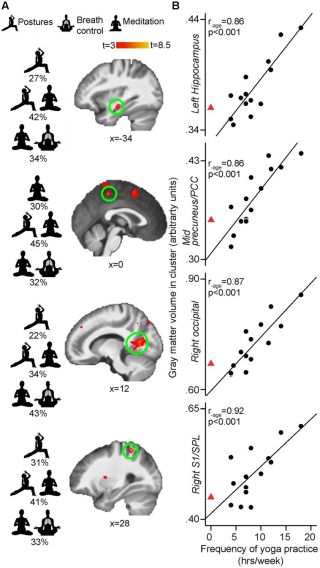
 I wonder if there is anyone who has ever not worried about
being boring—maybe only people so full of themselves that it never
occurs to them that they could be anything but fascinating to those
around them. Or maybe people who really are fascinating, and just don't
know it.
I wonder if there is anyone who has ever not worried about
being boring—maybe only people so full of themselves that it never
occurs to them that they could be anything but fascinating to those
around them. Or maybe people who really are fascinating, and just don't
know it.
 We all get into bad moods—and, eventually, we snap out of them. The
main reason we have trouble extracting ourselves from them more quickly
is because we can't shake a bad mood if we're not aware of what's causing it.
We all get into bad moods—and, eventually, we snap out of them. The
main reason we have trouble extracting ourselves from them more quickly
is because we can't shake a bad mood if we're not aware of what's causing it.